Honky Tonk
Heartbreak with a two-step tempo and a bar tab.
Get your song in Honky Tonk
Make yours in this styleHear it before you pay.$19 USD · your first song for $5.50 USDIf it doesn't move you, we give you your money back · 7 days.
Honky Tonk is a style from the Dust and Highway family. 108 BPM, Experimentation 16, Style strength 88.
What is Honky Tonk?
Barroom piano and a tear floating in a cold beer. Honky tonk turns heartache into a reason to dance.
How it sounds
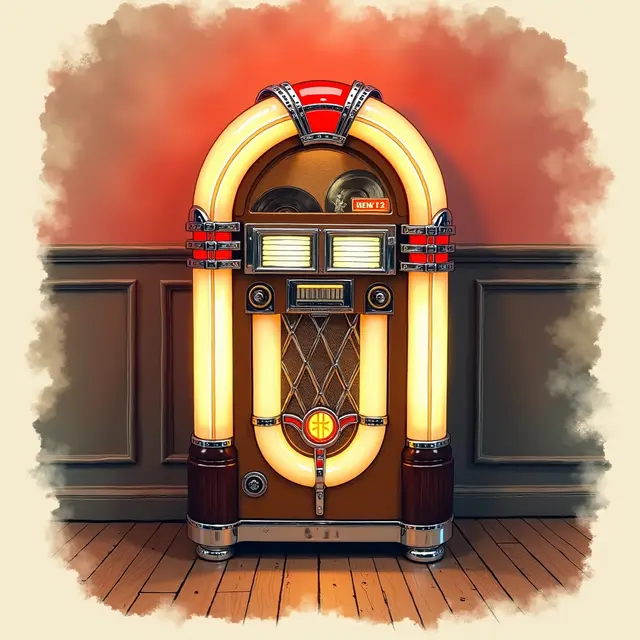
It is eleven o'clock on a Tuesday that hurts just like a Friday. The floorboards are wide and dark, scarred by dried resin and the heel-strikes of a thousand boots that came here to forget a face or celebrate a truck holding together down the highway. The walls hold the smell of stale tobacco, harness leather, and draft beer spilled across the zinc counter. In the corner, an upright piano with worn felts hits its keys with a dry, brassy clatter that cuts through the thick air of the room.
There is no softness there; every chord drops flat and firm, like a fist leaned hard against the grain. Beside it, the steel guitar stretches and slides with a liquid tremor, a long complaint rising from the floor and lodging right behind the eyes. Someone at the back booth shoves an empty glass across the edge, and the scrape dries up any attempt at polite talk. The long overhead tubes hum upward, flickering with an amber tint that turns cigarette smoke into a dense, nearly solid mass.
Outside, the blacktop stretches flat and cold beneath the high night. In here, the rhythm keeps a steady pace, a sort of mandatory march that will not let you stop. You tap your boot against the planks, you follow the beat with your heel, because the hurt weighs too much to sit still in the chair. The piano keeps hammering the same note, forcing you to take one more step, even when the only company is the wet rim of the glass and the murky reflection in the glass pane.
Palette: neon red / warm amber / dark wood / silver chrome
- BPM
- 108 BPM
- Family
- Dust and Highway
- Serial
- PLV-07
- Rarity
- Common
- Style strength
- 88
- Experimentation
- 16
Typical structure
[Piano Intro] → [Verse] → [Chorus] → [Verse 2] → [Chorus] → [Solo] → [Final chorus]
The four details above take up barely three lines on any standard spreadsheet. What stays hidden is how to make the lyric taste like a tavern counter without dropping into cardboard clichés: how many hardware nouns fit into a line before the scene loses its grip, and how the rhyme drops dry, like a tumbler set down too hard on oak. That balance lives inside eight unreleased parameters that cross your story with the exact pulse of the piano and road fatigue. When it finishes, an internal judge compares the draft against old records playing at crossroads diners and forces a rewrite on anything that smells like a postcard. Melancholy is easy to find. The boot hitting the floor, not.
How a lyric in this style thinks
A honky tonk lyric does not ask for sympathy. It states the damage plainly, keeps moving, and lets the shuffle beat carry whatever grief the words refuse to name. The genre works by compression: a split second of recognition — a dirty mug at three in the morning, an empty closet, a pickup truck nobody drives anymore — lands harder than any extended confession. The lyric does not explain the wound; it hands you the object and walks away. That restraint is the whole craft.
Honky tonk lives at 108 beats per minute, a tempo that is too fast for sitting still and too slow for genuine escape, which is exactly the point. You are not healing. You are shuffling across worn boards because stopping would cost you more than moving.
The emotional register sits somewhere between amber and dark wood — warm enough to feel, heavy enough to press down on you. Sentiment arrives sideways, tucked inside a detail: the scrape of a glass across zinc, the dry clatter of a piano with worn felts, the flicker of overhead tubes turning smoke into something almost solid. The barroom piano is not decorative here; it is structural.
Its flat, brassy chord drops set the emotional ceiling, and the weeping steel guitar fills whatever space remains, sliding up from the floor and lodging right behind the eyes. Cry-in-your-beer vocals work best when they stay conversational, almost matter-of-fact, because the melody is already doing the mourning. If the singer oversells the pain, the whole thing collapses into performance. Honky tonk does not perform grief — it reports it.
Line length in honky tonk tends to run short and declarative in the verse, then opens slightly in the chorus to let the title phrase breathe and repeat. Repetition in this genre is not laziness; it is the lyrical equivalent of that mandatory march the rhythm enforces. The same line comes back because you are still in the same bar, still on the same stool, and the situation has not changed. The chorus does not resolve anything — it circles. Rhyme schemes stay simple and audible: AABB or ABAB, nothing that draws attention to its own cleverness. Clever rhymes belong to a different room. Here, the rhyme should feel like it arrived on its own, like the only word that could have followed.
The sensory field is tight and specific: harness leather, stale tobacco, draft beer on zinc, the heel-strike of a boot on wide dark planks, blacktop stretching flat outside a door nobody is rushing toward. Honky tonk never reaches for nature imagery — no rivers, no mountains, no seasons turning. The sky only appears when someone is driving away under it. The world of this genre is interior, lit by neon and amber, bounded by the four walls of a place that stays open until the last person runs out of reasons to leave.
What it never uses: tenderness without irony, clean resolution, abstract emotional vocabulary. You cannot write honky tonk with words like healing, journey, or surrender. The genre rejects anything that sounds like it belongs on a greeting card.
Structurally, the piano intro announces the tempo and the mood before a single word is sung — this is not throat-clearing, it is a contract. The listener knows immediately what kind of night this is. Verses carry the narrative freight in tight, factual strokes. The chorus locks in the one emotional truth the whole song is circling. The instrumental solo — twangy guitar or steel — gives the body a moment to feel what the words have been restraining.
The final chorus lands differently than the earlier ones because by then the repetition has accumulated weight. What separated a real honky tonk lyric from a generic country imitation is that accumulation: the genre earns its final note by refusing shortcuts the whole way through.
- BARROOM PIANO
- TEARS AND BEER
Sample excerpt
Your coffee cup is sitting on the counter, The sugar jar is tipped upon its side. I’m counting up the cracks along the ceiling, With nowhere left for all this grief to hide. The screen door clicked at four o'clock this morning, A hollow sound that echoed through the hall.
Now I'm dancing with the dust motes in the kitchen, Just a two-step round the ruin you left behind. Pour another amber glass to blur the edges, And leave the heavy pieces of my mind.
Workshop note — This style relies on concrete, everyday imagery of domestic decay to anchor the listener in a specific, bitter moment. The chorus uses a simple, rhythmic hook that turns a stagnant situation into physical movement, which is essential for that signature honky tonk shuffle. Keep the lines clipped and conversational, avoiding metaphors that are too grand or poetic to fit inside a dimly lit tavern.
Sample excerpt written by MUSAI Song. Your lyrics are written from scratch, based on your story.
When to choose this style
Choose this track when you need to tell of a low blow that came without shouting, just a dull door slam and a quiet walk away. It works for the split that left you alone in the kitchen at three in the morning staring at a dirty mug, knowing there is no turning back. It fits when a family shop went under and the only thing left was signing cheap paperwork while looking at the linoleum floor.
For the uncle who drove off to the next county and left a pickup truck nobody drives anymore, or for the partner who cleared out their closet without leaving a note. Honky tonk does not ask for forgiveness or neat reasons; it turns regret into footwork and defeat into a short shuffle across worn boards. Do not pick this if you need a sweet wedding vow, a tender thank-you note to a mother, or a lullaby; the barroom piano has no patience for clean affection, and its rhythm wears out anyone who just wants to sit and weep in peace.
If you are looking for a gentle prayer, the card is Country Ballad.
Your story in this style
MUSAI Song writes original lyrics from your story, in the Honky Tonk style, and delivers the finished sung song, the ready-to-use style recipe, and an illustrated art plate with its numbered certificate, private by default; public only if its owner publishes it.
- Original lyrics written from your story
- A finished sung song, ready to play and share
- Art plate with a unique seal and a numbered certificate, private by default; public only if its owner publishes it
Frequently asked questions
What BPM is Honky Tonk?
Honky Tonk usually runs at 108 BPM.
What does Honky Tonk sound like?
Barroom piano and a tear floating in a cold beer. Honky tonk turns heartache into a reason to dance.
What song structure does Honky Tonk use?
[Piano Intro] → [Verse] → [Chorus] → [Verse 2] → [Chorus] → [Solo] → [Final chorus]
How do I write Honky Tonk lyrics?
Tell MUSAI Song your story and pick Honky Tonk: it writes original lyrics for this style at 108 BPM, you edit them word by word, and you get the song sung in Honky Tonk, with an illustration of the song and its numbered certificate. $19 USD per song, one-time payment.
Explore more styles
- 80s Heartland Rock
- Alt-Country
- Americana
- Appalachian Folk
- Classic Country
- Country Blues
- Country Duet
- Country Gospel
- Country Pop
- Country Rock
- Country Soul
- Country Waltz
- Cowboy Western
- Desert Highway Rock
- Fiddle Hoedown
- First Dance Country
- Folk Country
- Front Porch Acoustic
- Hick-Hop
- Jukebox Country Ballad
- Modern Country Anthem
- Mountain Bluegrass
- Nashville Sound
- Outlaw Country
Your idea or story, sung in this style
Card · secure payment via Stripe, charged in USD
If it doesn't move you, we give you your money back · 7 days