Appalachian Folk
Older than your grandmother's secrets, twice as haunting.
Get your song in Appalachian Folk
Make yours in this styleHear it before you pay.$19 USD · your first song for $5.50 USDIf it doesn't move you, we give you your money back · 7 days.
Appalachian Folk is a style from the Dust and Highway family. 72 BPM, Experimentation 35, Style strength 90.
What is Appalachian Folk?
An ancient voice rising through mountain fog. Appalachian folk, a centuries-old tradition of the eastern highlands, holds centuries in every note.
How it sounds
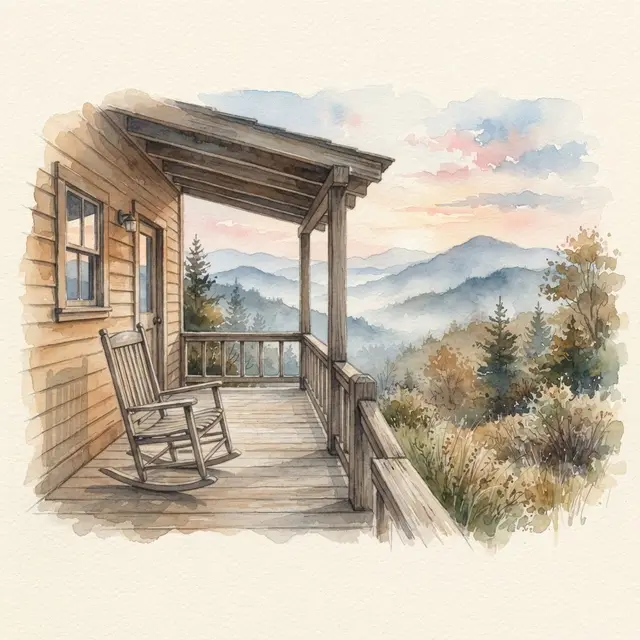
It is five in the morning and the timber house still holds the faint heat of the hearth that went out at midnight. You sit on the edge of the porch, your boots resting on boards worn pale by decades of footfalls and frost. The air smells of black pine and wet woodsmoke from the mist rolling down the ridges. There is no wind. The mountains rise like the dark backs of animals against a sky just beginning to pale. Across your knees rests a walnut dulcimer, its wooden pegs cold to the touch.
Out beyond the yard, the creek runs steady over white river stones with a patience older than any settlement. The banjo begins with a slow pluck, three notes asking for no reply, merely measuring the size of the silence all around. The voice does not rise from the throat; it comes up from the chest with a dry grain, steady and unhurried, naming someone the valley forgot but the roots still hold. There is no rush to reach the end of the stanza, because here time does not run forward: it settles like fog in the bottom of the hollow.
Palette: mountain blue / fog gray / dawn pink / wood ochre
- BPM
- 72 BPM
- Family
- Dust and Highway
- Serial
- PLV-06
- Rarity
- Epic
- Style strength
- 90
- Experimentation
- 35
Typical structure
[Intro] → [Verse] → [Verse 2] → [Chorus] → [Verse 3] → [Final Chorus a cappella]
The data above can be copied in a minute. What cannot be copied is the tension between instrumental austerity and the exact weight of memory. Resolving how a line describes the landscape while carrying a loss without turning picturesque is the real craft here. That lives in an internal distillate of eight unpublished parameters and the engine crosses it with the buyer's story. Upon finishing, an internal judge measures the lyrics against six dimensions of the canon and repairs what lost its ancient pulse. The chord is easy to play. The stillness, not.
How a lyric in this style thinks
A lyric in Appalachian Folk does not explain grief — it holds it the way a worn floorboard holds the weight of someone who stood there every morning for forty years. The genre works by naming specific things: a walnut dulcimer, a timber porch, a creek running over white stones. Those particulars carry the emotional freight so the lyric itself never has to announce what it feels. The voice arrives not as performance but as testimony, dry-grained and unhurried, as though the singer has already made peace with what is being said and is simply setting it on record for whoever is left to hear it. Appalachian folk earns its authority by refusing ornament. Every line does quiet, necessary work.
Rhythm in this genre moves at the pace of settled breath, typically somewhere around 72 BPM, and the line lengths are long enough to carry a complete thought but never so long they lose the modal pull underneath. The banjo enters with a slow, deliberate pluck — three notes that measure silence rather than fill it. The dulcimer sits beneath the voice like a second heartbeat, modal and slightly austere, rooted in tunings that predate the major-key conventions most listeners carry as a default.
Repetition here is not a hook mechanic; it is an act of witness. A phrase that returns in verse three means something different than it did in verse one, because the verses have built context around it. The structure — intro, two verses before the chorus, a third verse, and a final chorus stripped back to voice alone — earns that a cappella ending. By the time the instruments fall away, the words have to be enough on their own, and in a well-written Appalachian folk lyric, they are.
The sensory field is narrow and specific in the best possible way. You are working with timber, fog, ridge lines, hearth ash, river stone, boot leather, and the particular darkness before five in the morning when the mountains are still shapes rather than mountains. These are not decorations. They are the architecture of the emotional world the lyric inhabits. Appalachian folk never reaches for abstraction when a concrete object is available, and it never reaches for comfort when plain acknowledgment will do.
What this genre categorically avoids is urban texture, irony, self-deprecating wit, and any image that suggests speed or novelty. A city streetlight, a punchline, a chord change that resolves too cleanly — any of these will dissolve the atmosphere before it forms.
What separates a genuine Appalachian folk lyric from an imitation is the willingness to let grief be an inheritance rather than a crisis. The generic version reaches for resolution too early, softens the loss, or adds a redemptive turn that the tradition does not need and does not trust. The real version names someone the valley has forgotten and lets that naming be sufficient. It accepts that certain things end without explanation and that the creek runs the same way regardless.
The final a cappella chorus is not a dramatic gesture — it is the natural conclusion of a lyric that has been stripping back toward bare truth since the first line. If the words cannot stand in silence without the instruments, the draft is not finished yet.
- ANCIENT VOICE
- MOUNTAIN MIST
Sample excerpt
Grandfather's boots sit by the kitchen door caked with red clay from the high ridge floor he split the white oak with an iron wedge and lived his whole life on the gravel ledge
the mountain keeps the names we carve in stone and takes back every acre we call our own the fog rolls low upon the hemlock tree leaving the valley silent and undone
Workshop note — This sample relies on concrete, physical labor and regional textures to convey grief without resorting to sentimentality. Short, unadorned lines mirror the steady, unhurried pace of old highland storytelling, while avoiding decorative language altogether.
Sample excerpt written by MUSAI Song. Your lyrics are written from scratch, based on your story.
When to choose this style
Choose this card when your story requires the quiet weight of what remains after everything else departs. It works for remembering a grandfather who built his own timber home with split-knuckled hands, for a promise made on a dirt road and kept decades late, or for laying to rest someone who lived and died in the same township asking nothing of the world. It serves to name things for what they are without ornament or cheap comfort, accepting certain griefs as an inheritance rather than a wound. Do not choose this for light stories, rapid triumphs, city romances, or loud reconciliations that lack room to breathe. If you are looking for a steady acoustic bounce, the letter is Prairie Ballad.
Your story in this style
MUSAI Song writes original lyrics from your story, in the Appalachian Folk style, and delivers the finished sung song, the ready-to-use style recipe, and an illustrated art plate with its numbered certificate, private by default; public only if its owner publishes it.
- Original lyrics written from your story
- A finished sung song, ready to play and share
- Art plate with a unique seal and a numbered certificate, private by default; public only if its owner publishes it
Frequently asked questions
What BPM is Appalachian Folk?
Appalachian Folk usually runs at 72 BPM.
What does Appalachian Folk sound like?
An ancient voice rising through mountain fog. Appalachian folk, a centuries-old tradition of the eastern highlands, holds centuries in every note.
What song structure does Appalachian Folk use?
[Intro] → [Verse] → [Verse 2] → [Chorus] → [Verse 3] → [Final Chorus a cappella]
How do I write Appalachian Folk lyrics?
Tell MUSAI Song your story and pick Appalachian Folk: it writes original lyrics for this style at 72 BPM, you edit them word by word, and you get the song sung in Appalachian Folk, with an illustration of the song and its numbered certificate. $19 USD per song, one-time payment.
Explore more styles
- 80s Heartland Rock
- Alt-Country
- Americana
- Classic Country
- Country Blues
- Country Duet
- Country Gospel
- Country Pop
- Country Rock
- Country Soul
- Country Waltz
- Cowboy Western
- Desert Highway Rock
- Fiddle Hoedown
- First Dance Country
- Folk Country
- Front Porch Acoustic
- Hick-Hop
- Honky Tonk
- Jukebox Country Ballad
- Modern Country Anthem
- Mountain Bluegrass
- Nashville Sound
- Outlaw Country
Your idea or story, sung in this style
Card · secure payment via Stripe, charged in USD
If it doesn't move you, we give you your money back · 7 days