Country Soul
Twang plus horns: the peanut butter and jelly of feelings.
Get your song in Country Soul
Make yours in this styleHear it before you pay.$19 USD · your first song for $5.50 USDIf it doesn't move you, we give you your money back · 7 days.
Country Soul is a style from the Dust and Highway family. 90 BPM, Experimentation 24, Style strength 89.
What is Country Soul?
Memphis hugs Nashville: soul brass, guitar twang, and a voice that sweats pure emotion.
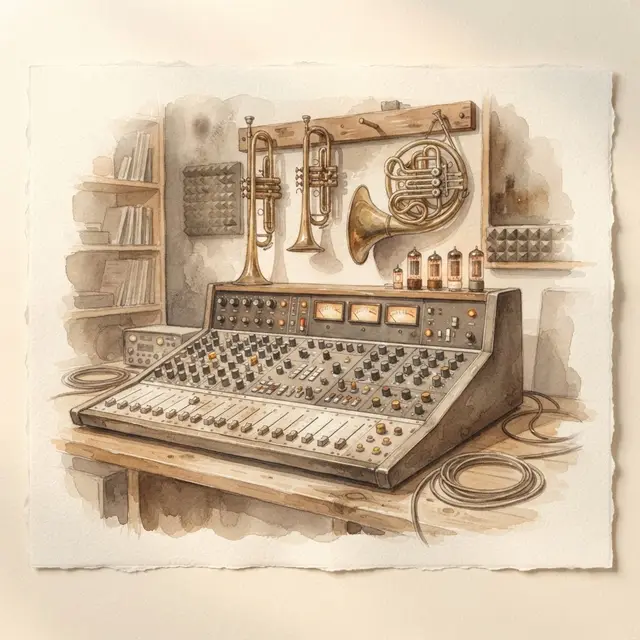
How it sounds
The air in Muscle Shoals is thick and heavy, and the ceiling fan turns so slowly it looks like it is about to give up, keeping a steady, dry hum that bleeds right into the open microphones. The tube console glows with an amber warmth that colors the dark mahogany wood. Someone left a crumpled paper coffee cup right beside the tape machine. You are sitting on a church pew with varnish worn down so thin the wood has taken the exact shape of your spine.
A Telecaster rests across your knees, cable plugged in; when you pick the high string, the bone nut yields that sharp, metallic twang that feels like it is peeling the paint off the drywall. Over to your left, a horn player warms up with three low notes on weathered brass before the section kicks in—not just backing the track, but leaning hard against your chest. The room smells of red roadside dust and hot machine oil. There are no sheet music stands, only crumpled lyric sheets with pencil marks and coffee rings.
The vocal starts bare, telling of something that happened ten years ago on a corrugated tin porch. It breaks right in the throat on the second line like damp kindling refusing to catch, but the choir surges in right behind it like a Sunday morning service where nobody asks for permission to weep.
Palette: warm amber / grayish coffee brown / brass gold
- BPM
- 90 BPM
- Family
- Dust and Highway
- Serial
- PLV-20
- Rarity
- Epic
- Style strength
- 89
- Experimentation
- 24
Typical structure
[Organ Intro] → [Verse] → [Chorus] → [Verse 2] → [Chorus] → [Soul bridge] → [Final chorus]
What you see in the data is just the outer wood of the studio. What stays hidden is the fine adjustment: how to write a four-line verse where every physical object carries decades of ache without tipping into cheap melodrama, and at exactly what beat the voice must crack so the brass section sounds like redemption instead of a parade. That lives inside an unpublished eight-parameter distillate that the engine cross-checks with your story before a single line is written. When it finishes, an internal judge measures the lyrics against six dimensions of the canon and sends back anything that smells like a formula for repairs. The twang can be bought. The brass-healed wound, not.
How a lyric in this style thinks
A country soul lyric does not explain grief — it delivers it physically, through the body, through objects that have absorbed years of use and are now being handled one last time. The genre works at the exact intersection where the rural South's storytelling tradition meets the raw, unmedicated emotional directness of classic soul music, and what emerges is a voice that refuses to make peace with something before it has fully bled out. Country soul does not offer resolution at the top of the song. It earns resolution, or it refuses it entirely, and neither outcome feels dishonest.
The base tone sits somewhere between amber warmth and coffee-brown exhaustion — not despair, but the specific weight of a person who has been carrying something for so long that putting it down feels almost like losing a limb. Emotion does not arrive in a rush. It arrives in the second line of the verse, where the voice cracks on a word that seemed safe. The crack is structural, not ornamental.
Verse lines in this genre tend to run long and conversational, closer to how a person actually talks when they are trying to say something difficult — no forced rhyme at the end of every bar, no tidy couplets. The rhyme arrives late, or slant, or it skips a beat entirely so that the syllable lands somewhere unexpected and you feel it before you process it. The chorus then shortens everything: fewer words, more space, the horn section leaning in where the lyric pulls back.
The sensory field of country soul is specific and non-negotiable. It lives in corrugated tin roofs, worn church pews, the bone nut of a Telecaster giving that sharp metallic twang, the slow rotation of a ceiling fan in a room that smells of machine oil and red road dust. It lives in brass instruments that have been played long enough to sound weathered. The organ intro is not decoration — it sets the emotional temperature before a single word is sung, the way a preacher's silence before the sermon tells you exactly how serious the morning is.
What this genre never uses: anything synthetic in the high frequencies, anything that glitters or accelerates. No confetti, no flashing lights, no production tricks that make the room feel larger than it is. The room is small and the microphone is close and the air is thick.
The structural logic follows the emotional logic of a difficult conversation. The organ intro is the moment before you knock on the door. The first verse places you in the memory — a specific porch, a specific year, a corrugated tin surface catching rain. The chorus is the thing you could not say then, now said plainly. The second verse adds the detail you left out the first time, the piece that changes the meaning of everything before it.
The soul bridge is where the choir enters and the lyric stops being about one person — it becomes communal, a Sunday-morning-without-permission-to-weep moment where the personal story opens into something shared. The final chorus carries the same words as before, but the voice behind them has shifted, and that shift is the only resolution on offer.
What separates a real country soul lyric from a generic imitation is the refusal to reach for comfort too early. Imitations tend to resolve by the second chorus, to clean the mud off before the song is done. The real thing holds the mud in place, lets the horn section push against your chest rather than lift you, and trusts that the Telecaster's twang and the choir's surge arriving together — without asking permission — will do more emotional work than any tidy closing line. The lyric earns its final note by spending the whole song in the dirt road where the burden was dropped, not by pretending the road ever ended.
- MEMPHIS AND NASHVILLE
- SOUL WITH TWANG
Sample excerpt
The screen door swings on a rusted hinge I left your coffee cup right where it sat Dust settles thick on the velvet fringe Of that worn-out, brim-bent Sunday hat The creek bed is bone-dry and choked with weeds And the porch light flickers like a dying spark.
Oh, the debt is paid in heavy amber light I’m leaving the keys in the frame of the gate My shoulders are light in the middle of the night Giving up the ghost of a love turned to weight.
Workshop note — Country soul relies on concrete imagery of decay to anchor the emotional weight, using the rhythm of physical labor to dictate line length. The chorus functions as a release valve, moving from specific domestic details to a broader, resonant acknowledgment of letting go. Avoid overly poetic metaphors; keep the language rooted in the physical decay of the setting to allow the brass and guitar to carry the emotional subtext.
Sample excerpt written by MUSAI Song. Your lyrics are written from scratch, based on your story.
When to choose this style
Choose this card when you need to forgive someone who is no longer around, but the apology is too heavy for a phone call or a clean letter. It works when an aging father hands you the keys to a shop that no longer turns a profit, or when you walk back through the land where you grew up and realize the property lines shifted a few feet while you were away. It serves the exact second you understand you carried someone else's burden for twenty years and your shoulders finally decide to drop it right in the middle of the dirt road.
Do not choose it to celebrate a promotion, nor for a party where people crowd under flashing lights, because country soul knows nothing of confetti or easy victories. If you are looking for a quick confession without the weight of the mud and the roots, the card is Country Pop.
Your story in this style
MUSAI Song writes original lyrics from your story, in the Country Soul style, and delivers the finished sung song, the ready-to-use style recipe, and an illustrated art plate with its numbered certificate, private by default; public only if its owner publishes it.
- Original lyrics written from your story
- A finished sung song, ready to play and share
- Art plate with a unique seal and a numbered certificate, private by default; public only if its owner publishes it
Frequently asked questions
What BPM is Country Soul?
Country Soul usually runs at 90 BPM.
What does Country Soul sound like?
Memphis hugs Nashville: soul brass, guitar twang, and a voice that sweats pure emotion.
What song structure does Country Soul use?
[Organ Intro] → [Verse] → [Chorus] → [Verse 2] → [Chorus] → [Soul bridge] → [Final chorus]
How do I write Country Soul lyrics?
Tell MUSAI Song your story and pick Country Soul: it writes original lyrics for this style at 90 BPM, you edit them word by word, and you get the song sung in Country Soul, with an illustration of the song and its numbered certificate. $19 USD per song, one-time payment.
Explore more styles
- 80s Heartland Rock
- Alt-Country
- Americana
- Appalachian Folk
- Classic Country
- Country Blues
- Country Duet
- Country Gospel
- Country Pop
- Country Rock
- Country Waltz
- Cowboy Western
- Desert Highway Rock
- Fiddle Hoedown
- First Dance Country
- Folk Country
- Front Porch Acoustic
- Hick-Hop
- Honky Tonk
- Jukebox Country Ballad
- Modern Country Anthem
- Mountain Bluegrass
- Nashville Sound
- Outlaw Country
Your idea or story, sung in this style
Card · secure payment via Stripe, charged in USD
If it doesn't move you, we give you your money back · 7 days