80s Heartland Rock
For everyone whose alarm clock is the real villain.
Get your song in 80s Heartland Rock
Make yours in this styleHear it before you pay.$19 USD · your first song for $5.50 USDIf it doesn't move you, we give you your money back · 7 days.
80s Heartland Rock is a style from the Dust and Highway family. 122 BPM, Experimentation 18, Style strength 89.
What is 80s Heartland Rock?
Factory-and-highway anthems for the people who rise before dawn. The heartland beats in four-four time.
How it sounds
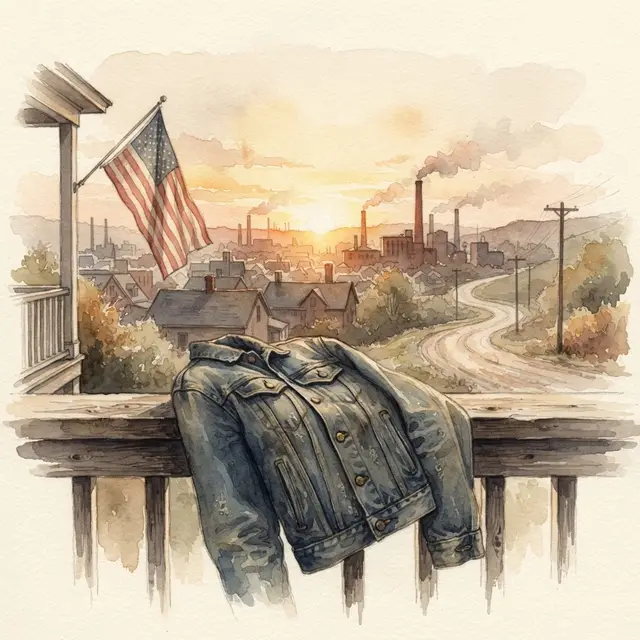
It is five-fifteen in the morning in the gravel lot outside the assembly plant. The dashboard gauge in your old pickup reads twenty-four degrees. You keep the engine running just long enough to thaw your knuckles over the plastic heater vents before punching the timecard. Your denim jacket carries the smell of burnt diner brew and clean motor oil. Through the crack in the windshield, white steam from the boiler towers cuts into the slate sky, right where a pale strip of morning light scrapes the horizon.
What pushes through the speakers is not polished: it is the dry twang of a worn Fender Telecaster plugged straight into an overdriven tube amplifier, gritty and loud. There are no clean studio tricks here. A metal glockenspiel doubles the organ riff, catching light like sun hitting the municipal water tank. The snare cracks hard on the two and the four, driving forward like an iron piston that refuses to quit. When the vocal cuts in, the throat sounds rough from breathing workshop dust and diesel fumes.
It does not chase smooth pitch; it leans hard into the microphone, shoving the line forward like a shoulder against a stalled truck. Your boot heel taps the worn floor mat on reflex. You feel the iron hum of the engine climbing straight through your work boots, filling your ribs with cold mountain air and snapping you wide awake.
Palette: denim blue / dawn gold / flag franja red
- BPM
- 122 BPM
- Family
- Dust and Highway
- Serial
- PLV-10
- Rarity
- Rare
- Style strength
- 89
- Experimentation
- 18
Typical structure
[Intro] → [Verse] → [Chorus] → [Verse 2] → [Chorus] → [Bridge] → [Epic final chorus]
The technical specs above are just the sheet metal. What does not fit on an index card is the craft: how to write about a shuttered plant without turning into a political flyer, and how much grit the chorus needs to feel triumphant without sounding cheap. That balance lives inside an unpublished eight-parameter engine that reads your personal history before laying down a single line. When finished, an internal judge evaluates the draft against six canonical dimensions and tightens every loose bolt. The four-on-the-floor beat is easy to copy. The working-class dignity is not.
How a lyric in this style thinks
A Heartland Rock lyric does not describe exhaustion — it enacts it. The words arrive already wearing their work clothes, already clocked in, and they move with the momentum of someone who learned long ago that stopping to feel sorry for yourself costs time you don't have. The genre earns its emotional weight through accumulation, not confession: detail after concrete detail stacking up until the listener feels the thirty years in the back rather than being told about them. That is the fundamental contract.
Heartland Rock does not explain its people; it shows them standing at the counter, gripping the steering wheel, watching the boiler steam cut the slate sky at five-fifteen in the morning, and trusts that the listener will understand what it cost.
The base tone is stoic, but stoic is not cold. Emotion in this genre arrives sideways, carried inside a specific object or a specific hour — the cracked dashboard gauge, the denim jacket that smells of burnt diner brew and motor oil, the worn floor mat your boot heel finds on reflex. Abstract feelings are almost never named directly in a strong Heartland lyric. Pride lives inside a graduation stage crossed in borrowed shoes. Love lives inside a kept promise and a tailgate and black coffee going cold.
The verse builds that sensory case methodically, line by line, without rushing. Then the chorus does not pivot to something prettier; it lifts the same weight higher, with more air and more velocity, the way a piston finds its stroke. The vocal delivery follows: rough-throated, leaning hard into the microphone, not chasing smooth pitch but shoving the line forward like a shoulder against a stalled truck.
Rhythm in Heartland Rock is structural, not decorative. The snare cracks on two and four like an iron punch clock, and the lyric has to honor that forward drive. Lines tend to run long and declarative, with the stress falling on working verbs — rose, kept, built, showed, stayed. Repetition is used with discipline: the title phrase or the central image comes back at the top of each chorus, slightly louder in the throat each time, until by the epic final chorus it is not a hook anymore but a statement of fact the whole room can ratify.
The bridge is where the lyric allows one moment of honest doubt or backward glance before the final chorus closes the door on ambivalence and drives through. That sequence — verse, chorus, verse, chorus, bridge, epic chorus — is not arbitrary. It is a worked-out argument, and the epic final chorus is the verdict.
The sensory field is specific and industrial-pastoral: gravel lots, assembly lines, two-lane highways, diner counters, pickup trucks with high mileage, municipal water towers, dawn light scraping a flat horizon. The instrumentation reinforces this — the dry twang of a Telecaster run straight into an overdriven tube amp, a glockenspiel doubling an organ riff and catching light the way sun hits a metal tank, drums that refuse to rush or soften. What the genre never uses: anything that signals irony, delicacy, or interior ambiguity.
No late-night bedroom confessions. No decorative metaphors borrowed from nature poetry. No vocal runs that draw attention to technique. The production stays gritty and loud, and the lyric earns the right to that volume by being exact.
What separates a real Heartland Rock lyric from a generic imitation is the refusal of self-pity and the refusal of false triumph. The people in these songs did not win against the odds in any cinematic sense — they showed up, which is a different and harder thing. The lyric has to hold both the weight of what it cost and the dignity of having paid it, without collapsing into sentiment or pumping its fist at nothing.
When the chorus rises at 122 BPM with that glockenspiel catching the dawn light, it should feel earned by every specific, unglamorous detail that came before it. That is the whole craft: make the listener feel the iron hum of the engine climbing through their work boots before you ask them to raise their fist.
- WORKING CLASS
- FIST IN THE AIR
Sample excerpt
The whistle blows at five AM inside the mill, I punch the card until the copper gears stand still. My boots have worn a path across the concrete floor, I leave my heavy shadow by the sliding metal door. The foreman talks of numbers that we never meet, While asphalt shimmers hazy in the summer heat.
It’s a steady climb on a rusted gear, We’re building something worth the sweat out here. Keep the engine turning when the tank runs low, That’s the only way a man can grow.
Workshop note — Heartland rock relies on a driving, four-four rhythm that mirrors the steady pace of manual labor. This sample succeeds by anchoring big themes of resilience in tangible objects like copper gears and punch cards, keeping the sentiment grounded rather than abstract. Avoid flowery metaphors; the lyrics must feel like they were written on the back of a clipboard during a lunch break.
Sample excerpt written by MUSAI Song. Your lyrics are written from scratch, based on your story.
When to choose this style
Choose this card when the story is built on quiet endurance and showing up. For a father who put thirty years into the plant floor so his kids could walk across a graduation stage. For the woman running the family hardware store in a town that keeps losing people, holding her ground with stubborn pride instead of self-pity. For marking a milestone that did not come from good fortune, but from waking up before dawn for a decade with an aching back. For two lifelong friends sharing black coffee on a tailgate, knowing that keeping a promise was victory enough.
Do not choose it for quiet regret or solitary grief behind closed doors; these feelings do not stay inside a bedroom, they belong on an open two-lane road with the windows rolled halfway down. It does not fit delicate apologies or light summer flings without weight. If you're looking for a fragile acoustic confession sung late at night, the card is Country Ballad.
Your story in this style
MUSAI Song writes original lyrics from your story, in the 80s Heartland Rock style, and delivers the finished sung song, the ready-to-use style recipe, and an illustrated art plate with its numbered certificate, private by default; public only if its owner publishes it.
- Original lyrics written from your story
- A finished sung song, ready to play and share
- Art plate with a unique seal and a numbered certificate, private by default; public only if its owner publishes it
Frequently asked questions
What BPM is 80s Heartland Rock?
80s Heartland Rock usually runs at 122 BPM.
What does 80s Heartland Rock sound like?
Factory-and-highway anthems for the people who rise before dawn. The heartland beats in four-four time.
What song structure does 80s Heartland Rock use?
[Intro] → [Verse] → [Chorus] → [Verse 2] → [Chorus] → [Bridge] → [Epic final chorus]
How do I write 80s Heartland Rock lyrics?
Tell MUSAI Song your story and pick 80s Heartland Rock: it writes original lyrics for this style at 122 BPM, you edit them word by word, and you get the song sung in 80s Heartland Rock, with an illustration of the song and its numbered certificate. $19 USD per song, one-time payment.
Explore more styles
- Alt-Country
- Americana
- Appalachian Folk
- Classic Country
- Country Blues
- Country Duet
- Country Gospel
- Country Pop
- Country Rock
- Country Soul
- Country Waltz
- Cowboy Western
- Desert Highway Rock
- Fiddle Hoedown
- First Dance Country
- Folk Country
- Front Porch Acoustic
- Hick-Hop
- Honky Tonk
- Jukebox Country Ballad
- Modern Country Anthem
- Mountain Bluegrass
- Nashville Sound
- Outlaw Country
Your idea or story, sung in this style
Card · secure payment via Stripe, charged in USD
If it doesn't move you, we give you your money back · 7 days