Trap Soul
For texts you typed, deleted, and turned into art.
Get your song in Trap Soul
Make yours in this styleHear it before you pay.$19 USD · your first song for $5.50 USDIf it doesn't move you, we give you your money back · 7 days.
Trap Soul is a style from the Asphalt and Diamonds family. 108 BPM, Experimentation 26, Style strength 87.
What is Trap Soul?
A warm midnight where singing wraps itself around trap: confessions with an 808 underneath.
How it sounds
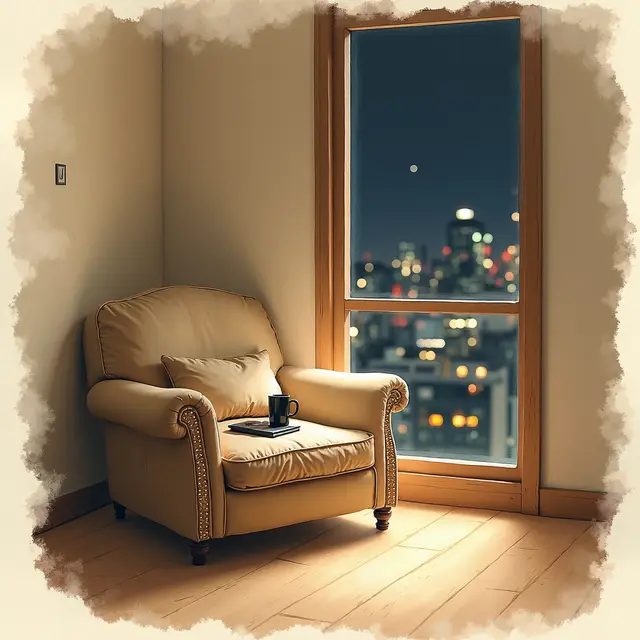
It is three-thirty in the morning in a room where the only light comes from the cold blue glow of a phone screen resting face down on the rumpled sheets. The window looks out onto a wet avenue; tail lights smear into soft, circular blurs against the glass. You turned off the bedside lamp an hour ago, but the space isn't dark—it sits in that lukewarm twilight where furniture loses its hard edges and floats in the draft slipping through the frame.
On the wooden dresser, a glass holds melted ice, leaving a warm ring of water that has soaked into the grain. The 808 doesn't punch or demand your chest; it rolls underneath like a heavy mattress, a low thrum felt more through the soles of your bare feet against the floor than through the air, as if the entire room were breathing at a sluggish, tired tempo. Above that frequency, a Rhodes electric piano drips chords with a tremolo so slight it feels like a metal wire vibrating in an empty hallway.
The vocal isn't mixed for a stadium or even a club. It is right there against your ear, close enough to catch the dry click of teeth and the wet shift of breath, reciting something that happened months ago but carries the exact same density in this quiet room.
Palette: night blue / bokeh amber / warm wood
- BPM
- 108 BPM
- Family
- Asphalt and Diamonds
- Serial
- ASF-22
- Rarity
- Common
- Style strength
- 87
- Experimentation
- 26
Typical structure
[Intro] → [Verse] → [Chorus] → [Verse 2] → [Chorus] → [Bridge] → [Final Chorus]
Those four details above take sixty seconds to copy. What cannot be copied is the precise restraint: how to balance the micro-pause in a delivery so it sounds like a real text read in the dark rather than a performance, or how to anchor an abstract ache to physical objects without sounding like an ad. That lives inside an unpublished set of eight constraints that the engine crosses with your story before a single line gets typed. When it finishes, an internal judge grades the draft against six canon dimensions and strips out anything that feels like a trick. The bass drops can be copied. The insomnia, no.
How a lyric in this style thinks
A trap soul lyric doesn't announce its feelings — it circles them. The genre operates through a kind of emotional archaeology, where the singer keeps returning to the same buried moment and finding it hasn't decayed at all. The confession isn't delivered; it's admitted, which is a different thing entirely. Trap soul lives at 108 BPM, slow enough that the 808 feels geological rather than rhythmic, a subsonic pressure you register in your sternum before you register it as music.
The lyric has to match that weight: sentences that don't resolve cleanly, thoughts that trail into silence mid-line, a refusal to summarize what the song is about because the song's whole point is that it can't be summarized.
The base tone is guilt that has gone cold and familiar, not the hot guilt of a fresh wound but the kind that greets you when the room goes quiet and your phone screen goes dark. Emotion in trap soul arrives laterally — it comes through a concrete detail before it names itself as feeling. A melted glass leaving a ring on wood. Three-word replies. A draft that stayed a draft. The lyric earns its emotional weight by staying specific and resisting the urge to explain.
If your chorus tells the listener how to feel rather than handing them the image that produces the feeling, you've lost the register entirely. The vocal delivery in this genre is close-miked, intimate enough to catch breath shifts and the dry click of a swallow — the production philosophy and the lyric philosophy are the same: proximity over projection.
Repetition in trap soul is structural and deliberate. A hook phrase returns not because it's catchy but because the speaker hasn't been able to stop thinking it. Line lengths tend to be uneven, with short declarative statements dropping into longer, slower confessions — the rhythm breathes rather than marches. The vocal melody floats loosely over the trap grid, landing slightly behind the beat or hovering just ahead of it, and the lyric should be written to allow that freedom. Rhymes exist but they're often slant, worn smooth rather than sharp, because a perfect rhyme in this genre feels too resolved, too finished for material that refuses to finish.
The sensory field of trap soul is nocturnal and indoor: wet glass, phone light against a ceiling, the specific quality of silence after a notification doesn't come. Tail lights through rain-streaked windows. Electric piano with tremolo that sounds like a signal fading in an empty corridor. This is not a genre for daylight or crowd noise or the smell of fresh air. It has no use for clean fury, public celebration, or any image that implies forward motion. Avoid anything that suggests the speaker has reached a decision. The Rhodes, the ambient keys, the 808 warmth — they all argue for suspension, and the lyric must argue for it too.
Structurally, the intro earns its length by establishing atmosphere before a single word lands. The first verse sets the unresolved situation without editorializing it. The chorus doesn't lift in the pop sense — it deepens, pressing further into the same emotional frequency rather than opening outward. The bridge is where the speaker gets closest to saying the true thing, and then the final chorus returns with that knowledge now underneath it, heavier for what the bridge almost said.
What separates a real trap soul lyric from a generic imitation is that the imitation resolves. It lets the character grow, or forgive, or move on. Trap soul prefers to stay suspended in the question — awake, still, the unsent message still sitting in the outbox.
- WARM MIDNIGHT
- VOCALS AND TRAP
Sample excerpt
Draft sits amber in the glowing outbox Three days old Two in the morning House goes quiet and the hum takes over You left your silver lighter on the counter I didn't mail it back
Late night reply shrunk to a period We kill each other in the quiet shift No doors slamming just the screen fading out Leaving me awake with the unsent text
Workshop note — Trap soul thrives on unfinished business and the physical weight of small objects left behind, like a lighter on a kitchen counter. Keep the verse lines short and conversational so they float naturally over the heavy 808 bass without rushing the delivery. Avoid neat resolutions or clean closure, leaving the narrative suspended right in the unresolved tension of a midnight confession.
Sample excerpt written by MUSAI Song. Your lyrics are written from scratch, based on your story.
When to choose this style
Choose this card when the story revolves around a draft saved in your outbox that you never had the nerve to send. It works for the call you didn't make at two in the morning, for the exact Tuesday when you realized a friendship was dying not from a screaming match, but because the replies shrank to three words and a full stop. Use it to confess something you would never say in daylight under the sun's harsh glare. It fits when guilt isn't an acute ache but a dull hum that returns the moment the house goes quiet and you lie down alone.
Do not pick this for a career milestone, a loud weekend with a crowd, or a bitter fight that still demands doors slamming: trap soul has no room for clean fury or public celebration. And if your story requires a neat resolution where everyone learns a lesson and moves on, this card will not deliver; trap soul prefers to stay suspended right in the middle of the unresolved question. If you are looking for a confession that cleans the slate instead of keeping you awake, the card is 90s R&B Revival.
Your story in this style
MUSAI Song writes original lyrics from your story, in the Trap Soul style, and delivers the finished sung song, the ready-to-use style recipe, and an illustrated art plate with its numbered certificate, private by default; public only if its owner publishes it.
- Original lyrics written from your story
- A finished sung song, ready to play and share
- Art plate with a unique seal and a numbered certificate, private by default; public only if its owner publishes it
Frequently asked questions
What BPM is Trap Soul?
Trap Soul usually runs at 108 BPM.
What does Trap Soul sound like?
A warm midnight where singing wraps itself around trap: confessions with an 808 underneath.
What song structure does Trap Soul use?
[Intro] → [Verse] → [Chorus] → [Verse 2] → [Chorus] → [Bridge] → [Final Chorus]
How do I write Trap Soul lyrics?
Tell MUSAI Song your story and pick Trap Soul: it writes original lyrics for this style at 108 BPM, you edit them word by word, and you get the song sung in Trap Soul, with an illustration of the song and its numbered certificate. $19 USD per song, one-time payment.
Explore more styles
- 90s R&B Revival
- Alt-R&B
- Atlanta Dirty South
- Bedroom Emo Rap
- Candlelight Slow Jam
- Crunk Revival
- Detroit Rap
- Drumless Rap
- G-Funk Revival
- Gospel Trap
- Hip-Hop Love Song
- Icy Drill
- Incense Neo-Soul
- Introspective Hip-Hop
- Jersey Club Rap
- Lo-Fi Cloud Rap
- Melodic Trap
- Memphis Phonk
- Memphis Rap
- Modern Boom Bap
- Modern R&B
- New Orleans Bounce
- NY Drill
- Pluggnb
Your idea or story, sung in this style
Card · secure payment via Stripe, charged in USD
If it doesn't move you, we give you your money back · 7 days