Lo-Fi Cloud Rap
Gravity is a suggestion up here in the reverb.
Get your song in Lo-Fi Cloud Rap
Make yours in this styleHear it before you pay.$19 USD · your first song for $5.50 USDIf it doesn't move you, we give you your money back · 7 days.
Lo-Fi Cloud Rap is a style from the Asphalt and Diamonds family. 66 BPM, Experimentation 58, Style strength 78.
What is Lo-Fi Cloud Rap?
Rap inside a digital cloud: endless echo, washed-out synths, and optional gravity.
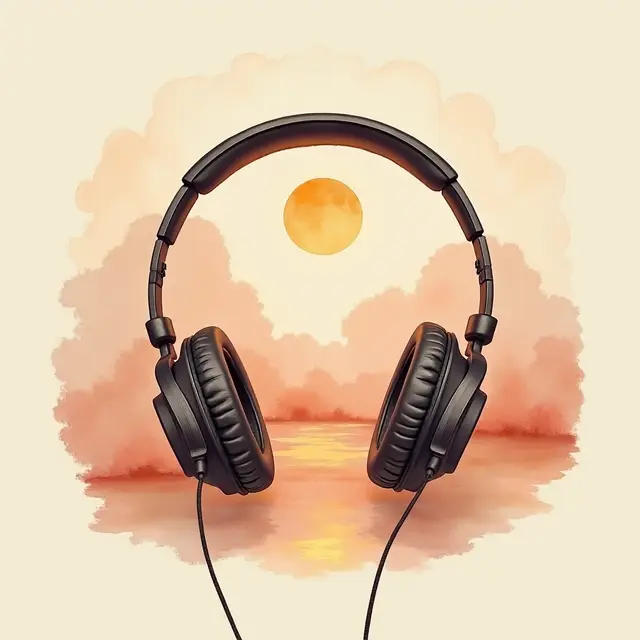
How it sounds
It is ten past three in the morning. The only illumination in the room comes from the violet glare of a laptop screen and a thin slice of street light slipping through the blind. You are lying on top of an unmade duvet, wearing over-ear headphones heavy enough to remind you that you still exist. On screen, an unnamed audio file advances at 126 BPM. The beat does not kick off; it floats. A low-pass filtered synth pad drains the air from the room, leaving behind a lukewarm density where time stretches out.
Beneath it, an 808 tuned an octave down does not hit your chest; it slides like warm vapor across the hardwood floor. When the voice arrives, it runs through an Auto-Tune chain set to maximum retune speed and an infinite cathedral reverb. It does not sound like someone singing into a microphone, but like a voice note sent from another dimension, fading out before it hits the ground. Consonants lose their sharp edges; words dissolve into texture, as if language were just another layer of condensation on the glass.
Your hand holds a phone with its screen lit up in silence, waiting for a message you know will not arrive, but the ache does not burn. Here, everything is muted, wrapped in a layer of digital cotton where gravity is optional and your body weighs exactly as much as the air in the room.
Palette: black / dark brown / salmon pink / amber orange / warm yellow
- BPM
- 66 BPM
- Family
- Asphalt and Diamonds
- Serial
- ASF-12
- Rarity
- Rare
- Style strength
- 78
- Experimentation
- 58
Typical structure
[Ethereal Intro] → [Verse] → [Floating hook] → [Verse 2] → [Hook] → [Dissolution]
The specs above are just the surface. What does not fit in the table is how to calibrate textual vagueness so it suggests without becoming incomprehensible, or how to treat adjectives so the nostalgia sounds like digital aesthetics rather than gothic whining. All of that lives within the internal distillate of this card—eight hidden parameters that the engine crosses with your story before generating a single line. Afterward, an internal judge evaluates the lyrics against six dimensions of the canon and fixes anything that breaks the float. The synthetic atmosphere can be copied. The weight of weightlessness cannot.
How a lyric in this style thinks
A cloud rap lyric does not explain its grief — it suspends it. The words arrive already half-dissolved, wrapped in so much reverb that meaning becomes atmospheric rather than argumentative. This is the genre's central contract: the listener is not meant to understand exactly what happened, only to feel the temperature of the room where it happened. Cloud rap works by removing friction. Consonants soften, syntax loosens, and the voice becomes one more texture in the mix — not a narrator standing in front of the beat, but a signal bleeding into it.
The emotional logic runs on detachment that is not cold but sedated. The ache is present, but it has been processed through time and digital distance until it resembles a screen glow more than an open wound. Line length in cloud rap tends toward the short and drifting — four to six syllables that land and then evaporate before the ear can grip them. Repetition is structural and intentional: a phrase like "don't even know" or "still here" can recur across a verse and the hook not because the writer ran out of ideas, but because that looping is the emotional truth. The mind circles. Cloud rap honours that circling instead of resolving it.
The sensory field is specific and modern: laptop screens at 3 a.m., unnamed audio files, a phone held face-up waiting for a notification that will not arrive, the particular weight of over-ear headphones, city streets walked not to arrive anywhere but to fill the silence inside. The genre lives in bedrooms and in transit — airports at dawn, backseat windows, empty parking structures. It never reaches for pastoral imagery or warm communal spaces. There are no kitchens full of people, no sunlit fields.
The textures are digital cotton, condensation on glass, the low hum of a hard drive. When colour appears in the imagery, it tends toward amber, deep violet, and the ink-black of a phone screen that has just gone dark.
Structurally, cloud rap opens with an ethereal intro that does not announce itself — the beat fades in rather than starts, and the first bars of the verse feel like waking inside a sound rather than entering one. The floating hook is the genre's signature moment: melodic, Auto-Tuned to maximum retune speed, and deliberately unresolved. It does not arrive at a payoff; it hovers. The second verse rarely escalates — it deepens the same emotional frequency, adding detail without adding heat. The dissolution that closes the track is not an outro in the conventional sense; it is the song slowly forgetting itself, the vocal dropping away while the pad continues, the 808 sliding off into silence.
What separates a genuine cloud rap lyric from an imitation is restraint under pressure. The temptation when writing about loneliness or loss is to reach for clarity, to explain the cause and name the feeling directly. Cloud rap resists that. The craft is in what is withheld: a relationship ends but we never learn why, an achievement is mentioned but the pride stays muted, a city is evoked through its ambient sound rather than its landmarks.
If your draft has a line that fully explains the situation, that line probably belongs in a different genre. Here, the image carries more than the statement, and the best lines feel less like sentences than like objects left on a windowsill — present, slightly out of focus, and heavy with context you sense rather than read.
- DIGITAL CLOUD
- ENDLESS ECHO
Sample excerpt
phone screen glowing blue in the dark room charging cable wrapped twice round my thumb digital static hums through the floorboards nobody calling nobody waiting just ambient loops on a cracked tab watching the rain blur the neon sign outside
lost in the haze where the signal dies floating away under amber lights no gravity left in this empty room just echoes fading into the blue
Workshop note — This verse works by listing mundane, isolated objects and digital actions instead of naming emotions directly. The lines use heavy repetition and a drifting rhythm to create a detached, weightless atmosphere. Avoid aggressive punctuation or rapid syllables; the delivery needs to feel slowed down and buried under layers of echo.
Sample excerpt written by MUSAI Song. Your lyrics are written from scratch, based on your story.
When to choose this style
Choose this card when your story does not ask for explanations or reckonings, but for a soft distance. It works for a breakup that ended not in a fight, but in a slow drift, when two people became strangers staring at different screens. To remember a period in a city where you lived isolated, walking late at night with music turned up high so you would not hear your own thoughts. For the quiet pride of an achievement built alone in your bedroom, without anyone witnessing the process. It works when you want to portray a loss that no longer burns with anger, but feels like a phone wallpaper you forgot to change.
Do not choose it for stories that demand physical confrontation, direct neighborhood pride, or loud accusations. Cloud rap cannot yell or defend itself. Neither is it right for celebrating a family anniversary or a collective victory that calls for warm toasts and hugs. If you want direct impact and raw street pride without all the filtering, the card is Modern Boom Bap.
Your story in this style
MUSAI Song writes original lyrics from your story, in the Lo-Fi Cloud Rap style, and delivers the finished sung song, the ready-to-use style recipe, and an illustrated art plate with its numbered certificate, private by default; public only if its owner publishes it.
- Original lyrics written from your story
- A finished sung song, ready to play and share
- Art plate with a unique seal and a numbered certificate, private by default; public only if its owner publishes it
Frequently asked questions
What BPM is Lo-Fi Cloud Rap?
Lo-Fi Cloud Rap usually runs at 66 BPM.
What does Lo-Fi Cloud Rap sound like?
Rap inside a digital cloud: endless echo, washed-out synths, and optional gravity.
What song structure does Lo-Fi Cloud Rap use?
[Ethereal Intro] → [Verse] → [Floating hook] → [Verse 2] → [Hook] → [Dissolution]
How do I write Lo-Fi Cloud Rap lyrics?
Tell MUSAI Song your story and pick Lo-Fi Cloud Rap: it writes original lyrics for this style at 66 BPM, you edit them word by word, and you get the song sung in Lo-Fi Cloud Rap, with an illustration of the song and its numbered certificate. $19 USD per song, one-time payment.
Explore more styles
- 90s R&B Revival
- Alt-R&B
- Atlanta Dirty South
- Bedroom Emo Rap
- Candlelight Slow Jam
- Crunk Revival
- Detroit Rap
- Drumless Rap
- G-Funk Revival
- Gospel Trap
- Hip-Hop Love Song
- Icy Drill
- Incense Neo-Soul
- Introspective Hip-Hop
- Jersey Club Rap
- Melodic Trap
- Memphis Phonk
- Memphis Rap
- Modern Boom Bap
- Modern R&B
- New Orleans Bounce
- NY Drill
- Pluggnb
- R&B Empowerment
Your idea or story, sung in this style
Card · secure payment via Stripe, charged in USD
If it doesn't move you, we give you your money back · 7 days