90s R&B Revival
Harmonies so tight they need a group name.
Get your song in 90s R&B Revival
Make yours in this styleHear it before you pay.$19 USD · your first song for $5.50 USDIf it doesn't move you, we give you your money back · 7 days.
90s R&B Revival is a style from the Asphalt and Diamonds family. 98 BPM, Experimentation 20, Style strength 89.
What is 90s R&B Revival?
Group harmonies and that nineties swing: 90s R&B revival smells like cassette tapes and first love.
How it sounds
It’s eleven at night in the back seat of a car with worn leather upholstery. The windshield holds leftover drops from a rain that stopped an hour ago, and outside, amber streetlights sweep across the dashboard every time a truck rolls past. You press play on the cassette deck, feeling the mechanical click right before the soft hiss of tape fills the cabin. A single voice doesn't start it; four enter at once, stacked in tight harmony around a warm, dusty Fender Rhodes line.
An Akai MPC3000 triggers the drums with a laid-back swing on the two and four, that velvet new jack bounce that forces your fingers to snap before your mind catches up. It smells like cheap vanilla perfume trapped in a wool coat and damp pavement outside. The lead vocal doesn't push; it glides through runs, slipping into falsetto at the tail of every phrase while the backing vocalists stack a wall of burgundy velvet behind it.
Next to you, someone rests their forehead against the cold glass, breathing slow, tracing an invisible pattern into the fog on the window. The bridge hits with no drums at all—just four throats catching air in a dry hallway, completely raw for eight bars until the low end drops back in, heavy and round. You feel the engine’s hum against your thighs and a thick warmth settling behind your ribs, as if the room just shrank down to this cabin.
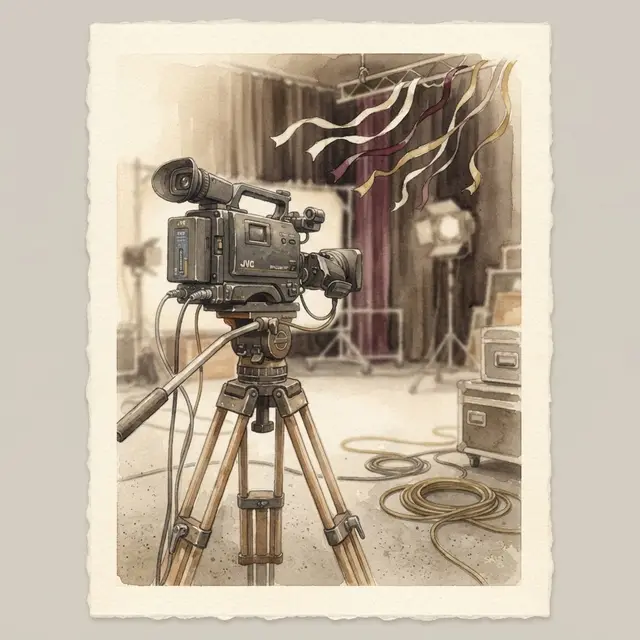
Palette: dark gray / gold wood / burgundy / cream
- BPM
- 98 BPM
- Family
- Asphalt and Diamonds
- Serial
- ASF-23
- Rarity
- Rare
- Style strength
- 89
- Experimentation
- 20
Typical structure
[Harmony Intro] → [Verse] → [Chorus] → [Verse 2] → [Chorus] → [A cappella bridge] → [Final chorus]
The specs above are just the public menu. What doesn't show on the surface are this genre’s two biggest writing traps: how to weave four vocal lines without losing the main narrative, and how to capture nineties intimacy without slipping into cheap parody. That lives inside this card's internal distillate—eight parameters the engine blends directly with your raw story. Once generated, an internal judge evaluates the lyrics against six canon dimensions and repairs anything that feels like a costume. The drum swing is easy to copy. The harmony that gives you goosebumps is not.
How a lyric in this style thinks
A lyric in 90s R&B Revival does one specific thing: it makes the past feel present and warm without pretending the distance isn't real. The genre holds memory at arm's length just long enough to admire it, then pulls it close. Emotion doesn't announce itself through confession or rupture — it arrives through accumulated detail, a memorized phone number, the mechanical click of a cassette deck, the particular weight of a wool coat in a cold car. The warmth is earned, not declared, and that restraint is the whole craft. If the lyric tips into sentiment without those anchors, it collapses into greeting-card softness. The genre demands specificity as the price of feeling.
The base tone of 90s R&B Revival sits somewhere between gratitude and desire — desire that has already been satisfied and is now being savored rather than chased. Lines tend to be mid-length, conversational but musical, shaped to ride a groove rather than fight it. The new jack swing bounce at roughly 98 BPM means syllables fall with a laid-back snap; the lyric shouldn't rush.
Repetition in the chorus is structural and deliberate — the hook circles back not because the writer ran out of ideas but because the feeling genuinely deserves a second and third pass. The bridge breaks that pattern by stripping away rhythm entirely, letting four voices catch air in something close to silence, which means the bridge lyric has to hold up acoustically with no production crutch underneath it.
The sensory field of this genre is narrow and specific in the best way. It lives inside small enclosed spaces — a car interior, a living room with pushed-back furniture, a hallway with good reverb. Its textures are warm and slightly worn: Fender Rhodes keys, the hiss of analog tape, velvet harmonics stacked in the upper registers of four voices moving together. The production palette — amber streetlight, burgundy warmth, cream and wood tones — should guide your word choices too.
The genre never uses cold, clinical imagery; it has no use for fluorescent light, chrome surfaces, or anything that feels like a spreadsheet. Outdoor scenes exist only as glimpsed detail through glass, not as open-air landscapes.
Structurally, the canon runs from a harmony intro — four voices arriving before any verse begins — through two verse-chorus cycles, into an a cappella bridge, and then a final chorus that lands heavier because the low end drops back in under it. This means your verse lyrics need to build a world and your chorus lyrics need to name the feeling at the center of it. The a cappella bridge is the section most writers underwrite: because there are no drums, no keys, nothing but breath and pitch, every word is exposed. Write it short, write it true, and do not reach for a metaphor that needs production to land. Eight bars of raw voice will forgive almost anything except abstraction.
What separates a real 90s R&B Revival lyric from a generic imitation is the absence of crudeness and the absence of bitterness in equal measure. The genre handles desire with a kind of confidence that doesn't need to prove itself, and it handles nostalgia without grievance. If your draft has a score to settle or a wound still bleeding, the warmth won't hold.
The voice glides through runs and slips into falsetto at the end of phrases not to show off but to soften the landing — and your lyrics should do the same, arriving at the emotional peak and then easing off before the listener feels manipulated. That ease, that willingness to let the feeling breathe and not push it to the edge, is the whole signature of the genre.
- GROUP HARMONIES
- SMOOTH NEW JACK
Sample excerpt
Your key fumbles in the lock at 2 AM Leather jacket damp from the misty air You bring the scent of rain and cheap coffee I watch you drop your bag on the hardwood floor We never had much furniture in those days Just a velvet chair and a stack of overdue bills
Oh, tell me you remember the rhythm of us Tracing ink black shadows in that empty room Slow dancing to the hum of the city light Gold embers burning while the world stayed still
Workshop note — This style thrives on mid-tempo pockets and specific, tactile imagery that anchors a memory in physical space. Use the chorus to build expansive vocal harmonies that hover over a steady, swung beat, focusing on the sensory details of the moment rather than grand proclamations. Avoid jagged phrasing; every line should feel smooth and conversational, designed to glide over the bassline.
Sample excerpt written by MUSAI Song. Your lyrics are written from scratch, based on your story.
When to choose this style
Pick this card when your story is a warm memory you can still touch. It works for a ten-year anniversary looking back at that first unfurnished apartment. For a gift to a partner you met by swapping homemade mixtapes in the middle of the night. To say thank you to a childhood friend who held you down when things got heavy, or for a reunion that took years to pull off. Use it when you want to write about desire without crudeness and nostalgia without bitterness, anchored in small details: a memorized landline, a midnight walk through your old neighborhood, or the first slow dance in the living room.
Don't pick it to settle old scores or process a fresh betrayal: 90s R&B Revival needs warmth and cannot handle hostility. Avoid it for recent grief that still stings, or for a cold story about solo ambition. If you want hard street urgency or a story of grit delivered through direct impact, the card is Modern Boom Bap.
Your story in this style
MUSAI Song writes original lyrics from your story, in the 90s R&B Revival style, and delivers the finished sung song, the ready-to-use style recipe, and an illustrated art plate with its numbered certificate, private by default; public only if its owner publishes it.
- Original lyrics written from your story
- A finished sung song, ready to play and share
- Art plate with a unique seal and a numbered certificate, private by default; public only if its owner publishes it
Frequently asked questions
What BPM is 90s R&B Revival?
90s R&B Revival usually runs at 98 BPM.
What does 90s R&B Revival sound like?
Group harmonies and that nineties swing: 90s R&B revival smells like cassette tapes and first love.
What song structure does 90s R&B Revival use?
[Harmony Intro] → [Verse] → [Chorus] → [Verse 2] → [Chorus] → [A cappella bridge] → [Final chorus]
How do I write 90s R&B Revival lyrics?
Tell MUSAI Song your story and pick 90s R&B Revival: it writes original lyrics for this style at 98 BPM, you edit them word by word, and you get the song sung in 90s R&B Revival, with an illustration of the song and its numbered certificate. $19 USD per song, one-time payment.
Explore more styles
- Alt-R&B
- Atlanta Dirty South
- Bedroom Emo Rap
- Candlelight Slow Jam
- Crunk Revival
- Detroit Rap
- Drumless Rap
- G-Funk Revival
- Gospel Trap
- Hip-Hop Love Song
- Icy Drill
- Incense Neo-Soul
- Introspective Hip-Hop
- Jersey Club Rap
- Lo-Fi Cloud Rap
- Melodic Trap
- Memphis Phonk
- Memphis Rap
- Modern Boom Bap
- Modern R&B
- New Orleans Bounce
- NY Drill
- Pluggnb
- R&B Empowerment
Your idea or story, sung in this style
Card · secure payment via Stripe, charged in USD
If it doesn't move you, we give you your money back · 7 days