Melodic Trap
Heartbreak, but make it slap at 130 BPM.
Get your song in Melodic Trap
Make yours in this styleHear it before you pay.$19 USD · your first song for $5.50 USDIf it doesn't move you, we give you your money back · 7 days.
Melodic Trap is a style from the Asphalt and Diamonds family. 130 BPM, Experimentation 28, Style strength 86.
What is Melodic Trap?
Autotune with a wound: melodic trap shines and bleeds at the same time, deep in the middle of the night.
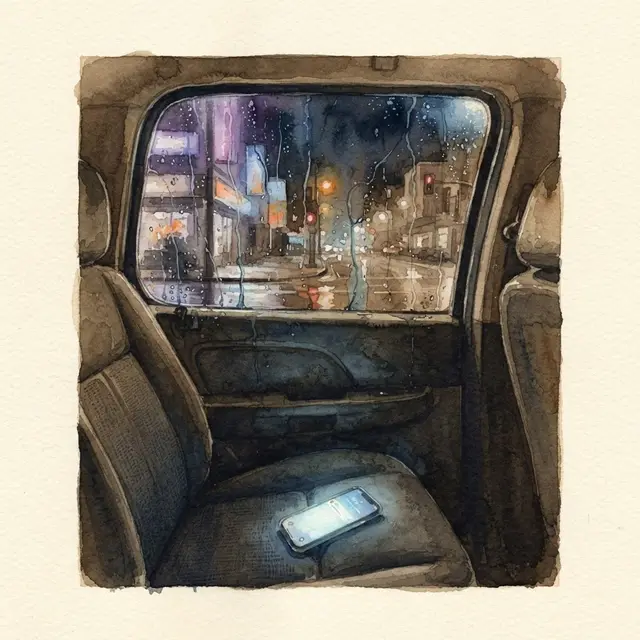
How it sounds
It is three-thirty in the morning on a beltway that leads nowhere useful. The windshield takes the rain in oblique bursts that the wipers barely manage to clear, leaving a blurred smear before starting over. The dashboard casts a dim, bluish glow across your hands, which grip the steering wheel with a stiffness that already aches in your knuckles. To your right, the passenger seat is empty, but the phone screen stays lit face-up on the upholstery, blinking with silent notifications that illuminate the headrest without a sound.
The sound system pushes a heavy 808, a bass so deep it doesn't rattle the doors but vibrates straight against your ribs, like a slowed-down funeral march. Above it, the hi-hats race in a network of tight triplets, a metallic, constant tick-tock marking the seconds it takes to decide whether you floor the accelerator or look for an off-ramp.
Then the voice comes through the speakers: processed by pitch correction until it turns to pure crystal, a layer of flawless tuning that trembles at the exact second the lyrics say something you refused to admit. The machine fixes the pitch but lets the air through, a thread of voice breaking with painful precision, like thin glass under a boot. There are no shouts here. Just the artificial beauty of a filter holding a truth too fragile to speak bare.
Palette: dark blue / neon violet / black / orange amber
- BPM
- 130 BPM
- Family
- Asphalt and Diamonds
- Serial
- ASF-02
- Rarity
- Common
- Style strength
- 86
- Experimentation
- 28
Typical structure
[Intro] → [Melodic verse] → [Hook] → [Verse 2] → [Hook] → [Emotional bridge] → [Final hook]
What you see above is merely the set design. Behind it lie two technical knots that no template solves: maintaining the tension between the machine-like rigidity of the pitch correction and the actual tremor of the confession without sounding like a farce, and rationing everyday objects so a phone or a windshield acts as an exact mirror of inner emptiness without slipping into poetic cliché. That balance lives inside eight internal parameters that the engine crosses with your biography before drafting a single bar. In the end, an internal judge evaluates the lyrics against six dimensions of the canon and orders a rewrite for any line that falls flat. The vocal processor is bought in a store. The exact tremor is not.
How a lyric in this style thinks
A melodic trap lyric does not confess — it circulates. The emotion moves in loops rather than arcs, returning to the same wound at a slightly different angle each time, never quite closing the distance between what the speaker knows and what the speaker can say out loud. That is the defining mechanic of the genre: melodic trap holds a truth in the mouth without swallowing it. The voice, processed through pitch correction until it achieves something close to artificial glass, does not crack in the way an acoustic vocal cracks.
It trembles at the precise syllable where the admission lives, and then the autotune seals it back into a hard, luminous surface. The listener feels the break because the technology marks it so cleanly. There is no rough edge to hide behind. That is the formal risk of the genre, and a lyric that ignores it — that writes around the confession instead of into it — will sound hollow against those 808s.
The bass in melodic trap does not arrive as rhythm. It arrives as pressure, a subsonic weight sitting somewhere between the sternum and the seat cushion, oscillating at a frequency that bypasses the ears and registers directly as dread or longing. Hi-hats layer above it in tight triplet subdivisions, mechanical and relentless at tempos around 130 BPM, creating the sensation of time passing faster than the speaker is ready for.
Lyrics written for this production environment need to match that internal contradiction: the beat is moving, the speaker is stuck. Line length in the melodic verse tends to be short and slightly asymmetrical, landing just off the obvious downbeat, which gives the delivery its characteristic lean — a syllable that arrives a half-beat late feels like someone catching themselves before they say too much. Then they say it anyway.
The sensory field of melodic trap is specific and should be treated as a constraint, not a suggestion. The genre lives inside vehicles at night, on highways that connect nothing meaningful, under amber sodium lights that make everything look slightly jaundiced. The phone screen glowing face-up on an empty seat. The dashboard wash of dim blue light. Rain on glass that the wipers clear but do not clean. These are not decorative images — they are load-bearing. They carry the emotional temperature that the speaker refuses to state directly.
What melodic trap does not use is daylight, crowds, nature as comfort, or any object that signals warmth or resolution. A fire, a field, a sunrise: wrong register entirely. The genre's textures are synthetic, reflective, and faintly cold, even when the feeling underneath is desperate.
Structurally, the hook in melodic trap functions differently from a pop chorus. It is not a release — it is a repetition of the problem, set to a melody so immediate and clean that the listener accepts it as resolution even though nothing has resolved. The hook should contain the confession in its most distilled form, stripped of context, which is why it can repeat three times without wearing out: each return lands in a slightly different emotional position because the verses have shifted the listener's understanding without changing the words.
The emotional bridge, sitting between the second hook and the final hook, is where melodic trap allows itself the closest thing to rawness — sparse production, a vocal that the autotune holds together but barely, a lyric that steps one degree closer to the actual truth. After the bridge, the final hook returns not as triumph but as acceptance of the loop. Nothing is resolved. The highway continues.
What separates a real melodic trap lyric from a generic imitation is the discipline of withholding. The genre is not about expressing pain — it is about performing the containment of pain, and the performance occasionally slips. A lyric that names the feeling in plain terms, that says I am devastated or I miss you completely, breaks the contract. The speaker in melodic trap is too proud, too numbed by forward motion, and too aware of the image they are projecting to speak that plainly.
Instead, the lyric gestures at the wound through objects, through the specific detail of the empty seat or the unread notification, through a line that ends one syllable before it would become too honest. The autotune does the rest. It makes the near-admission shine like something expensive, and then the 808 closes over it, and the beltway continues into whatever comes next.
- FELT AUTOTUNE
- GLOWING WOUND
Sample excerpt
Leather seats burning where you used to sit, I left the receipt for the dinner on the dash. Two espressos, cold by the time the valet pulled up, I’m counting the lines on the asphalt in ink black, Trying to forget the way your voice went thin, When I told you the promotion meant we’d never stay.
Now the amber streetlights blur into violet, I’m driving fast but the silence is heavier, Your ghost is just a flicker on the glowing phone, I’m winning the race but I’m doing it all alone.
Workshop note — This genre thrives on the contrast between rhythmic, rapid-fire syllables and long, dragged-out melodic vowels that allow the autotune to shimmer. By focusing on mundane, sterile objects like a receipt or a phone screen, you ground the emotional ache in the physical reality of a late-night drive. Avoid poetic abstractions; keep the language sharp and cold to mimic the artificial polish of the production.
Sample excerpt written by MUSAI Song. Your lyrics are written from scratch, based on your story.
When to choose this style
Choose this card when you need to confess something you are slightly ashamed of, but with your eyes fixed on the rearview mirror and without slowing down. It works for that breakup that made no noise in a stairwell, but instead rotted in silence during a three-hour drive. For when you realized there was nothing left to argue about and yet the phone was still sitting on the adjacent seat lighting up the nothingness. It is for pride that bleeds inside while you fake coldness in front of others.
For success that tastes like ash because the person you wanted to celebrate with no longer answers messages. Do not choose it for a sweet reconciliation, nor for a celebratory birthday, nor to tell a story where pain resolves with a clean hug; melodic trap offers no happy endings or lukewarm comfort, only the artificial gloss of a wound that keeps oozing beneath the highway lamps. If you are looking for a self-improvement narrative with a bright moral, the card is Cloud Rap.
Your story in this style
MUSAI Song writes original lyrics from your story, in the Melodic Trap style, and delivers the finished sung song, the ready-to-use style recipe, and an illustrated art plate with its numbered certificate, private by default; public only if its owner publishes it.
- Original lyrics written from your story
- A finished sung song, ready to play and share
- Art plate with a unique seal and a numbered certificate, private by default; public only if its owner publishes it
Frequently asked questions
What BPM is Melodic Trap?
Melodic Trap usually runs at 130 BPM.
What does Melodic Trap sound like?
Autotune with a wound: melodic trap shines and bleeds at the same time, deep in the middle of the night.
What song structure does Melodic Trap use?
[Intro] → [Melodic verse] → [Hook] → [Verse 2] → [Hook] → [Emotional bridge] → [Final hook]
How do I write Melodic Trap lyrics?
Tell MUSAI Song your story and pick Melodic Trap: it writes original lyrics for this style at 130 BPM, you edit them word by word, and you get the song sung in Melodic Trap, with an illustration of the song and its numbered certificate. $19 USD per song, one-time payment.
Explore more styles
- 90s R&B Revival
- Alt-R&B
- Atlanta Dirty South
- Bedroom Emo Rap
- Candlelight Slow Jam
- Crunk Revival
- Detroit Rap
- Drumless Rap
- G-Funk Revival
- Gospel Trap
- Hip-Hop Love Song
- Icy Drill
- Incense Neo-Soul
- Introspective Hip-Hop
- Jersey Club Rap
- Lo-Fi Cloud Rap
- Memphis Phonk
- Memphis Rap
- Modern Boom Bap
- Modern R&B
- New Orleans Bounce
- NY Drill
- Pluggnb
- R&B Empowerment
Your idea or story, sung in this style
Card · secure payment via Stripe, charged in USD
If it doesn't move you, we give you your money back · 7 days