Detroit Rap
Punchlines assembled with Motor City precision.
Get your song in Detroit Rap
Make yours in this styleHear it before you pay.$19 USD · your first song for $5.50 USDIf it doesn't move you, we give you your money back · 7 days.
Detroit Rap is a style from the Asphalt and Diamonds family. 100 BPM.
What is Detroit Rap?
Sinister piano and a flow that answers to no one: Detroit rap rhymes like it doesn't need your approval.
How it sounds
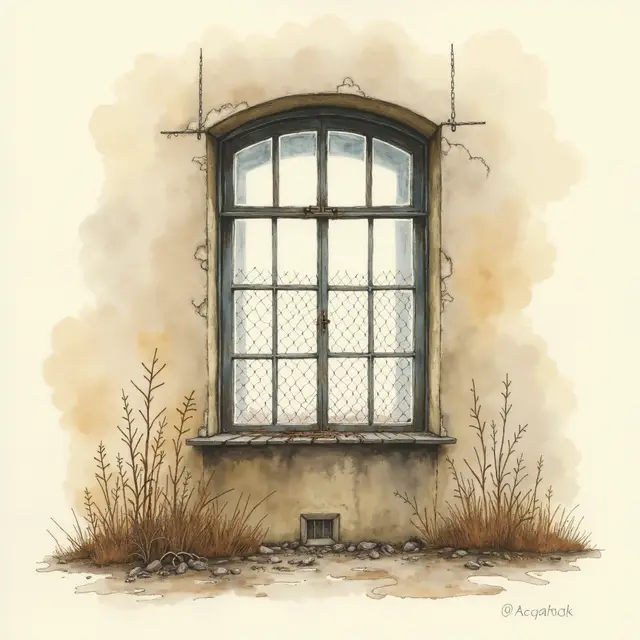
It is four in the afternoon and the Michigan sky has the exact color of a used aluminum can. You are leaning against the bumper of a Lincoln Continental that has seen better decades; the metal pops beneath the dry cold rolling down from the lake. All around you, the parking lot of the abandoned plant is a rectangle of cracked asphalt where weeds push through the tar like they are in a rush. The air tastes of burnt gasoline and stale dampness.
Inside the cabin, the piano kicks in: notes repeating with a clinical insistence, recorded with a glare so cold it feels like the keys were carved from trimmed ice. There is no hook to catch you, just a percussive knock that lands lopsided, dragging slightly off the bar, as if the drummer were half a block ahead of the beat and did not care if you kept up. The voice drops in without raising its volume. It does not rap to impress; it lists facts with the indifferent precision of someone checking an inventory of salvaged parts.
It names an address, drops an exact figure, describes how rust eats the skin of a back door. Every line is an iron stake driven into wet dirt. There is no rage in the tone, only the frozen certainty of a man who took off his coat in the middle of a squall and stopped shivering hours ago. The track grinds on, crooked and steady at once, while the white smoke of your breath dissolves slowly into the gray.
Palette: slate gray / sienna rust / muted steel blue
- BPM
- 100 BPM
- Family
- Asphalt and Diamonds
- Serial
- ASF-20
- Rarity
- Rare
Typical structure
[Piano Intro] → [Verse] → [Hook] → [Verse 2] → [Hook] → [Verse 3] → [Outro]
What you see above is merely the peeled paint on the door. The real friction here is holding the deadpan without sounding bored and making the flow land off the grid without looking like the writer missed the meter by accident. That lives inside an unpublished eight-parameter distillate that the motor crosses with every raw detail of your past before the first bar is laid down. When it finishes, an internal judge weighs the lyrics against six dimensions of the canon and sends back anything that smells like a pose or a lecture for a complete rewrite. The sinister piano can be programmed in ten minutes. The ice-water pulse, cannot.
How a lyric in this style thinks
A Detroit Rap lyric does not ask you to feel anything. It presents evidence. The voice drops into the track with the flat authority of someone reading a police report they wrote themselves, and the listener either keeps up or gets left in the parking lot. This is the genre's first and most important distinction: emotion is not performed, it is embedded in the precision of the detail. When you name the exact figure on a final paycheck, when you describe the specific sound a deadbolt makes at two in the morning, when you note the color of the sky over a closed plant on a Tuesday afternoon — that specificity is the feeling. The genre does not interpret its own pain. It invoices it.
The base tone is controlled and cold, but cold in the way that iron is cold — not absent of heat, but deliberately withholding it. Anger in Detroit Rap arrives as inventory, not explosion. Lines tend to be long and dense, packed with syllables that tumble forward in an off-grid cadence that sounds almost conversational until you realize how precisely it's been calibrated. The flow drags slightly against the kick, lands where the beat doesn't expect it, and that friction is intentional.
It mirrors the subject matter: a man who has stopped synchronizing himself to other people's rhythms. Repetition, when it appears, is structural rather than emotional — a phrase returns not to emphasize feeling but to close an argument, the way you'd repeat a number on a contract to make sure it was heard.
The sensory field of Detroit Rap is specific and industrial. Cracked asphalt, rust scaling the underside of a car door, the particular gray of a Michigan sky in November, the smell of burnt oil that doesn't leave a coat even after washing — these are the textures the genre lives inside. The piano, usually a looped figure with a clinical, almost sinister repetition, provides the harmonic environment: not warm, not lush, recorded with a glare that makes the keys sound like they were sampled from a colder room than the one you're sitting in.
What this genre never uses is softness as decoration. No atmospheric reverb washes, no major-key redemption arc, no bridge that pivots into resolution. The production stays low and punchy, the drums landing with a knock that is felt more than heard, and the space between sounds is as intentional as the sounds themselves.
Structurally, Detroit Rap follows a logic of accumulation. The piano intro sets the temperature before a word is spoken — you know exactly what kind of room you're walking into. The verses are where the real work happens: long, fact-dense, each line an iron stake. The hook, when it exists, functions less as a melodic release and more as a statement of position, delivered at the same deadpan register as the verse. There is no emotional gear-shift between sections. The outro does not resolve; it exits. The track ends because the inventory is complete, not because anything has been forgiven or explained.
What separates a genuine Detroit Rap lyric from a generic imitation is the refusal to editorialize. The amateur version tells you how to feel about the story. The real version trusts that the details carry enough weight on their own. If you find yourself writing lines that explain the emotion — that describe how betrayal felt, how hard the fall was, how satisfying the comeback — you are writing around the genre rather than inside it. Write the address. Write the figure. Write what the metal sounded like when it popped in the cold.
The listener will do the rest. The genre's authority comes from the voice that has already processed all of this alone, off-camera, and is now simply presenting the findings.
- SINISTER PIANO
- UNFILTERED FLOW
Sample excerpt
Moved the couch alone, I didn't need a hand to lift it. Parked the black sedan where the asphalt’s drifted. Threw the keys in the river, bought a brand new cylinder. Watching the indigo sky, feeling like a pillager. Accountant sent the file, yeah, the numbers looking heavy. I was drowning in the mud, now I'm standing on the levee.
Don't ask me for a favor, I don't know your face. Left the office with a box, set a different pace. Keep the receipt, I paid for every single brick. That old talk is cheap, and the air is getting thick.
Workshop note — This sample uses irregular line lengths and internal rhymes to mimic the genre's signature off-kilter delivery. The hook avoids melodic soaring in favor of a blunt, rhythmic statement that reinforces the narrator's emotional distance. By grounding the verse in specific objects like a black sedan and a new door cylinder, it replaces abstract pain with a cold, tactile reality.
Sample excerpt written by MUSAI Song. Your lyrics are written from scratch, based on your story.
When to choose this style
Choose this track when you need to put absolute distance between your story and anybody else's pity. It works for when you got back on your feet after everyone wrote you off and you refuse to celebrate with applause, demanding a signed receipt instead. For when an old partner turned away and you decided the answer was not an argument, but the permanent silence of changing the deadbolt. To narrate a youth where cold was not a season but a way to measure the gap between crumbling walls.
For the afternoon you walked out of an office holding a single cardboard box with the cold certainty that the top floor's opinion no longer exists. Detroit Rap is not meant for asking forgiveness, softening old griefs, or kitchen-table reconciliations; if you are after a warm confession or a comforting hug, this card will feel too stark and stiff. If you need to dissect a betrayal with the surgical precision of an audit, the card is Modern Boom Bap.
Your story in this style
MUSAI Song writes original lyrics from your story, in the Detroit Rap style, and delivers the finished sung song, the ready-to-use style recipe, and an illustrated art plate with its numbered certificate, private by default; public only if its owner publishes it.
- Original lyrics written from your story
- A finished sung song, ready to play and share
- Art plate with a unique seal and a numbered certificate, private by default; public only if its owner publishes it
Frequently asked questions
What BPM is Detroit Rap?
Detroit Rap usually runs at 100 BPM.
What does Detroit Rap sound like?
Sinister piano and a flow that answers to no one: Detroit rap rhymes like it doesn't need your approval.
What song structure does Detroit Rap use?
[Piano Intro] → [Verse] → [Hook] → [Verse 2] → [Hook] → [Verse 3] → [Outro]
How do I write Detroit Rap lyrics?
Tell MUSAI Song your story and pick Detroit Rap: it writes original lyrics for this style at 100 BPM, you edit them word by word, and you get the song sung in Detroit Rap, with an illustration of the song and its numbered certificate. $19 USD per song, one-time payment.
Explore more styles
- 90s R&B Revival
- Alt-R&B
- Atlanta Dirty South
- Bedroom Emo Rap
- Candlelight Slow Jam
- Crunk Revival
- Drumless Rap
- G-Funk Revival
- Gospel Trap
- Hip-Hop Love Song
- Icy Drill
- Incense Neo-Soul
- Introspective Hip-Hop
- Jersey Club Rap
- Lo-Fi Cloud Rap
- Melodic Trap
- Memphis Phonk
- Memphis Rap
- Modern Boom Bap
- Modern R&B
- New Orleans Bounce
- NY Drill
- Pluggnb
- R&B Empowerment
Your idea or story, sung in this style
Card · secure payment via Stripe, charged in USD
If it doesn't move you, we give you your money back · 7 days