New Orleans Bounce
NOLA invented this — your hips just found out.
Get your song in New Orleans Bounce
Make yours in this styleHear it before you pay.$19 USD · your first song for $5.50 USDIf it doesn't move you, we give you your money back · 7 days.
New Orleans Bounce is a style from the Asphalt and Diamonds family. 100 BPM, Experimentation 46, Style strength 82.
What is New Orleans Bounce?
The Triggerman call that moves all of NOLA: bounce, a style born in New Orleans, is sweat, hips, and community.
How it sounds
It is four in the afternoon on the St. Claude neutral ground and the air is so thick you feel like you are breathing lukewarm soup. The asphalt shines black, melting slowly under a heavy sun that gives no quarter. You are standing by a row of wooden porches painted in bright mint and octoroon yellow where grandmothers fan themselves with cardboard while barefoot kids chase a bicycle tire rolling on its own. Ten meters away, an ice cream truck idles with a low hum that competes with the 808 hammering from an open trunk.
The Triggerman drum machine sets the pace: a dry, relentless pattern that enters through the soles of your feet and climbs up your knees before you even notice. The tuba answers from underneath with a thick growl that rattles plastic cups filled with bourbon and crushed ice resting on the rail. Suddenly, a trumpet slices the air with a sharp call, gold pistons flashing under the humidity, and someone shouts a short command into the mic that makes fifty sets of hips drop at once, exact, synchronized by an unseen force.
Mardi Gras flags hang limp from the utility poles, drenched in sweat and heat, while the ground vibrates to the rhythm of a block that refuses to stand still. Dust kicks up in small swirls around your sneakers, your chest pounds to the kick drum, and time stops moving forward: there is only the weight of your body dropping on bent knees, the dry punch of the beat, and the urgent need to keep moving down.
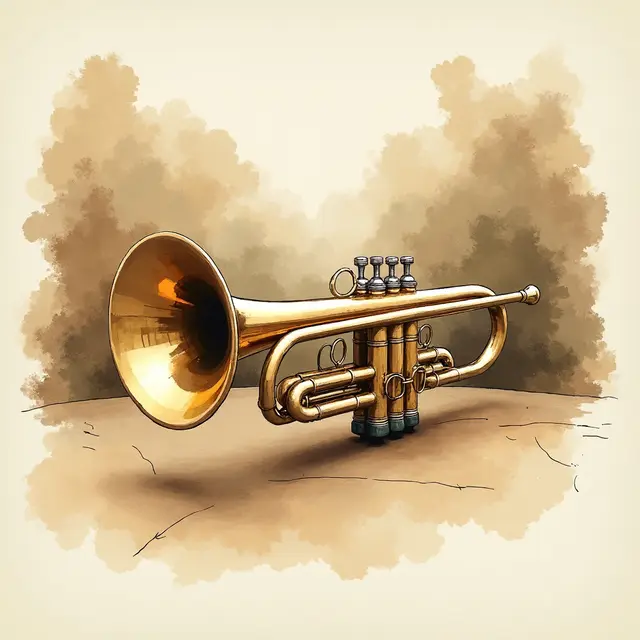
Palette: warm brass gold / silver gray / pistons in subtle teal
- BPM
- 100 BPM
- Family
- Asphalt and Diamonds
- Serial
- ASF-29
- Rarity
- Rare
- Style strength
- 82
- Experimentation
- 46
Typical structure
[Call Intro] → [Verse] → [Repetitive hook] → [Verse 2] → [Hook] → [Twerk breakdown] → [Final hook]
The data above is just the visible surface of the recipe. Behind it lie distinct technical hurdles: how to keep enough breath in your chest to rap over a hundred BPM without choking, and how to structure a call-and-response that sounds like a real block party instead of a canned studio chant. All of that lives inside an unpublished internal distillate of eight parameters, and the engine cross-references it with your exact story. When it finishes, an internal judge measures the lyrics against six canonical dimensions and sends back anything that falls short. The beat can be bought anywhere. The weight of the block, no.
How a lyric in this style thinks
A New Orleans Bounce lyric does not describe a celebration — it commands one. The words arrive as instructions, short and percussive, aimed at bodies rather than minds. Where most genres ask you to feel something, bounce tells you exactly what to do with your hips, your knees, your weight, and the floor beneath you. That imperative engine is the first thing to understand: every line is a directive or a confirmation, and the crowd's response is built into the structure from the start. The Triggerman pattern — that dry, relentless 808 kick and snare loop — is not backdrop; it is the skeleton the lyric hangs on, and every syllable lands against it like a knuckle on a door.
The emotional register in bounce sits at the intersection of pride and release. The feeling is not tenderness; it is the specific relief of a neighborhood that has outlasted something brutal and needs to say so with its whole body. Emotion arrives through volume and repetition, not through metaphor. The hook in a bounce track is not a melody to admire — it is a phrase short enough to shout on a second listen, repeated until it becomes physical reflex. Four to six syllables is not a rule but a gravitational pull. The verse exists to set a scene or make a claim, but it exists primarily to build pressure toward that hook, which the crowd already knows before it lands.
The sensory field of bounce is hyper-specific to St. Claude and the neutral ground, to wooden porches and asphalt that holds the afternoon heat long after sundown. Concrete objects earn their place here: the plastic cup, the ice cream truck idling at the corner, the tuba growl underneath everything, the trumpet cutting through humidity like a blade. What bounce never uses is interior abstraction. You will not find quiet rooms, rain on a window, or the careful grammar of regret. The vocabulary is outdoor, communal, and physical. Even the brass band flavor — when it appears — functions as punctuation, not atmosphere.
Structurally, bounce moves in a tight arc: a call intro that establishes the MC's authority and locks the tempo in the listener's body, two verses that build the specific story or the specific block's claim, hooks that return with the same words each time because variation would break the spell, a twerk breakdown where the lyric thins to almost nothing and the beat takes full command, and a final hook that lands harder because the breakdown has cleared the room of everything else. The breakdown is not a bridge — it is a pressure release that makes the final hook feel like re-entry. Silence is not welcome here; the space between sections is filled by crowd response or brass punctuation.
What separates a real bounce lyric from a generic imitation is the call-and-response architecture built into the writing itself. The MC writes the answer before the crowd knows the question. Short declarative commands, a pause measured in exactly one beat, then a chanted confirmation — that rhythmic contract is what makes fifty sets of hips drop at once on cue. If your lyric reads complete without a crowd, you have not yet written bounce. The Triggerman does not carry sentiment; it carries urgency. Write the lyric so that standing still while it plays feels like a small failure.
- TRIGGER CALL
- NOLA HIPS
Sample excerpt
Third Ward porch with the speakers in the grass Ice chest sweating while the city buses pass Auntie brought the gumbo, Marcus brought the noise Got the whole block stepping, all the girls and boys Folded up the bills that we finally paid Dancing on the pavement in the amber evening shade
Where you at, where you at? Get it off the ground! Tell the whole damn street that we back in town! Where you at, where you at? Let the bass line hit! Bend your knees, drop low, we ain't stoppin' a bit!
Workshop note — Bounce lyrics thrive on fast, chanted call-and-response phrases and relentless vocal repetition designed to drive collective physical movement. The imagery grounds the triumph in real urban spaces—porches, ice chests, and pavement—shifting personal relief into a block-wide celebration. The genre discards internal monologues in favor of direct commands that leave no room for sitting down.
Sample excerpt written by MUSAI Song. Your lyrics are written from scratch, based on your story.
When to choose this style
Choose this carta when the story asks for a celebration that cannot fit inside a quiet room, needing the entire street as a witness. It works to celebrate that the neighborhood is still standing despite everything, that the whole block chipped in to lift someone up, or that a family survived a brutal year and is finally shaking it off on the front porch. Use it when an achievement is not told through quiet tears, but through a loud gathering where nobody sits down and sweat on the back of the neck is the only proof you are alive.
For that friend who learned to walk tall again and wants his people to celebrate with music bouncing right against the ribcage. Do not use this for silent grief, lonely nostalgia, or quiet breakups where you need stillness to figure out what broke: bounce does not know how to whisper and has no patience for long pauses. If you are looking for an intimate confession to cry alone, the carta is Modern Boom Bap.
Your story in this style
MUSAI Song writes original lyrics from your story, in the New Orleans Bounce style, and delivers the finished sung song, the ready-to-use style recipe, and an illustrated art plate with its numbered certificate, private by default; public only if its owner publishes it.
- Original lyrics written from your story
- A finished sung song, ready to play and share
- Art plate with a unique seal and a numbered certificate, private by default; public only if its owner publishes it
Frequently asked questions
What BPM is New Orleans Bounce?
New Orleans Bounce usually runs at 100 BPM.
What does New Orleans Bounce sound like?
The Triggerman call that moves all of NOLA: bounce, a style born in New Orleans, is sweat, hips, and community.
What song structure does New Orleans Bounce use?
[Call Intro] → [Verse] → [Repetitive hook] → [Verse 2] → [Hook] → [Twerk breakdown] → [Final hook]
How do I write New Orleans Bounce lyrics?
Tell MUSAI Song your story and pick New Orleans Bounce: it writes original lyrics for this style at 100 BPM, you edit them word by word, and you get the song sung in New Orleans Bounce, with an illustration of the song and its numbered certificate. $19 USD per song, one-time payment.
Explore more styles
- 90s R&B Revival
- Alt-R&B
- Atlanta Dirty South
- Bedroom Emo Rap
- Candlelight Slow Jam
- Crunk Revival
- Detroit Rap
- Drumless Rap
- G-Funk Revival
- Gospel Trap
- Hip-Hop Love Song
- Icy Drill
- Incense Neo-Soul
- Introspective Hip-Hop
- Jersey Club Rap
- Lo-Fi Cloud Rap
- Melodic Trap
- Memphis Phonk
- Memphis Rap
- Modern Boom Bap
- Modern R&B
- NY Drill
- Pluggnb
- R&B Empowerment
Your idea or story, sung in this style
Card · secure payment via Stripe, charged in USD
If it doesn't move you, we give you your money back · 7 days