Trap Anthem
The 808 hits before your name does.
Get your song in Trap Anthem
Make yours in this styleHear it before you pay.$19 USD · your first song for $5.50 USDIf it doesn't move you, we give you your money back · 7 days.
Trap Anthem is a style from the Asphalt and Diamonds family. 140 BPM, Experimentation 25, Style strength 88.
What is Trap Anthem?
Seismic 808s and hi-hats like electric rain. The trap anthem walks into the room before you do.
How it sounds
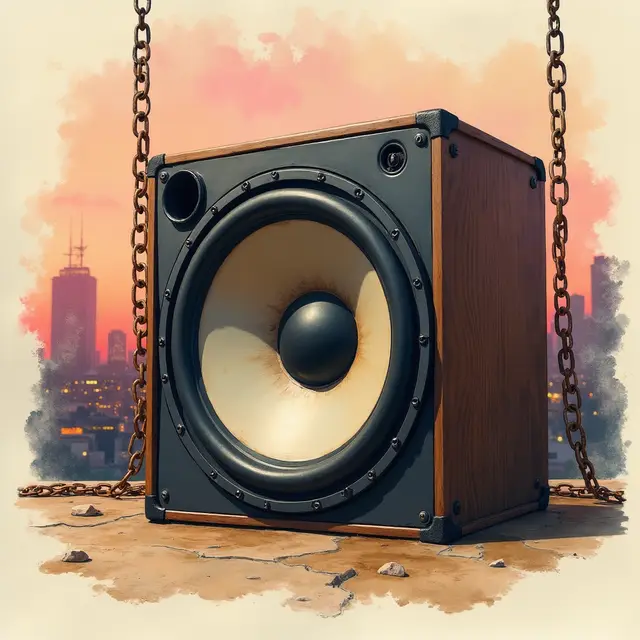
It is half past three in the morning on the twenty-seventh floor of a glass tower overlooking nothing. The floor is dark mahogany, cold beneath your soles. Outside, the city air drifts up heavy with moisture and rust, slipping through the poorly sealed window frame. You are sitting on the edge of a low sofa, watching the reflection of your own face in the dark glass while the magenta skyline has already turned to pitch black. Two meters away, the subwoofer is live. It is not loud: it is felt.
Every four bars, the 808 strikes with the force of a hydraulic piston that rattles your breastbone and forces you to swallow hard. The hi-hats rain down like a storm of steel nails, blindingly fast, microscopic, slicing the air with frightening precision. You are wearing a heavy chain around your neck; the metal taps your collarbone with a cold, steady weight, reminding you exactly where you are and what it took to get here.
There is no background music; there is a heavy machine running on sixteen cylinders that measures your pulse and forces it to lock into its own violence. The light of a billboard across the street flashes red against the wall, a steady pulse bleeding in and out of the room. Outside, the city keeps spinning in its own noise, but inside this room the air is dense, smelling of graphite and chilled glass, and every second sounds like a signed sentence that can no longer be erased.
Palette: graphite black / mahogany wood / sunset coral magenta / gold rust chains
- BPM
- 140 BPM
- Family
- Asphalt and Diamonds
- Serial
- ASF-01
- Rarity
- Common
- Style strength
- 88
- Experimentation
- 25
Typical structure
[Intro] → [Verse] → [Hook] → [Verse 2] → [Hook] → [Bridge] → [Final Hook]
What you see in the public data is just the chassis. Behind it lies an invisible problem: how to make arrogance sound like physical truth rather than cardboard posing, and how to keep the accumulation of material power from turning into an empty caricature. That lives in the unpublished eight-parameter distillate that the engine cross-references with your story before writing the first bar. In the end, an internal judge measures the lyrics against six canons and orders the demolition of anything sounding weak. The beat can be bought anywhere. The exact weight of the gold cannot.
How a lyric in this style thinks
A trap anthem lyric does one thing above everything else: it occupies space. It does not argue its case, it does not explain its wounds, and it does not ask for a verdict. The lyric arrives as a statement of fact, the way a signed contract arrives — already binding, already done. This is the core discipline of the genre: every line must feel like a door being closed rather than opened. The emotional architecture is not warmth or confession; it is the specific gravity of a person who has already survived whatever the room thought would break them, and is now simply noting the record for the archive.
The base tone of a trap anthem sits somewhere between iron patience and controlled contempt. Anger is present, but it has been compressed until it no longer flickers — it radiates. Emotion in this genre arrives through restraint, not release. A line that says too much loses the weight. The most effective lyrics in this form are short, declarative, and slightly unfinished, leaving a beat of silence after the period that the 808 then fills like a hydraulic press hitting the floor.
Line length is deliberately uneven: a long clause followed by a fragment, a dense bar followed by two words that land like a gavel. Repetition in the hook is structural, not ornamental — the hook returns not to emphasize feeling but to establish permanence, the way a signature is written twice on a legal document.
The sensory field of the trap anthem is precise and hard-edged. Concrete objects carry the weight: cold glass, heavy chains, mahogany floors, the red pulse of a billboard cutting through dark air. The genre lives in high floors and empty rooms, in the hour before dawn when the city is still running but no one is watching. Graphite, ink black, amber, deep gold — these are the colours that belong here. What the lyric never uses is soft texture: no fabric, no warmth, no candles, no open windows with a breeze. The acoustic environment is sealed.
The hi-hats rain down in microscopic bursts at speeds that feel mechanical rather than human, and the lyric's internal rhythm should mirror that — fast syllables clustered together and then a sudden held note or silence, the way a storm of steel nails suddenly stops.
Structurally, the trap anthem follows a logic of escalation and consolidation. The intro and first verse establish the position — where you are, what was done, what it cost. The hook does not pivot emotionally; it locks the position in place. The second verse moves the camera slightly, adding one specific detail that makes the victory or the cold indifference more concrete, more irrefutable.
The bridge is the only moment where the tempo of the language can slow, where a single image or a single line is allowed to stand alone in the mix — not as vulnerability, but as the moment you look the other person in the eye without blinking. The final hook returns with the same words but lands harder because by then the listener has accumulated all the evidence.
What separates a real trap anthem lyric from a generic imitation is the refusal to celebrate. Generic versions of the genre reach for triumph and applause; the actual form is colder than that. The protagonist of a trap anthem does not smile when the contract is signed. They do not explain what they overcame to the people who doubted them. The lyric names the conquest the way a coroner names a cause of death — clinically, with full authority, without drama. If your draft contains the word 'finally' followed by an exhale, or an appeal to anyone's recognition, pull it out. The trap anthem demands space, not a crowd.
- SEISMIC 808
- RAIN HI-HATS
Sample excerpt
Ink black fountain pen on the mahogany desk, Three phones buzzing but I ignore the rest. You called three times from the lobby downstairs, Now you want a seat where the air is spare. Heavy gold chain hanging cold on my chest, I don't need a hand, I just bought the whole crest. No smile for the lens when the flash goes white.
We don't negotiate under the gold rust light, Turned the basement keys into the penthouse heights. I don't need your hand to hold the door, We don't ask for room, we just take the floor.
Workshop note — This trap anthem lyric uses short, hard-hitting declarative sentences to establish an uncompromising presence before the beat even drops. The repetition of heavy, concrete nouns—like mahogany, gold, and ink—creates a physical weight that anchors the vocal rhythm against rapid hi-hats. By avoiding emotional pleading or metaphors of struggle, the text maintains the cold, victorious boundary essential to the genre.
Sample excerpt written by MUSAI Song. Your lyrics are written from scratch, based on your story.
When to choose this style
Choose this card when you need to drive a stake into the ground and declare your ground after everyone bet on your collapse. It works for the day you sign the life-changing contract and refuse to smile for anyone. For the moment you return the call to the one who locked the door and no longer care what they say. To build a personal victory anthem that demands space, not applause. It serves when anger has cooled down until it is as solid as iron and you only need a seismic foundation to name what you conquered.
Do not choose it for a tender reconciliation, a quiet grief, or a Sunday afternoon family memory: the trap anthem has no room for soft nostalgia or long explanations; if you need to ask for forgiveness or show unarmored vulnerability, this card will feel too heavy and cold. If you are looking for an intimate, fractured confession about past mistakes, the card is Cloud Rap.
Your story in this style
MUSAI Song writes original lyrics from your story, in the Trap Anthem style, and delivers the finished sung song, the ready-to-use style recipe, and an illustrated art plate with its numbered certificate, private by default; public only if its owner publishes it.
- Original lyrics written from your story
- A finished sung song, ready to play and share
- Art plate with a unique seal and a numbered certificate, private by default; public only if its owner publishes it
Frequently asked questions
What BPM is Trap Anthem?
Trap Anthem usually runs at 140 BPM.
What does Trap Anthem sound like?
Seismic 808s and hi-hats like electric rain. The trap anthem walks into the room before you do.
What song structure does Trap Anthem use?
[Intro] → [Verse] → [Hook] → [Verse 2] → [Hook] → [Bridge] → [Final Hook]
How do I write Trap Anthem lyrics?
Tell MUSAI Song your story and pick Trap Anthem: it writes original lyrics for this style at 140 BPM, you edit them word by word, and you get the song sung in Trap Anthem, with an illustration of the song and its numbered certificate. $19 USD per song, one-time payment.
Explore more styles
- 90s R&B Revival
- Alt-R&B
- Atlanta Dirty South
- Bedroom Emo Rap
- Candlelight Slow Jam
- Crunk Revival
- Detroit Rap
- Drumless Rap
- G-Funk Revival
- Gospel Trap
- Hip-Hop Love Song
- Icy Drill
- Incense Neo-Soul
- Introspective Hip-Hop
- Jersey Club Rap
- Lo-Fi Cloud Rap
- Melodic Trap
- Memphis Phonk
- Memphis Rap
- Modern Boom Bap
- Modern R&B
- New Orleans Bounce
- NY Drill
- Pluggnb
Your idea or story, sung in this style
Card · secure payment via Stripe, charged in USD
If it doesn't move you, we give you your money back · 7 days