Spoken Word Soul
Poetry night, but the bass line takes notes.
Get your song in Spoken Word Soul
Make yours in this styleHear it before you pay.$19 USD · your first song for $5.50 USDIf it doesn't move you, we give you your money back · 7 days.
Spoken Word Soul is a style from the Asphalt and Diamonds family. 76 BPM, Experimentation 48, Style strength 84.
What is Spoken Word Soul?
Poem over a walking bass line: spoken word soul turns the coffee shop into a confessional with groove.
How it sounds
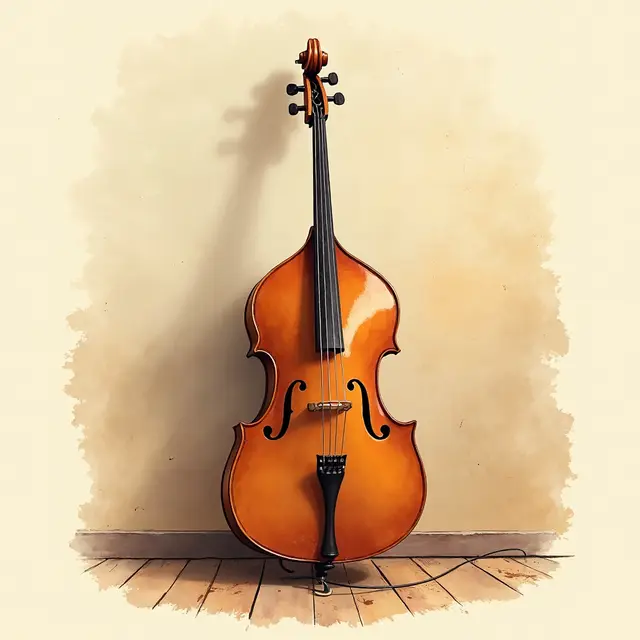
It is three in the morning inside a café locked from the street, save for the amber bulb left burning for the few who stayed. The air smells of scorched coffee grounds and heavy paper. Wooden chairs creak in their own rhythm as someone leans forward to speak the truth they have swallowed for three years. There is no drum kit. Only an upright bass plucked with raw fingertips, each thick, round note floating in the room before dying against the carpeted walls.
The strings hum with that old-wood resonance you feel against your ribs, measuring a thick, dragging time. In the center, beneath a bare bulb hanging without a shade, stands a floor mic with a dented grille worn by a thousand mouths. Someone snaps their fingers in the corner, a dry tick keeping time without asking permission, while a voice starts to speak rather than sing, dropping words with the precision of silver coins counted on a pine table. The world outside has ceased to exist.
There is only this heavy pulse, the steam rising from a cold ceramic cup, and the uneasy certainty that falsehood is no longer an option. Every line lands with deliberate weight, carving out a space in the quiet that the next syllable must fill.
Palette: brown black warm orange amber
- BPM
- 76 BPM
- Family
- Asphalt and Diamonds
- Serial
- ASF-31
- Rarity
- Epic
- Style strength
- 84
- Experimentation
- 48
Typical structure
[Bass Intro] → [Spoken verse] → [Sung refrain] → [Spoken verse 2] → [Refrain] → [Spoken climax] → [Final refrain]
What you see on the surface is merely the café atmosphere and the bassline. Behind it lie two stubborn writing hurdles that defy simple tables: keeping the poem from slipping into academic pretense when set to music, and ensuring the shift from spoken verse to sung chorus feels like a breath rather than a trick. That balance lives inside an unpublished set of eight parameters that the motor cross-references with your story. When writing finishes, an internal judge measures the lyrics against six dimensions of the canon and forces a rewrite on anything that rings false. A walking bass can be played by anyone. Unfiltered truth cannot.
How a lyric in this style thinks
A lyric in spoken word soul does not perform emotion — it delivers it at close range, the way a confession arrives across a small table rather than from a stage. The voice speaks more than it sings, and that distinction is structural, not stylistic. The spoken verse carries the full weight of meaning: it is where the real sentence lives, the one that took three years to form.
The sung refrain, when it finally comes, is not a hook in the pop sense — it is the moment the body can no longer sustain pure speech and tips, briefly, into melody, before returning to the deliberate cadence of prose-as-lyric. This is the essential architecture of spoken word soul, and every other decision follows from it.
The base tone is amber-dark, warm but never sweet. Emotion arrives through precision, not volume. A line lands because of where it pauses, not because it escalates. Repetition works differently here than in most song forms: when a phrase returns, it returns with accumulated weight, the way a word said twice in an argument means something the first saying could not carry. Line lengths are deliberately uneven — some lines are short enough to feel like a door closing, others run long and breathless, mimicking actual thought.
The rhythm is spoken syntax, not metric verse, which means the lyric must be written to be heard aloud, not scanned on a page. If it reads cleanly as a poem but feels awkward in the mouth, it is not finished.
The sensory field of spoken word soul is specific and austere: scorched coffee, heavy paper, wood grain, ceramic, the dry tick of a finger snap in a room with carpeted walls. The upright bass is the only constant harmonic presence — plucked slowly, each note round and brief, measuring time without driving it. Tempo sits around 76 BPM, which is a walking pace, a thinking pace, the speed at which someone chooses their next word carefully.
What this genre refuses is ornamentation: no string swells padding out the silence, no reverb-soaked production softening the edges, no percussive urgency pushing the listener forward. The intimacy depends on sparse arrangement. When you add too much, you give the listener somewhere to hide, and spoken word soul does not allow hiding.
Structurally, the spoken verses do the confessional work — they name things, place them in time, hold them up without flinching. The sung refrain exists as emotional release but also as a kind of formal anchor, a recurring phrase that the verses orbit. The spoken climax is the most demanding section to write: it must feel inevitable rather than theatrical, the point where everything said before converges into a single clear admission. Many writers reach for rhetorical flourish here and lose the genre entirely. The climax works only when it sounds like someone who has run out of ways to avoid the truth, not someone who has rehearsed their arrival at it.
What separates a genuine spoken word soul lyric from a generic imitation is the quality of the specific detail. The genre lives or dies on concrete nouns: not 'a difficult conversation' but 'the third cup of coffee neither of us touched.' Not 'I felt guilty' but 'I counted the tiles between the door and where you stood.' Abstraction is the enemy. So is false resolution — this form does not require the speaker to have healed or understood; it requires only that they have spoken with full honesty about what remains. The final refrain does not close the door. It holds it open, letting the silence after the last syllable do the work that no additional lyric could.
- POEM WITH BASS
- COFFEE AND TRUTH
Sample excerpt
I left your heavy coat hanging by the radiator. It smells like wet wool and the stale smoke of five o'clock. I didn't say goodbye because the elevator was loud, and I had forty dollars and a cardboard suitcase. You never looked up from the kitchen table. Your hands were stained with motor oil and grease, just like mine are now, twenty years down this gravel road.
Some truths are spoken in the dark between us, heavy as lead, sweet as burnt sugar in an iron pot.
Workshop note — This genre relies on conversational pacing where the rhythm is carried entirely by the upright bass rather than traditional rhyme schemes. The spoken verses build heavy, tactile details of ordinary rooms, while the sung refrain opens the voice into a warm, lingering melody that acts as a release.
Sample excerpt written by MUSAI Song. Your lyrics are written from scratch, based on your story.
When to choose this style
Choose this card when you need to confess something too heavy to shout but impossible to keep quiet. It fits that overdue conversation with a father whose rigid posture and fear of affection you inherited. It works when a breakup did not end in slammed doors, but in a long dinner where the cleanest truths were spoken in a low murmur. It names the quiet guilt of leaving your hometown knowing no one stood on the platform waiting for your return.
It fits an anniversary where gifts feel pointless and the only task left is admitting that time passed and it still leaves an ache. It is entirely wrong for a party, a loud victory, or teenage romance built on fireworks: spoken word soul has no room for artifice or frantic shouting. It fails completely if you want a catchy pop hook for the radio. If you want a smooth vocal delivery wrapped in classic R&B arrangements, the letter is 90s R&B Revival.
Your story in this style
MUSAI Song writes original lyrics from your story, in the Spoken Word Soul style, and delivers the finished sung song, the ready-to-use style recipe, and an illustrated art plate with its numbered certificate, private by default; public only if its owner publishes it.
- Original lyrics written from your story
- A finished sung song, ready to play and share
- Art plate with a unique seal and a numbered certificate, private by default; public only if its owner publishes it
Frequently asked questions
What BPM is Spoken Word Soul?
Spoken Word Soul usually runs at 76 BPM.
What does Spoken Word Soul sound like?
Poem over a walking bass line: spoken word soul turns the coffee shop into a confessional with groove.
What song structure does Spoken Word Soul use?
[Bass Intro] → [Spoken verse] → [Sung refrain] → [Spoken verse 2] → [Refrain] → [Spoken climax] → [Final refrain]
How do I write Spoken Word Soul lyrics?
Tell MUSAI Song your story and pick Spoken Word Soul: it writes original lyrics for this style at 76 BPM, you edit them word by word, and you get the song sung in Spoken Word Soul, with an illustration of the song and its numbered certificate. $19 USD per song, one-time payment.
Explore more styles
- 90s R&B Revival
- Alt-R&B
- Atlanta Dirty South
- Bedroom Emo Rap
- Candlelight Slow Jam
- Crunk Revival
- Detroit Rap
- Drumless Rap
- G-Funk Revival
- Gospel Trap
- Hip-Hop Love Song
- Icy Drill
- Incense Neo-Soul
- Introspective Hip-Hop
- Jersey Club Rap
- Lo-Fi Cloud Rap
- Melodic Trap
- Memphis Phonk
- Memphis Rap
- Modern Boom Bap
- Modern R&B
- New Orleans Bounce
- NY Drill
- Pluggnb
Your idea or story, sung in this style
Card · secure payment via Stripe, charged in USD
If it doesn't move you, we give you your money back · 7 days