Greek Laïkó
The sea doesn't need lyrics to make you homesick.
Get your song in Greek Laïkó
Make yours in this styleHear it before you pay.$19 USD · your first song for $5.50 USDIf it doesn't move you, we give you your money back · 7 days.
Greek Laïkó is a style from the Distant Worlds family. 96 BPM, Experimentation 22, Style strength 93.
What is Greek Laïkó?
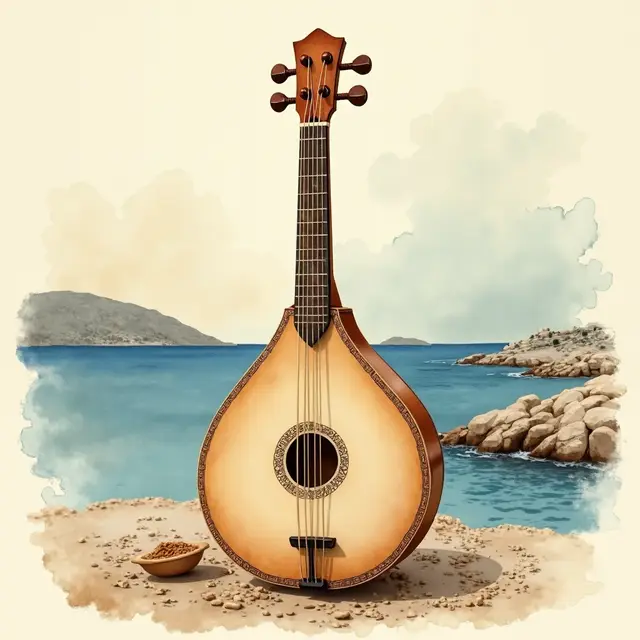
A shimmering bouzouki and a Greek voice caught between joy and sorrow. Laïkó, Greece's beloved popular song tradition, is Mediterranean, bittersweet, and made for dancing close.
How it sounds
It is midnight at a Piraeus dock. The wooden tables beneath the hanging filament bulbs are sticky with retsina wine and sea salt. The air smells of fried fish, warm olive oil, and the thick smoke of cigarettes no one bothers to put out. Three meters away, the dark sea hits the concrete quay with a heavy thud, swallowing the golden glare of a flickering harbor lamp. A man in a rolled-sleeve white shirt bows his head over a bouzouki, his calloused fingers driving across the metal strings with a sharpness that cuts the air.
The sound glitters, bright and clean like sunlight on water, while a baglama weaves underneath at a frantic speed, mimicking the tremor of a fever. Then the voice cuts in. It asks for no permission. It is a raspy shout that forces joy and sorrow to happen at the exact same moment, hurling a name out toward the dark harbor like a stone thrown into the tide. Beside him, an accordion stretches its bellows slowly, pushing the beat forward like an incoming tide that forces your feet to move even when your chest is caving in. No one sits still.
Two men dance in an embrace, spinning slowly between the chairs, eyes shut, crushing cigarette butts beneath their soles, laughing through clenched teeth while tears streak their cheeks. The night stretches on, the glass is empty again, and the music keeps pressing right on the bruise.
Palette: Aegean blue / mahogany brown / sand gold
- BPM
- 96 BPM
- Family
- Distant Worlds
- Serial
- MUN-13
- Rarity
- Common
- Style strength
- 93
- Experimentation
- 22
Typical structure
[Bouzouki Intro] → [Verse] → [Chorus] → [Instrumental] → [Final chorus]
The data points above are merely the surface notes written on a sheet. Beneath them lie abrasive problems no table can solve: how to make joy sound desperate without sliding into parody, and how to nail the exact weight so the voice commands you to dance over the wreckage instead of begging. That lives in an internal distillate of eight unpublished parameters that the engine crosses with your story. When it finishes, an internal judge measures the lyrics against six dimensions of the canon and forces a rewrite on anything that falls short. The bouzouki is bought. The ache, no.
How a lyric in this style thinks
A laïkó lyric does not process grief — it performs it at full volume, in public, with a glass in hand. The word lands on the listener like a shout across a harbour, and that is precisely the point. Laïkó, Greece's beloved urban popular song tradition, works on the principle that sorrow and celebration are not opposites but the same current running in two directions at once.
The lyric's job is to hold both without flinching: to name a loss so directly that the room goes quiet for a beat, and then to push the music forward until the feet start moving again. This is not catharsis in the classical sense. It is closer to defiance — the insistence that life continues, loudly, on the same street where the wound happened.
The emotional register arrives fast and stays hot. There is no slow build toward feeling; the voice enters already committed, already raw. Laïkó vocals are traditionally raspy and projected outward, as if singing to someone standing at the far end of a pier rather than sitting beside you. The delivery favours held vowels, sudden dynamic drops that pull the listener in, and a return to full force that feels almost aggressive in its warmth. Lyrically, the tone is direct without being simple.
The words reach for the universal through the hyper-specific: a name spoken once and then repeated until it becomes a kind of percussion, a harbour, a rolled sleeve, a glass slammed down and immediately refilled. Abstract emotion is mistrusted here. Laïkó does not say longing; it says the table is set and one chair stays empty.
Line length in this genre tends toward the medium, built to match the bouzouki's rhythmic phrasing — those bright, metallic runs at 96 BPM that shimmer like light off salt water. The baglama weaves underneath at a tighter, faster tremolo, and the lyric has to breathe inside that shimmer without fighting it. Repetition is structural, not decorative.
A key phrase — a name, a place, a single declarative sentence — will anchor the chorus and return in the final chorus with more weight than it carried the first time, because the instrumental section in between has done the emotional labour that words cannot. That instrumental break is not a rest; it is where the body responds to what the lyric already said. The accordion pushes the tempo forward like something inevitable, and when the voice returns for the final chorus, it should feel earned rather than merely repeated.
The sensory world of laïkó is specific and non-negotiable. It lives in dockside air thick with fried fish and cigarette smoke, in the particular amber light of a filament bulb over a sticky wooden table, in the thud of dark water against concrete. The objects that populate the lyric — the glass, the bouzouki, the sea, the door left open onto the street — are load-bearing. They do not decorate the emotion; they are the emotion made tangible. What this genre never uses: bedroom confessions, whispered introspection, cold irony, or any image that belongs indoors and away from other people. Laïkó needs witnesses. A lyric that could be written in a quiet room is probably not laïkó.
The structural logic follows the section sequence closely because each part has a function. The bouzouki intro establishes the emotional temperature before a word is sung — the listener already knows whether this night ends in laughter or tears, or both. The verse plants the specific story: the person, the place, the thing that was lost or is being toasted. The chorus lifts that story into something the whole table can shout together. The instrumental is the body's answer.
The final chorus is the same words again, but they mean more now because the room has already lived inside them for three minutes. What separates a real laïkó lyric from a generic imitation is that the imitation tries to be poetic where laïkó tries to be true — and truth in this tradition is always communal, always slightly too loud, and always pressed right against the bruise.
- SHIMMERING BOUZOUKI
- BITTERSWEET MEDITERRANEAN
Sample excerpt
Three empty chairs around the courtyard table The lemon branch is scraping on the wall You left your silver watch upon the cable And poured the retsina until the fall We broke two plates against the concrete flooring And shouted curses at the open sea
Drink the amber wine until the morning breaks Let the bouzouki sting for every heart that aches We laugh too loud to let the sorrow in Another round before the night wears thin
Workshop note — This verse anchors the sorrow in physical objects like chairs and broken plates to keep the sentiment grounded in a real tavern yard. The chorus relies on an open, swinging rhythm that forces grief and celebration into the exact same breath. Laikó forbids whispered secrets, demanding instead a loud, communal voice built for clinking glasses and crowded streets.
Sample excerpt written by MUSAI Song. Your lyrics are written from scratch, based on your story.
When to choose this style
Choose this card when you need to sing about a loss that refuses to turn solemn and instead demands to be worn out on the floor. It works to toast a grandfather who left a house full of noise, for a breakup that asks for a long table with wine and one last glass shouted at the sea rather than silence. It fits when grief and celebration are the exact same thing and you can no longer tell them apart.
Do not choose it for teenage romance or for a whispered confession in a dark bedroom; laïkó needs space, clinking glasses, and the street right outside the door. It also fails for a polite thank-you note or a tidy family memory looking for closure. If you are looking for an understated, cold chronicle where danger is only named sideways, the card is Drill.
Your story in this style
MUSAI Song writes original lyrics from your story, in the Greek Laïkó style, and delivers the finished sung song, the ready-to-use style recipe, and an illustrated art plate with its numbered certificate, private by default; public only if its owner publishes it.
- Original lyrics written from your story
- A finished sung song, ready to play and share
- Art plate with a unique seal and a numbered certificate, private by default; public only if its owner publishes it
Frequently asked questions
What BPM is Greek Laïkó?
Greek Laïkó usually runs at 96 BPM.
What does Greek Laïkó sound like?
A shimmering bouzouki and a Greek voice caught between joy and sorrow. Laïkó, Greece's beloved popular song tradition, is Mediterranean, bittersweet, and made for dancing close.
What song structure does Greek Laïkó use?
[Bouzouki Intro] → [Verse] → [Chorus] → [Instrumental] → [Final chorus]
How do I write Greek Laïkó lyrics?
Tell MUSAI Song your story and pick Greek Laïkó: it writes original lyrics for this style at 96 BPM, you edit them word by word, and you get the song sung in Greek Laïkó, with an illustration of the song and its numbered certificate. $19 USD per song, one-time payment.
Explore more styles
- Afrobeat (Fela)
- Algerian Raï
- Anatolian Psych Rock
- Andalusian Music
- Arabic Flamenco Fusion
- Arabic Music (Tarab)
- Armenian Duduk
- Balinese Gamelan
- Balkan Cinema Fusion
- Bhangra
- Bollywood Filmi
- Bosnian Sevdah
- Carnatic
- Cinematic World Fusion
- Congolese Rumba
- Congolese Soukous
- Desert Blues Tuareg
- Ethio-Jazz
- Hindustani Raga
- Indo-Jazz Fusion
- Iraqi Maqam
- Mandinka Kora
- Mongolian Throat Singing
- Ottoman Classical
Your idea or story, sung in this style
Card · secure payment via Stripe, charged in USD
If it doesn't move you, we give you your money back · 7 days