Balkan Cinema Fusion
The Balkan trumpet doesn't announce the wedding — it commands it.
Get your song in Balkan Cinema Fusion
Make yours in this styleHear it before you pay.$19 USD · your first song for $5.50 USDIf it doesn't move you, we give you your money back · 7 days.
Balkan Cinema Fusion is a style from the Distant Worlds family. 130 BPM, Experimentation 34, Style strength 92.
What is Balkan Cinema Fusion?
Frantic brass and Romani violin at a wedding bursting with life. Balkan cinema fusion: the festive chaos of Bregović — wild, dramatic, and electric.
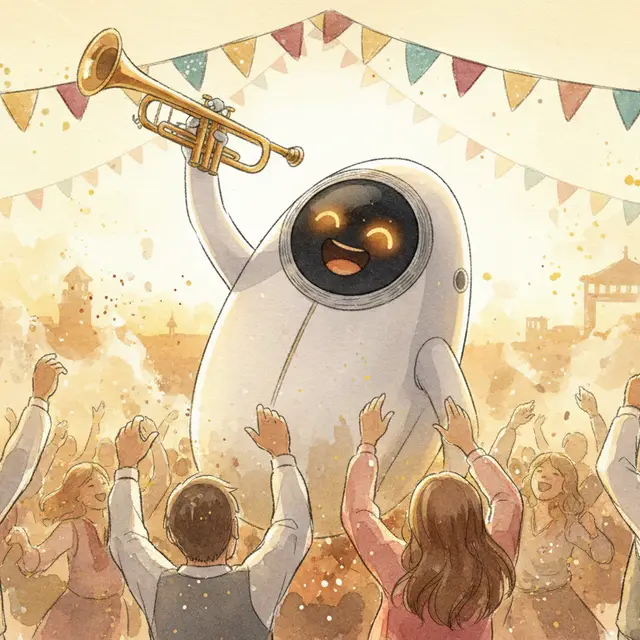
How it sounds
It is four in බල the afternoon and the dry earth courtyard can no longer hold the weight of the crowd. Dust rises in thick clouds that stick to the sweat on foreheads and to the deep maroon suits heavy with old gold embroidery. Someone tips a pitcher of red wine across the long wooden table and the liquid runs thick and dark among the roast lamb platters, seeking the ground like a live fault line.
In the center, beneath a canopy of faded paper pennants whipped by a stubborn wind, the violinist jams the instrument under his chin with a blind fury; the bow sheds horsehair into the air and the sound is not music, it is a howl of wood that cuts straight through the heat. Right beside him, the trumpet attacks a limping, rabid melody that drills straight into the teeth and rattles the ribs. There is no steady beat waiting for you.
The bass drum strikes the chest like a battering ram while the accordion breathes at full bellows, fingers hardened by working the soil hammering the buttons. Someone shouts a toast no one hears because the roar has already eaten every word. Leather boots slam hard against the dry ground in a furious stomping, kicking up pebbles that click against chairs. There is no quiet contemplation here. The air smells of spent sparkler powder, roasting meat, hot skin, and sour wine evaporating before it hits the dust.
Palette: gold / garnet / turquoise / warm ochre
- BPM
- 130 BPM
- Family
- Distant Worlds
- Serial
- MUN-31
- Rarity
- Common
- Style strength
- 92
- Experimentation
- 34
Typical structure
[Dramatic Intro] → [Fast Theme] → [Frantic Acceleration] → [Climax] → [Euphoric Outro]
The details above are copied in a minute. What cannot be copied is the architecture of disorder: how to make the trumpet and accordion fight for the exact same space without burying the lyrics under the brass, and where to drop the precise silence right before the accelerando so the hit actually hurts. That lives in an unpublished internal distillate of eight parameters that the engine crosses with the buyer's story before writing a single line. When finished, an internal judge measures the lyrics against six canon dimensions and sends back what fails for repairs. The balkan rhythm is stolen. The precise chaos, not.
How a lyric in this style thinks
A lyric in Balkan Cinematic Fusion does not describe a celebration — it becomes the physical pressure of one. The words land like blows, arrive in bursts, and carry the same structural violence as the brass section beneath them: no polite build, no measured reveal. From the first line, the genre demands that language behave like a battering ram. This is the defining quality of Fusión Balcánica de Cine as a lyrical form: emotion does not approach gradually. It erupts already at full volume, and the writer's job is to sustain that eruption without letting it collapse into noise.
The tonal base sits somewhere between ecstasy and anguish, and the most honest writing in this genre refuses to separate those two states. The joy here is not comfortable — it is the kind that presses against the ribs, that makes the eyes water for reasons nobody can name. Repetition is not a device of emphasis but of physical insistence, the way a drum pattern locks into the chest. Short declarative lines hit harder than complex syntax.
When a line runs long, it should run breathless, unpunctuated, the way a toast gets swallowed by the room before it finishes. Rhyme, when it appears, lands with a thud rather than a chime — consonants doing more work than vowels, the mouth closing hard on the final syllable.
The sensory field of Balkan Cinematic Fusion is extremely specific, and getting it wrong is the fastest way to produce a generic imitation. The genre lives in dry courtyards and long wooden tables, in the smell of roasting meat and sour wine soaking into cracked earth, in the scratch of horsehair against gut strings, in leather boots striking stone. Dust is a recurring physical presence, not a metaphor. The accordion breathes at full bellows; the trumpet does not play a melody so much as attack one.
What this genre never touches: candles, whispers, rain on windows, the interior of a bedroom, anything that asks for stillness. The imagery must carry weight and temperature — amber light, deep maroon, the dark garnet of spilled wine running across a table toward the edge.
Structurally, Fusión Balcánica de Cine follows a logic of escalation that mirrors its section map exactly. The Dramatic Intro establishes the scene with declarative force — one image, one fact, no softening. The Fast Theme introduces the central emotional claim at pace, and the Frantic Acceleration is where rhythm in the lyric starts to break its own rules: lines shorten, syntax fragments, the syntax itself starts to stumble forward like a dancer losing control of the tempo.
The Climax is often wordless in pure instrumental versions, but in a lyric it functions as the moment where the central image returns transformed — the same courtyard, now unrecognisable under the weight of what happened there. The Euphoric Outro does not resolve; it simply stops being able to contain itself.
What separates real writing in this genre from a generic imitation is the willingness to let chaos be structural rather than decorative. Many writers reach for Balkan imagery as atmosphere — the violin, the brass, the wedding — without understanding that the form requires the lyric itself to behave chaotically. The line breaks should feel slightly wrong. The transitions between sections should arrive a beat too early. Wordless syllables — oi, hei, a sustained vowel howled against the brass — carry as much narrative weight as any couplet.
The voice in this genre is not a narrator watching the scene. It is inside the scene, already hoarse, already past the point of rational description, reporting back from somewhere between joy and wreckage.
- FRANTIC BRASS
- FESTIVE CHAOS
Sample excerpt
Grandfather's silver flask hits the oak table while three trumpets bleed into the dust a heavy plate cracks against the kitchen wall and the whole courtyard smells of roasted pig and rust we haven't slept since Thursday noon and the accordion bellows are tearing wide open
dance until the floorboards turn to smoke dance until the old men choke on wine let the brass scream louder than our debt today we live and tomorrow we forget
Workshop note — This style thrives on breathless accumulation, stacking loud physical objects and relentless motion to mirror the frantic chaos of a marathon celebration. Keep the lines punchy and rhythmic, driven by percussion and brass rather than introspection. Avoid smooth transitions or delicate phrasing; every image must clang like a tossed copper pan.
Sample excerpt written by MUSAI Song. Your lyrics are written from scratch, based on your story.
When to choose this style
Choose this card when a family celebration spills over so violently that the only way to tell the story is through noise, chaos, and a joy that borders on pain. It works for a three-day wedding that defied sleep, for a stubborn grandfather's milestone birthday that crammed fifty people into a dusty backyard, or for a loud reconciliation where plates flew before turning into a fierce embrace. It serves when your town's memory demands a dirty, unbridled brass fanfare rather than quiet nostalgia.
Do not pick it for a late-night intimate confession, a fragile love that needs gentle caresses, or a loss where grief asks for piano and silence. If you seek the cold containment of urban chronicle, the card is Drill.
Your story in this style
MUSAI Song writes original lyrics from your story, in the Balkan Cinema Fusion style, and delivers the finished sung song, the ready-to-use style recipe, and an illustrated art plate with its numbered certificate, private by default; public only if its owner publishes it.
- Original lyrics written from your story
- A finished sung song, ready to play and share
- Art plate with a unique seal and a numbered certificate, private by default; public only if its owner publishes it
Frequently asked questions
What BPM is Balkan Cinema Fusion?
Balkan Cinema Fusion usually runs at 130 BPM.
What does Balkan Cinema Fusion sound like?
Frantic brass and Romani violin at a wedding bursting with life. Balkan cinema fusion: the festive chaos of Bregović — wild, dramatic, and electric.
What song structure does Balkan Cinema Fusion use?
[Dramatic Intro] → [Fast Theme] → [Frantic Acceleration] → [Climax] → [Euphoric Outro]
How do I write Balkan Cinema Fusion lyrics?
Tell MUSAI Song your story and pick Balkan Cinema Fusion: it writes original lyrics for this style at 130 BPM, you edit them word by word, and you get the song sung in Balkan Cinema Fusion, with an illustration of the song and its numbered certificate. $19 USD per song, one-time payment.
Explore more styles
- Afrobeat (Fela)
- Algerian Raï
- Anatolian Psych Rock
- Andalusian Music
- Arabic Flamenco Fusion
- Arabic Music (Tarab)
- Armenian Duduk
- Balinese Gamelan
- Bhangra
- Bollywood Filmi
- Bosnian Sevdah
- Carnatic
- Cinematic World Fusion
- Congolese Rumba
- Congolese Soukous
- Desert Blues Tuareg
- Ethio-Jazz
- Greek Laïkó
- Hindustani Raga
- Indo-Jazz Fusion
- Iraqi Maqam
- Mandinka Kora
- Mongolian Throat Singing
- Ottoman Classical
Your idea or story, sung in this style
Card · secure payment via Stripe, charged in USD
If it doesn't move you, we give you your money back · 7 days