Afrobeat (Fela)
When the horns come in, politics has to step outside.
Get your song in Afrobeat (Fela)
Make yours in this styleHear it before you pay.$19 USD · your first song for $5.50 USDIf it doesn't move you, we give you your money back · 7 days.
Afrobeat (Fela) is a style from the Distant Worlds family. 110 BPM, Experimentation 28, Style strength 95.
What is Afrobeat (Fela)?
Sharp horns, a hypnotic drum groove, and a rhythm that refuses to stop for fifteen minutes straight. Fela's afrobeat: the party with a message — political, contagious, and unstoppable.
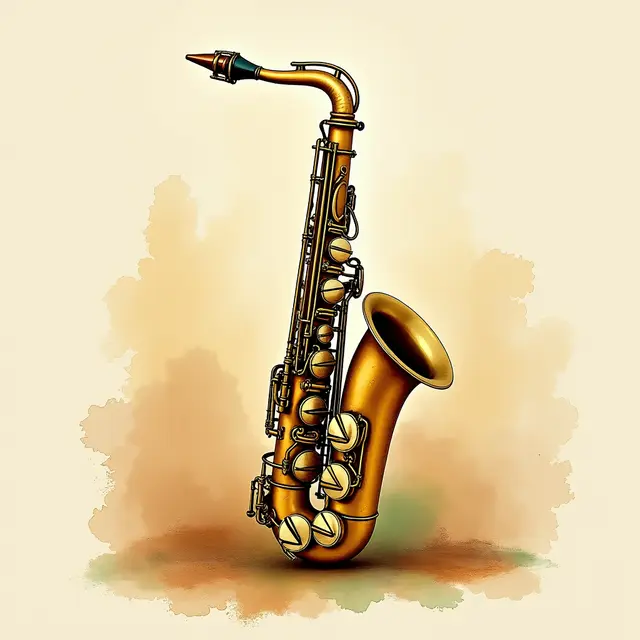
How it sounds
It is two in the morning at the Shrine in Lagos and the sweat has its own smell by now, palm oil and generator smoke folded into something that sticks to your shirt. You are standing in a crowd of bodies that have not stopped moving, and the bass has been locked on the same riff for twenty minutes, cycling until you stop counting bars and it starts counting you instead. The saxophone cuts in like a lawyer who just found the document everyone was hiding. The trumpet answers. The guitar chops in short, dirty stabs.
Tony Allen's drums hold the whole structure from underneath, steady as a fact that does not need to raise its voice to be true. The singer points past the stage, toward some uniform that is not in the room but that everyone in the room knows by name. The chorus responds. You respond. Your hips respond before your brain catches up. That is the design: let the body in first, and by the time the mind arrives, it is already too late to leave.
Palette: gold / burnt orange / teal green / warm brown
- BPM
- 110 BPM
- Family
- Distant Worlds
- Serial
- MUN-19
- Rarity
- Rare
- Style strength
- 95
- Experimentation
- 28
Typical structure
[Long Intro groove] → [horns] → [Verse] → [call-and-response chorus] → [Solo] → [final groove]
How a lyric in this style thinks
An Afrobeat lyric in Fela's tradition does not open by explaining. It opens by accumulating. The dominant mode is irony disguised as praise: you honor the powerful with such extravagant reverence that the compliment curdles into indictment. You say the politician is generous because he kept everything and left the bones. You say the system works perfectly, for the people who built it.
This inversion is the genre's signature weapon because it forces the listener to hold two meanings at once while their feet keep moving, which means they cannot look away and cannot stop dancing and cannot pretend they did not understand. The sensory world is not decorative. It is the military uniform under the club lights, the dirty bill passing between hands, the corroded microphone that amplifies what the newspaper will not print, the warm beer on the table while the generator outside is already coughing.
Every concrete image carries political weight because it exists inside a context the audience already lives in. Power gets named by its body parts: the mouth that eats, the hand that signs, the stomach that is never full. That anatomical focus makes the machinery visible, strips away the abstraction the powerful prefer to hide behind. The most effective angle is not the victim grieving but the witness pointing. The lyric voice is on the dance floor, yes, but it is also taking notes, naming names, keeping receipts.
The anger is rationed and delivered with precision over the groove, because a lyric that loses the rhythm loses the room, and losing the room is exactly what the target would prefer.
- ENDLESS GROOVE
- PARTY WITH A MESSAGE
Sample excerpt
The generator smoking on the pavement curb Third time this week the landlord change his word He bring three men in shiny leather shoes To tell the weavers what they stand to lose Mama Titi holds her bolt of indigo tight We work all day, they come to count at night.
Who owns the market? We own the ground! (Tell them now!) Who keeps the rhythm when the lights go down? (Tell them now!)
Workshop note — This excerpt pits a collective 'we' against a systemic authority, grounding political protest in concrete daily realities like market stalls and fabric bolts. The chorus utilizes a direct call-and-response pattern designed to be shouted over a continuous, polyrhythmic groove. Abstract poetry is set aside in favor of sharp declarations that turn shared grievance into a powerful, rhythmic rally.
Sample excerpt written by MUSAI Song. Your lyrics are written from scratch, based on your story.
When to choose this style
Use this card when the personal story has a villain bigger than one person: a system, an institution, a silence someone finally decided to break out loud. It works for the immigrant's child who puts into words what the family never said, for the worker who finally names the exploitation she spent years calling normal, for anyone who needs to turn legitimate anger into something people can move to without losing the argument. It also fits collective celebration with weight behind it: a neighborhood that survived, a community that held together.
Do not use it for private heartbreak, quiet grief, or confessional moments where the self is the whole world. Afrobeat needs a we, a visible target, and a groove long enough to hold the case it is building. Intimacy without stakes does not survive this rhythm.
Your story in this style
MUSAI Song writes original lyrics from your story, in the Afrobeat (Fela) style, and delivers the finished sung song, the ready-to-use style recipe, and an illustrated art plate with its numbered certificate, private by default; public only if its owner publishes it.
- Original lyrics written from your story
- A finished sung song, ready to play and share
- Art plate with a unique seal and a numbered certificate, private by default; public only if its owner publishes it
Frequently asked questions
What BPM is Afrobeat (Fela)?
Afrobeat (Fela) usually runs at 110 BPM.
What does Afrobeat (Fela) sound like?
Sharp horns, a hypnotic drum groove, and a rhythm that refuses to stop for fifteen minutes straight. Fela's afrobeat: the party with a message — political, contagious, and unstoppable.
What song structure does Afrobeat (Fela) use?
[Long Intro groove] → [horns] → [Verse] → [call-and-response chorus] → [Solo] → [final groove]
How do I write Afrobeat (Fela) lyrics?
Tell MUSAI Song your story and pick Afrobeat (Fela): it writes original lyrics for this style at 110 BPM, you edit them word by word, and you get the song sung in Afrobeat (Fela), with an illustration of the song and its numbered certificate. $19 USD per song, one-time payment.
Explore more styles
- Algerian Raï
- Anatolian Psych Rock
- Andalusian Music
- Arabic Flamenco Fusion
- Arabic Music (Tarab)
- Armenian Duduk
- Balinese Gamelan
- Balkan Cinema Fusion
- Bhangra
- Bollywood Filmi
- Bosnian Sevdah
- Carnatic
- Cinematic World Fusion
- Congolese Rumba
- Congolese Soukous
- Desert Blues Tuareg
- Ethio-Jazz
- Greek Laïkó
- Hindustani Raga
- Indo-Jazz Fusion
- Iraqi Maqam
- Mandinka Kora
- Mongolian Throat Singing
- Ottoman Classical
Your idea or story, sung in this style
Card · secure payment via Stripe, charged in USD
If it doesn't move you, we give you your money back · 7 days