Ethio-Jazz
The coffee goes cold. The groove does not.
Get your song in Ethio-Jazz
Make yours in this styleHear it before you pay.$19 USD · your first song for $5.50 USDIf it doesn't move you, we give you your money back · 7 days.
Ethio-Jazz is a style from the Distant Worlds family. 88 BPM, Experimentation 34, Style strength 94.
What is Ethio-Jazz?
Vibraphone and organ over Ethiopian scales that shimmer with golden mystery. Ethio-jazz, a genre born in 1960s Addis Ababa blending jazz with ancient Ethiopian modes, is Africa's most enigmatic groove: smoky, hypnotic, and effortlessly elegant.
How it sounds
It is ten past ten in an Addis Abeba room thick with roasted coffee beans, burning frankincense, and stale pipe tobacco. The walls are dark timber, glossed by decades of elbows and trapped heat, and the only light slants downward from a frayed amber shade, bouncing off the pitted brass of a tenor sax propped against an upright piano. Outside, the dirt road cools beneath a wide, rust-colored moon. You are sitting in a worn leather chair that sinks at the exact right angle.
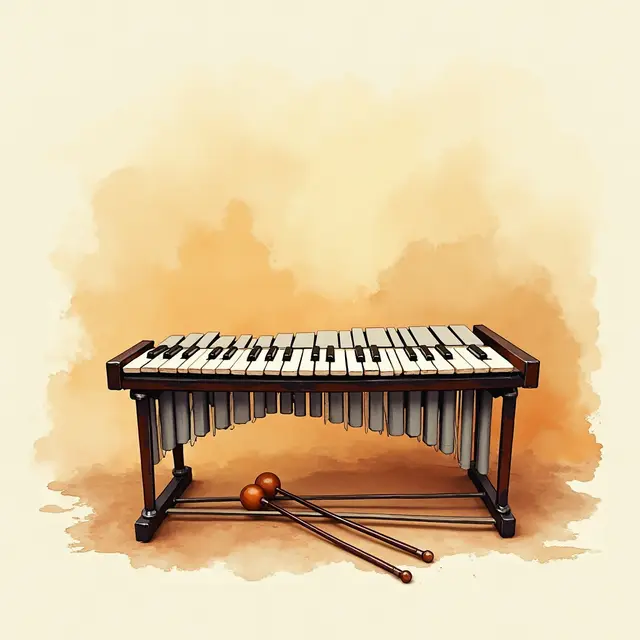
In the center, a seventies electric organ hums a steady, low drone while the keys touch strange, sliding intervals that refuse any Western grid. Suddenly, the vibraphone strikes; a soft mallet hits the metal bar, and the note hangs in the half-light, echoing inside the dry wood before it fades. There is no rush here. At eighty-eight beats per minute, every bar stretches like thick oil. The horns—a trumpet and a tenor—answer in unison with a pentatonic line that sounds like an old secret, a forgotten trade route, a map no longer printed.
The sound does not demand your attention; it settles over you slowly, like smoke rising from a charcoal brazier on the next table, until you stop noticing where your breath ends and the low register of the organ begins. Time turns circular, a wheel spinning on its own axis, going nowhere.
Palette: orange amber / dark brown / silver gray
- BPM
- 88 BPM
- Family
- Distant Worlds
- Serial
- MUN-20
- Rarity
- Rare
- Style strength
- 94
- Experimentation
- 34
Typical structure
[Modal theme] → [vibraphone] → [organ Solo] → [horns] → [closing theme]
The details above are just the surface layer read at a glance. What stays hidden is how to handle the pentatonic scale without slipping into postcard exoticism, or how to maintain a hypnotic pulse without the lyrics looping into empty repetition. That lives inside an unpublished set of eight parameters, which the engine crosses with your raw biography before writing a single line. When it finishes, an internal judge measures the output against six dimensions of the canon and sends it back for repair if the density slips. The tempo can be copied. The golden mystery cannot.
How a lyric in this style thinks
A lyric written for Ethio-Jazz does not express feeling — it holds feeling at arm's length and lets the space between the words do the heavier work. The genre operates on withheld disclosure: you circle a memory without naming it, you describe the room instead of the wound, you let the shape of an absence speak louder than any confession. This is music built on Ethiopian modal scales that sidestep the Western harmonic grid, and the lyric has to match that evasion. Nothing resolves cleanly. Nothing arrives on time. The emotional architecture of Ethio-Jazz is circular, not linear, and a lyric that drives toward a climax or a cathartic release will feel grafted onto the wrong body.
The base tone is cool and slightly amber-lit — warm in texture but never hot in temperature. Emotion enters sideways, through the concrete detail of a specific object or a sensory threshold: the weight of a leather chair that has memorized the exact angle of a body, the smell of frankincense layered over roasted coffee, the way a cracked pocket watch catches the last slant of light from a frayed shade. These are not decorative images. They are the emotional argument.
The lyric earns its feeling by refusing to name it, trusting the vibraphone note hanging in dry air to carry what the words will not say. Repetition, when it appears, is not emphasis — it is the wheel spinning again, the same phrase returning the way a memory returns: unchanged, slightly more distant, impossible to hold.
Line length in Ethio-Jazz lyrics tends toward the medium and the unhurried. Short, punchy lines feel wrong here; they imply urgency, and this genre runs at eighty-eight beats per minute precisely because it has nowhere urgent to go. Longer phrases breathe across the bar like a tenor saxophone line answering a trumpet in unison — two voices saying the same old secret in parallel.
Rhythm in the vocal melody should lean into the groove without locking rigidly to the beat; the feel is slightly behind, settling into the pocket the organ drone creates. That low, humming organ is the foundation against which every lyric decision should be tested: if a word feels too sharp, too declarative, too bright, the organ will expose it.
The sensory field of Ethio-Jazz is specific and cannot be swapped out for generic atmosphere. Timber walls, brass instruments propped against upright pianos, rust-colored moonlight over a dirt road, charcoal smoke drifting from a nearby brazier — these are the textures the genre lives inside. What it never uses: neon, velocity, the vocabulary of urgency, direct emotional instruction. You will not find imperatives here. You will not find a bridge that explains what the verses meant.
The structural logic follows the instrumental canon: a modal theme establishes the tonal world, a solo instrument (vibraphone or organ) extends it inward, the horns arrive as commentary rather than climax, and the closing theme does not resolve so much as it recedes. A lyric that respects this structure will plant its central image in the opening, let it drift and refract through the middle sections, and return to it at the end slightly altered — the same map, but some of the roads no longer printed.
What separates a genuine Ethio-Jazz lyric from a generic imitation is the quality of its distance. An imitation reaches for the exotic — it names places, gestures at ancient mystery, performs inscrutability. A real lyric in this genre earns its distance through restraint and precision: the elder whose entire life compressed into three silent gestures, the reunion after twenty years where the only honest record is the shape of time carved into each other's hands. The enigma is not decorative. It is structural.
When the vibraphone strikes and the note hangs in the half-light before fading into dark wood, the lyric should be doing exactly the same thing: sounding once, clearly, and then letting the room decide what it meant.
- ENIGMATIC SCALES
- SMOKY GROOVE
- INSTRUMENTAL
Sample excerpt
A cracked watch on the sideboard by the dust. The street where we walked has a new iron gate. Twenty rainy seasons turned the timber gray. I trace the map where the old bridge stood.
Amber light on the chipped porcelain cup. Nothing is missing, nothing is found. The brass horn plays down the avenue, and the afternoon stays in its heavy coat.
Workshop note — This sample relies on sensory snapshots—a cracked watch, a gray timber—rather than direct emotional statements. The lines maintain an untethered, unhurried cadence that matches the smoky modal scales of the groove. Avoid loud confessions or dramatic resolutions, as this musical tradition requires absolute emotional distance and cool restraint.
Sample excerpt written by MUSAI Song. Your lyrics are written from scratch, based on your story.
When to choose this style
Choose this card when your narrative requires the cool distance of a memory that no longer aches but remains entirely out of reach. It works to trace the outline of someone who left without forwarding an address, an elder whose entire life fit into three silent gestures and a cracked pocket watch. It fits a reunion after twenty years across oceans, when words feel heavy and useless, leaving only the shape of time carved into each other's hands.
It also captures a childhood landscape that no longer exists because the streets were paved over and renamed, leaving nothing behind but the ghost of a distant tune. Do not pick this for an urgent crisis or a fresh heartbreak that still burns; ethio-jazz never raises its voice, avoids easy catharsis, and rejects loud confessions. If you need a burst of adrenaline or a direct emotional purge, this atmosphere will feel too elusive. If you look for cold composure and sharp urban chronicle, the card is Drill.
Your story in this style
MUSAI Song writes original lyrics from your story, in the Ethio-Jazz style, and delivers the finished sung song, the ready-to-use style recipe, and an illustrated art plate with its numbered certificate, private by default; public only if its owner publishes it.
- Original lyrics written from your story
- A finished sung song, ready to play and share
- Art plate with a unique seal and a numbered certificate, private by default; public only if its owner publishes it
Frequently asked questions
What BPM is Ethio-Jazz?
Ethio-Jazz usually runs at 88 BPM.
What does Ethio-Jazz sound like?
Vibraphone and organ over Ethiopian scales that shimmer with golden mystery. Ethio-jazz, a genre born in 1960s Addis Ababa blending jazz with ancient Ethiopian modes, is Africa's most enigmatic groove: smoky, hypnotic, and effortlessly elegant.
What song structure does Ethio-Jazz use?
[Modal theme] → [vibraphone] → [organ Solo] → [horns] → [closing theme]
How do I write Ethio-Jazz lyrics?
Tell MUSAI Song your story and pick Ethio-Jazz: it writes original lyrics for this style at 88 BPM, you edit them word by word, and you get the song sung in Ethio-Jazz, with an illustration of the song and its numbered certificate. $19 USD per song, one-time payment.
Explore more styles
- Afrobeat (Fela)
- Algerian Raï
- Anatolian Psych Rock
- Andalusian Music
- Arabic Flamenco Fusion
- Arabic Music (Tarab)
- Armenian Duduk
- Balinese Gamelan
- Balkan Cinema Fusion
- Bhangra
- Bollywood Filmi
- Bosnian Sevdah
- Carnatic
- Cinematic World Fusion
- Congolese Rumba
- Congolese Soukous
- Desert Blues Tuareg
- Greek Laïkó
- Hindustani Raga
- Indo-Jazz Fusion
- Iraqi Maqam
- Mandinka Kora
- Mongolian Throat Singing
- Ottoman Classical
Your idea or story, sung in this style
Card · secure payment via Stripe, charged in USD
If it doesn't move you, we give you your money back · 7 days