Rock en Español (Alternative)
The plaza always knew the verse was coming.
Get your song in Rock en Español (Alternative)
Make yours in this styleHear it before you pay.$19 USD · your first song for $5.50 USDIf it doesn't move you, we give you your money back · 7 days.
Rock en Español (Alternative) is a style from the Electric Roads family. 120 BPM.
What is Rock en Español (Alternative)?
Dynamic guitars with ska touches and a charismatic voice in Spanish. Rock en español alternativo, the free and mestizo rebellion of an entire generation.
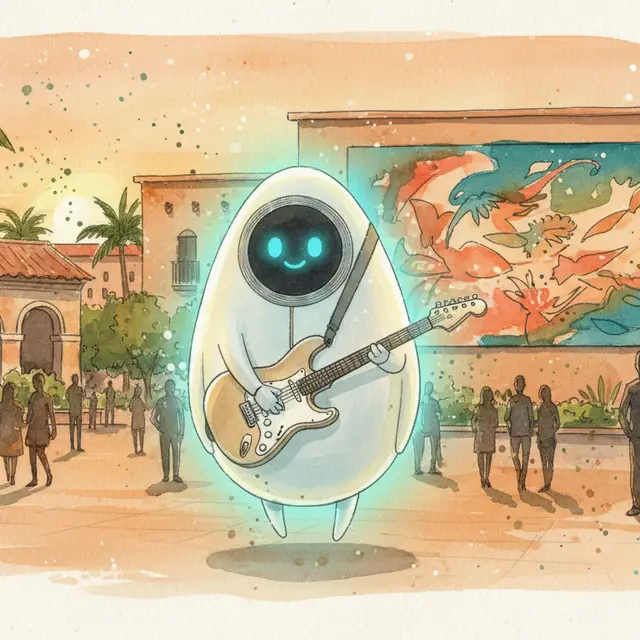
How it sounds
It is six-thirty in the afternoon on a corner where the pavement still holds the heat of the entire day. The sky wears that dirty orange hue before the streetlights kick on, and the asphalt smells of burnt gasoline and old ditch water. A tight crowd presses against the side of an old flatbed truck rigged as a stage, black cables snaking across the pavement like rough stitches. Someone hits the snare with a rimshot that slices through the evening hum before the first chord even drops.
The guitar kicks in with a warm, tube-driven distortion, pushing a riff that blends raw punk urgency with the bouncing pulse of an upright bass cranked through a stack. Next to you, a guy in a faded band tee from twenty years ago shouts the chorus at full throat, holding a warm can of beer. The bassline carries a heavy, almost dub-like groove that forces your hips to sway even while your boots stand in dirty puddle water.
No expensive light rigs or massive screens here; just a string of bare festival bulbs flickering to the rhythm of a stuttering diesel generator. The voice rasps, not from neglect but from mileage, spitting out phrases everyone on this block understands without translation. Dust rises from the stomping feet and sticks to the sweat on your forearms. Everything vibrates at that specific frequency where anger and celebration become the exact same thing, a loud and stubborn gathering that never asked for an invitation.
Palette: warm orange / cyan / olive green
- BPM
- 120 BPM
- Family
- Electric Roads
- Serial
- ELC-22
- Rarity
- Rare
Typical structure
[Intro] → [Verse] → [Chorus] → [Verse 2] → [Bridge] → [Final Chorus]
What you see above is just the street scenery. The real trick here is balancing social grit so it never sounds like a political slogan, and keeping the poetic edge sharp without sliding into campy campfire clichés. All of that lives inside an unpublished internal distillate of eight parameters, and the engine cross-references it with every detail you provide. When it finishes, an internal judge measures the lyrics against six dimensions of the canon and sends back any flat lines for a complete rewrite. Anyone can strum three power chords in the park. The weight of the accent, no.
How a lyric in this style thinks
A lyric in Rock en Español Alternativo does one thing above everything else: it claims territory. Not metaphorically — it names the corner, the block, the cracked sidewalk, the specific hour when the heat stops being bearable and becomes a kind of shared insult. The emotion does not arrive through confession; it arrives through accumulation, through image after image of a place that grinds you down and somehow still holds you. This is the defining tension of the genre: you belong to something that costs you, and the lyric refuses to resolve that contradiction. It sits inside it, loud and unashamed, and lets the crowd finish the thought.
The base tone is warm but combative, closer to collective fury than personal grief. Verses tend to run long and conversational, stacking detail the way a neighbourhood stacks history — without apology, without hierarchy. The lines breathe like speech, not like poetry written for the page, which means syllables bunch and stretch to follow the natural stress of Spanish phrasing. When the chorus hits, it is not a melodic reward so much as a release valve: shorter, higher, built to be shouted by people who have been holding it in since the first beat. Repetition in the chorus is structural muscle, not decoration. You repeat because the statement needs to land in the body, not just the mind.
The sensory field of Rock en Español Alternativo is specific and non-negotiable. You are working with asphalt, diesel, cheap beer, faded cotton, bare bulbs, rimshots that crack like bad news, and basslines that carry a dub-weight even when the tempo is pushing past comfortable. The guitar distortion comes from tube-driven warmth, not digital sharpness — there is a looseness in the attack that sounds lived-in.
Ska-inflected upstrokes arrive in the verse to give the groove a bouncing urgency, while the reggae undertow in the bass keeps the hips moving even when the lyrics are spitting anger. What the genre never uses: pristine studio gloss, reverb-heavy atmospherics, or imagery that belongs to wealth, ease, or private interior spaces. The ceiling here is a string of festival bulbs. The venue is a flatbed truck.
Structurally, the intro earns the first verse by establishing the riff as a place, not just a sound. The two verses do the documentary work — the specific people, the specific humiliations, the specific small victories that make the story feel true rather than representative. The bridge is where the lyric breaks its own rhythm, often dropping to a half-spoken, half-sung delivery over a stripped arrangement, forcing the listener to pay attention before the final chorus detonates.
That final chorus is louder in the mix, frequently doubled vocally, and sometimes extended by an extra bar so the crowd has room to run over the edge with it. The section logic is simple because the emotional logic is simple: build, release, complicate, release harder.
What separates a real lyric in this genre from a generic imitation is the quality of its proper nouns and the honesty of its contradictions. Generic imitations write about the city in the abstract; Rock en Español Alternativo writes about the corner where the pavement holds the heat until six-thirty. Generic imitations resolve the tension between love and resentment; this genre refuses to. The voice rasps not from neglect but from mileage — that distinction matters everywhere, including on the page. If your lyric could be shouted comfortably by someone who has never lost anything, start over. This sound was built for people who stayed.
- MESTIZO REBELLION
- POETRY IN SPANISH
Sample excerpt
Your denim jacket still hangs on the hallway nail, covered in dust from the subway tracks downtown. We spent three winters drinking bitter coffee in the rain, watching the amber streetlights flicker until they died. I kept your rusted keys in a shoebox under the bed, the paint on the front door is peeling like a sunburn.
We are the static screaming in the alleyway, concrete echoes where we carved our names in ink black, this city grinds its teeth, but we never back down.
Workshop note — This genre thrives on rhythmic urgency and raw, observational grit that captures the tension of urban life. The lyrics use specific, tactile imagery to anchor the emotion, ensuring the chorus acts as a collective shout rather than a private whisper. Keep your lines punchy and avoid abstract metaphors; the energy comes from the clash of personal history against a loud, shifting environment.
Sample excerpt written by MUSAI Song. Your lyrics are written from scratch, based on your story.
When to choose this style
Choose this card when your story is about belonging to a place that gave you scars but still feels like home. It works for recounting the chaotic move across town with lifelong friends, shared fury over dead ends, or a romance built from scraps in the middle of a shifting city. It fits perfectly for a sibling who packed up for another country leaving their worn-out jacket on the back of a chair, or to mark a decade of grinding against the odds without selling out.
Do not pick it for minimalist love stories or quiet confessions whispered in a dark bedroom: this sound demands open air, high volume, and a chorus shouted by a crowd. It will not work for silent grief or private sorrow that wants to hide in the corners, because this genre does not know how to be quiet or stand still. If you are looking for an intimate acoustic shelter where secrets stay small, the card is Bedroom Indie.
Your story in this style
MUSAI Song writes original lyrics from your story, in the Rock en Español (Alternative) style, and delivers the finished sung song, the ready-to-use style recipe, and an illustrated art plate with its numbered certificate, private by default; public only if its owner publishes it.
- Original lyrics written from your story
- A finished sung song, ready to play and share
- Art plate with a unique seal and a numbered certificate, private by default; public only if its owner publishes it
Frequently asked questions
What BPM is Rock en Español (Alternative)?
Rock en Español (Alternative) usually runs at 120 BPM.
What does Rock en Español (Alternative) sound like?
Dynamic guitars with ska touches and a charismatic voice in Spanish. Rock en español alternativo, the free and mestizo rebellion of an entire generation.
What song structure does Rock en Español (Alternative) use?
[Intro] → [Verse] → [Chorus] → [Verse 2] → [Bridge] → [Final Chorus]
How do I write Rock en Español (Alternative) lyrics?
Tell MUSAI Song your story and pick Rock en Español (Alternative): it writes original lyrics for this style at 120 BPM, you edit them word by word, and you get the song sung in Rock en Español (Alternative), with an illustration of the song and its numbered certificate. $19 USD per song, one-time payment.
Explore more styles
- Alt-Rock 90s
- Bedroom Indie
- Blues Rock
- Britpop
- Campfire Indie Folk
- Classic Rock
- Dance-Punk
- Emo Midwest
- Folk Rock
- Garage Punk
- Garage Revival
- Garage Rock
- Grunge
- Hard Rock
- Heartland Rock
- Indie Pop
- Indie Rock
- Jangle Pop
- Math Rock
- New Wave
- Noise Rock
- Pop Punk
- Post-Punk
- Power Pop
Your idea or story, sung in this style
Card · secure payment via Stripe, charged in USD
If it doesn't move you, we give you your money back · 7 days