Jangle Pop
The light through the leaves has a rhythm of its own.
Get your song in Jangle Pop
Make yours in this styleHear it before you pay.$19 USD · your first song for $5.50 USDIf it doesn't move you, we give you your money back · 7 days.
Jangle Pop is a style from the Electric Roads family. 130 BPM, Experimentation 26, Style strength 90.
What is Jangle Pop?
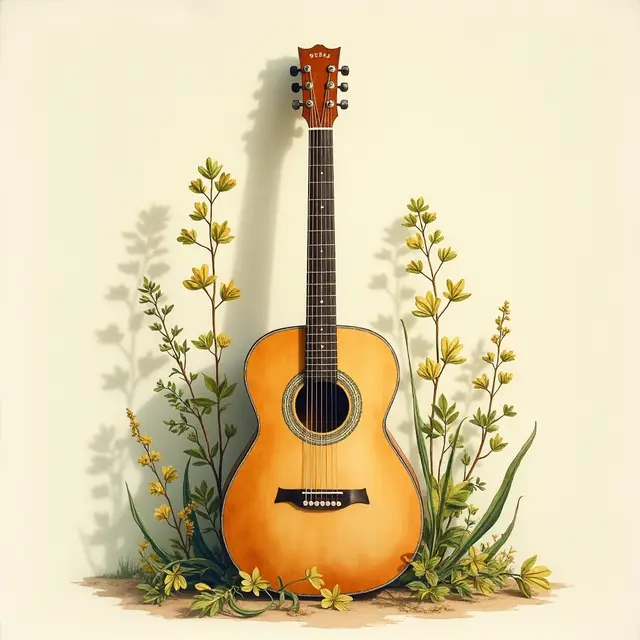
Twelve-string guitars chiming like sunlight through leaves. Jangle pop: luminous, nostalgic melody, bright, fresh, and full of open air.
How it sounds
It is four in the afternoon in a suburb where the asphalt gives off a thick haze that distorts the garden fences. You are sitting on the curb with your heels dug into freshly cut grass, listening to a twelve-string Rickenbacker through an amplifier barely surviving the heat. The notes do not float; they drop like gold coins onto the pavement, one after another, with a metallic chime that cuts through the heavy air.
There are no synthesizers or dark layers: just the clean, bright timbre piercing your temples with the urgency of a bicycle rushing down a hill at top speed. A window on the second floor of the house across the street is open, and from inside comes the flat hum of a transistor radio nobody is listening to. The sun filters through the maple leaves with an almost painful precision, painting golden and cool patches across your knees.
Three houses down, someone is shouting for a dog that refuses to show up, and the sound bounces off the red bricks with unbearable clarity. Everything vibrates with that precise tension of summer days that feel endless yet carry the absolute certainty that they are already ending. The brightness hurts your eyes. The melody climbs the scale with childish haste, chasing a chord that never fully resolves, leaving you with the strange sensation that happiness and memory are happening in the exact same second.
Palette: warm orange / green / gold yellow
- BPM
- 130 BPM
- Family
- Electric Roads
- Serial
- ELC-18
- Rarity
- Common
- Style strength
- 90
- Experimentation
- 26
Typical structure
[Intro] guitar → [Verse] → [Chorus] → [Verse 2] → [Final Chorus]
What you see above is just the shimmer visible from the curb. Behind this card lie problems a table cannot solve: how to make a melody sound luminous without falling into advertising cliches, and how to pack a piercing nostalgia into verses so short they feel ready to snap. That lives in an unpublished eight-parameter internal distillate that the engine cross-references with your story before writing a single syllable. When finished, an internal judge measures the result against six dimensions of the canon and orders repairs on anything out of tune. The bright chord can be copied. The sunny urgency, no.
How a lyric in this style thinks
A jangle pop lyric does not describe nostalgia — it performs it in real time, catching the listener in the exact instant when a good moment begins to slip. The genre works by holding two contradictory feelings simultaneously: the warmth of something still present and the ache of already knowing it will be gone. That doubleness is not a theme you choose; it is built into the sound itself.
The chiming attack of a twelve-string Rickenbacker or similar bright electric, played clean through a slightly overdriven amp, carries an inherent sweetness that resolves too quickly — the note rings, peaks, and fades before you want it to. Your lyric needs to do the same thing structurally. Every image should arrive fully lit and then let go.
The base tone in jangle pop sits in the warm-to-wistful register, never cold, never bitter, never knowing. Emotion arrives sideways — through a concrete object or a sensory detail rather than a stated feeling. The smell of cut grass in afternoon heat, the specific clatter of a bicycle freewheel, the way maple light cuts into patches on the pavement — these are the genre's native vocabulary. What jangle pop never uses: urban grit, night-time imagery, abstract suffering, or the kind of self-aware irony that folds back on itself. The emotional palette is gold, green, and amber. If a line sounds like it belongs in a city after midnight, cut it.
Rhythm and line length follow the guitar's lead. At 130 BPM the pulse is brisk but not frantic — think of a bicycle downhill, accelerating just past comfort. Verses tend to run in short, even lines that land on the beat with the same chiming regularity as the guitar attack. The syllable count wants to be consistent enough that the melody can carry the words without fighting them. Repetition in jangle pop is structural, not hypnotic: a chorus phrase comes back because the feeling itself keeps returning, not because you are trying to drill it in. Two or three key words — a name, a street, an afternoon — can anchor the whole song if they are placed with precision.
The canonical structure for jangle pop is compact: intro, verse, chorus, second verse, final chorus. No bridge, no extended outro, no key change. This is not laziness — it mirrors the experience the genre is built around. The summer afternoon that felt endless was actually just an afternoon. The structure enacts that compression. Your intro establishes the guitar tone and the specific location — the listener should be able to see the street before the first word lands.
The chorus is where the emotional doubleness peaks, and it should contain the song's most imagistic language. The second verse does not escalate; it adds one new sensory detail that reframes what came before, the way a second look at a photograph reveals something you missed the first time.
What separates a real jangle pop lyric from a generic imitation is precision of scene. Generic versions reach for universal sentiment — lost youth, golden days, the way things change — and land on nothing because they have nothing to hold onto. The real thing plants you on a specific curb, at a specific hour, with the sound of a transistor radio nobody is listening to bleeding from an open window across the street.
Vocal delivery in production should be warm and slightly forward in the mix, melodic bass moving under the guitar rather than anchoring from below, drums bright and dry with no heavy reverb. The production goal is clarity, not atmosphere — jangle pop trusts that the chime of the guitar string contains more feeling than any amount of sonic texture layered on top of it.
- CHIMING GUITARS
- SUN THROUGH LEAVES
Sample excerpt
Your sneakers are scuffed on the asphalt again, we’re dragging our feet past the rusted iron gate. The amber light catches the spokes of your bike, I’m trying to speak but the afternoon is late. We bought two popsicles, orange and lime, watching them melt in the heat of July.
It’s a long way home on a street built for two, with the gold sun spilling on everything we knew. Everything is bright, everything is true.
Workshop note — Jangle pop relies on short, observational lines that act like snapshots of a singular, sun-drenched moment. The chorus functions as a shimmering expansion of the verse, using simple imagery to capture a sense of bittersweet nostalgia without falling into heavy drama. Avoid complex metaphors; keep the rhythm bouncing and light, mirroring the chiming of the twelve-string guitars.
Sample excerpt written by MUSAI Song. Your lyrics are written from scratch, based on your story.
When to choose this style
Choose this card when you need to tell the story of a summer that hurt because it was too bright. It works for the afternoon you realized a childhood friendship was snapping while eating ice cream on a warm sidewalk. For the exact day you moved away and watched through the back window of the car as the tree-lined street vanished for good. For a teenage romance without grand tragedies or shouting matches, just golden light and a bicycle rolling slowly away.
It also serves to rescue the memory of someone who is gone, but remembering them not through gray mourning, but through the echo of childhood laughter in a garden where the grass still smells the same. Do not choose this for tales of nocturnal fury, cold revenge, or adult love worn out by silence: jangle pop does not know how to sound cynical or dirty. If you seek a dense and nocturnal confession, the card is Bedroom Indie.
Your story in this style
MUSAI Song writes original lyrics from your story, in the Jangle Pop style, and delivers the finished sung song, the ready-to-use style recipe, and an illustrated art plate with its numbered certificate, private by default; public only if its owner publishes it.
- Original lyrics written from your story
- A finished sung song, ready to play and share
- Art plate with a unique seal and a numbered certificate, private by default; public only if its owner publishes it
Frequently asked questions
What BPM is Jangle Pop?
Jangle Pop usually runs at 130 BPM.
What does Jangle Pop sound like?
Twelve-string guitars chiming like sunlight through leaves. Jangle pop: luminous, nostalgic melody, bright, fresh, and full of open air.
What song structure does Jangle Pop use?
[Intro] guitar → [Verse] → [Chorus] → [Verse 2] → [Final Chorus]
How do I write Jangle Pop lyrics?
Tell MUSAI Song your story and pick Jangle Pop: it writes original lyrics for this style at 130 BPM, you edit them word by word, and you get the song sung in Jangle Pop, with an illustration of the song and its numbered certificate. $19 USD per song, one-time payment.
Explore more styles
- Alt-Rock 90s
- Bedroom Indie
- Blues Rock
- Britpop
- Campfire Indie Folk
- Classic Rock
- Dance-Punk
- Emo Midwest
- Folk Rock
- Garage Punk
- Garage Revival
- Garage Rock
- Grunge
- Hard Rock
- Heartland Rock
- Indie Pop
- Indie Rock
- Math Rock
- New Wave
- Noise Rock
- Pop Punk
- Post-Punk
- Power Pop
- Psychedelic Rock
Your idea or story, sung in this style
Card · secure payment via Stripe, charged in USD
If it doesn't move you, we give you your money back · 7 days