Blues Rock
The road dust has been tuning that note for years.
Get your song in Blues Rock
Make yours in this styleHear it before you pay.$19 USD · your first song for $5.50 USDIf it doesn't move you, we give you your money back · 7 days.
Blues Rock is a style from the Electric Roads family. 110 BPM, Experimentation 24, Style strength 93.
What is Blues Rock?
A guitar that cries with soul over a hot shuffle. Blues rock: the bridge between the ache of blues and the power of rock — raw and full of feeling.
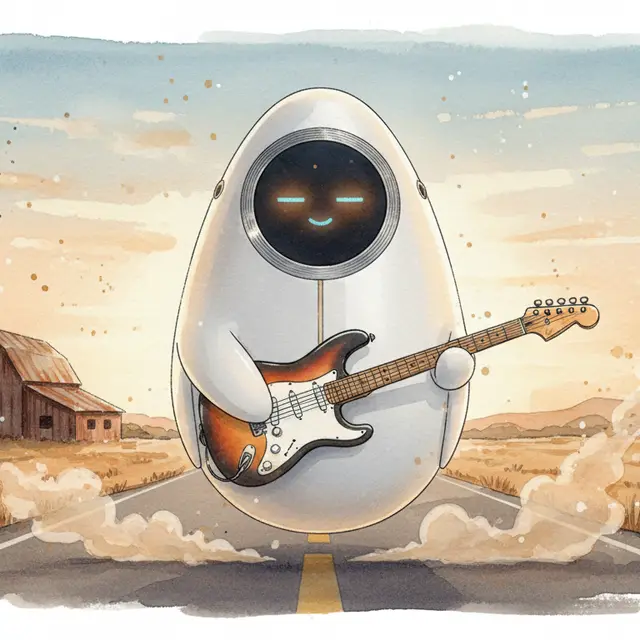
How it sounds
It is four in the afternoon on a weathered porch where the wood groans under the trapped heat of three counties. Red clay dust hangs suspended in the thick, amber light dying slowly against the rusted fender of an old truck. A heavy-bottomed glass sits on the rail, its ring of condensation sliding downward to leave a dark streak on peeling paint. Someone flips the switch on a tube amplifier that takes ten full seconds to warm up—that low, steady hum vibrating up from the floorboards before a single string is even touched.
The fretting hand clamps down hard enough to turn the knuckles white, and when the pick strikes, the wound metal bends upward until it shrieks past its natural tension. This is no clean tone. It carries the scrape of skin against steel winding, the friction of hot nickel against calloused flesh, the speaker cone pushed straight to its rattling edge. The drums drag in on the hi-hat, a walking shuffle that mimics heavy boots crunching over loose gravel, keeping time without rushing, like a threat that needs no hurry.
The voice comes straight from the back of the throat, rasped dry by cheap tobacco and highway air, refusing all polish, delivering just enough words to make the silence between lines weigh twice as much. The guitar cuts back in—not to play around the story, but to finish the exact sentence the singer left hanging, wringing out the ache until it turns into a physical pull right behind the ribs. No rescue melody here. Just the raw friction of wood and wire.
Palette: warm amber / earth brown / sky grayish blue
- BPM
- 110 BPM
- Family
- Electric Roads
- Serial
- ELC-24
- Rarity
- Rare
- Style strength
- 93
- Experimentation
- 24
Typical structure
[Intro] guitar → [Verse] → [Chorus] → [Solo] heartfelt → [Verse 2] → [Final chorus]
The tempo and tuning parameters are just the visible surface of the recipe. Behind this card lie problems that refuse to fit in a table: how to keep the ache from sounding like theatrical melodrama, and how to make a single bent note carry more weight than three crowded verses. That lives inside an unpublished internal distillate that the engine cross-references with your story before a single line is written. When it finishes, an internal judge measures the lyrics against six canons and sends back anything that lacks true grit. The amplifier is rented. The heavy pull of the string, no.
How a lyric in this style thinks
A blues rock lyric does not describe pain — it demonstrates that the body has already absorbed it and kept moving anyway. The genre works in the aftermath, not the moment of impact. When the line lands, the damage is already done; what the lyric carries is the weight of having decided to stay standing. That is the fundamental contract blues rock makes with a listener: not catharsis, not resolution, but endurance with full knowledge of the cost.
The heat and friction in the sound — the tube amp warming up, the bent string pushed past its natural pitch, the shuffle that drags like boots on gravel — those are not atmosphere. They are the emotional argument the lyric is making, and every word you write has to be dense enough to sit alongside that sound without flinching.
The base tone is amber and earth-worn, not melodramatic. Emotion in blues rock arrives sideways, through concrete detail rather than declared feeling. You do not write that something hurts; you write the condensation ring sliding down the glass on the porch rail, the peeling paint underneath it, the ten seconds of hum before the amp is ready to speak. The listener's nervous system does the rest.
Line length tends toward the mid-range — not the short punches of punk, not the sprawl of folk — and the rhythm leans on the natural stress patterns of working-class American speech, the kind that lands hard on the verb and lets the noun breathe. Repetition is structural, not decorative: a phrase returns because the situation hasn't changed, because the person is still sitting in the same chair three years later, because some weights don't lift.
The sensory field is narrow and specific. Blues rock lives in red clay dust, rusted metal, dry timber, the smell of hot asphalt, cheap tobacco, calloused hands, and rooms where the windows haven't been opened in years. It does not live in abstract emotional language, in celestial imagery, in anything that requires altitude. Keep the camera low and close.
The objects that appear in a strong blues rock lyric are worn, functional, and slightly past their best — a truck with a dented fender, a glass with no ice left, a shop where the accounts don't balance. These are not symbols chosen for elegance; they are the residue of time actually passing. If a line could appear in a genre that celebrates, cut it.
Structurally, blues rock earns its sections by earning the right to speak. The intro guitar isn't decoration — it sets the emotional temperature before a word is sung, so your first verse can enter mid-thought, already inside the situation. The chorus in this genre is not a release valve; it is a statement of fact delivered with enough force that it becomes undeniable. The solo that follows is not a showpiece — it finishes the sentence the singer left hanging, and your lyric should leave room for that silence.
The second verse tightens the screws rather than repeating the setup, and the final chorus lands differently because the listener has now heard the solo speak. That arc — statement, instrumental witness, deeper statement — is what separates the form from a generic rock song with a blues chord progression.
What separates a real blues rock lyric from an imitation is the refusal to explain. The genre trusts friction over clarity. A vocalist rasping through a back-of-the-throat delivery is not asking for sympathy; the lyric should match that register — declarative, a little rough, willing to leave the ending open because some situations do not end. If your chorus reaches for uplift or your bridge offers a lesson learned, the genre will resist you.
The gritty, warm production — walking bass locking with the shuffle, the speaker cone pushed to its rattling edge, the crying guitar — is built to carry ambiguity, not resolution. Write toward that space: the moment when someone stands up from the table, walks out the door, and the screen door swings shut behind them. What happens next is not your business. That is blues rock.
- CRYING GUITAR
- BLUES WITH POWER
Sample excerpt
Dust settles thick on the counter top Since the old man's register stopped its drop I count out pennies by the kitchen light While the screen door rattles in the midnight fight
Lead in my boots and rust in my veins Carrying iron through the same old trains It ain't getting lighter, it just gets long Humming the weight of a broken song
Workshop note — This sample anchors the heavy emotional palette of blues rock by grounding every feeling in physical objects like register coins and rattling screen doors rather than abstract pain. The line length remains deliberate and stubborn, echoing the steady churn of a 110 BPM shuffle without rushing toward any tidy resolution.
Sample excerpt written by MUSAI Song. Your lyrics are written from scratch, based on your story.
When to choose this style
Choose this card when the story demands real weight—the kind that cannot be fixed with a clean conversation or a pretty apology. It works when a stubborn family grudge sits silently across a dinner table for years until someone finally stands up and walks out. For the slow erosion of a marriage rotting under the same roof. For the physical exhaustion of working the land or keeping a failing shop afloat month after month. For the dull sting of returning to a hometown where everyone knows your name but nobody understands your absence.
Blues rock is the card of endurance with a scar: it serves when you need to convey that the hit landed, but your bones have already learned to carry the load. Do not choose it for a casual breakup, a sudden burst of joy, or a victory meant to be shouted from the rooftops; this genre cannot celebrate without dragging its feet. Avoid it for stories chasing innocence or a tidy, Hollywood resolution. If your narrative needs a bright exit or an optimistic moral, this card will feel too rough and heavy.
If you are looking for raw, unpolished confession that smells of hot asphalt and dry timber, the card is Alt-Rock 90s.
Your story in this style
MUSAI Song writes original lyrics from your story, in the Blues Rock style, and delivers the finished sung song, the ready-to-use style recipe, and an illustrated art plate with its numbered certificate, private by default; public only if its owner publishes it.
- Original lyrics written from your story
- A finished sung song, ready to play and share
- Art plate with a unique seal and a numbered certificate, private by default; public only if its owner publishes it
Frequently asked questions
What BPM is Blues Rock?
Blues Rock usually runs at 110 BPM.
What does Blues Rock sound like?
A guitar that cries with soul over a hot shuffle. Blues rock: the bridge between the ache of blues and the power of rock — raw and full of feeling.
What song structure does Blues Rock use?
[Intro] guitar → [Verse] → [Chorus] → [Solo] heartfelt → [Verse 2] → [Final chorus]
How do I write Blues Rock lyrics?
Tell MUSAI Song your story and pick Blues Rock: it writes original lyrics for this style at 110 BPM, you edit them word by word, and you get the song sung in Blues Rock, with an illustration of the song and its numbered certificate. $19 USD per song, one-time payment.
Explore more styles
- Alt-Rock 90s
- Bedroom Indie
- Britpop
- Campfire Indie Folk
- Classic Rock
- Dance-Punk
- Emo Midwest
- Folk Rock
- Garage Punk
- Garage Revival
- Garage Rock
- Grunge
- Hard Rock
- Heartland Rock
- Indie Pop
- Indie Rock
- Jangle Pop
- Math Rock
- New Wave
- Noise Rock
- Pop Punk
- Post-Punk
- Power Pop
- Psychedelic Rock
Your idea or story, sung in this style
Card · secure payment via Stripe, charged in USD
If it doesn't move you, we give you your money back · 7 days