Ragtime
Syncopated elegance for an era that had no idea what was coming.
Get your song in Ragtime
Make yours in this styleHear it before you pay.$19 USD · your first song for $5.50 USDIf it doesn't move you, we give you your money back · 7 days.
Ragtime is a style from the Smoke and Midnight family. 100 BPM, Experimentation 24, Style strength 93.
What is Ragtime?
Bright, syncopated piano bouncing like a sunny day from long ago. Ragtime: jazz's elegant grandmother, sparkling, nostalgic, and full of playful grace.
How it sounds
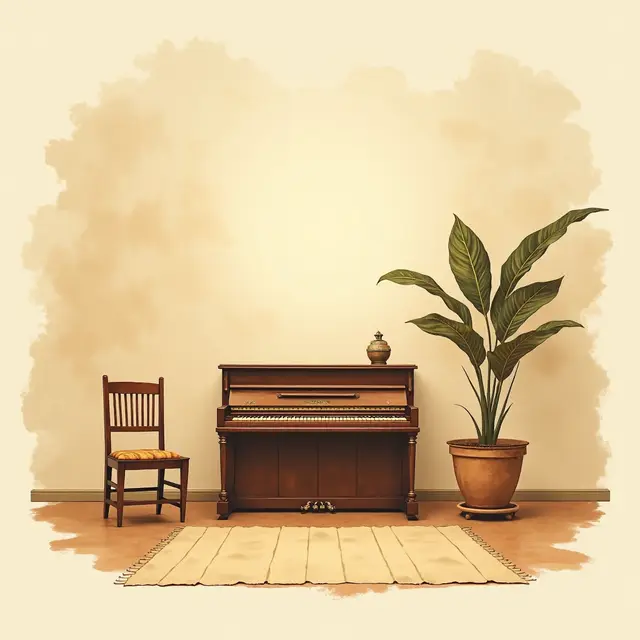
It is a Sunday afternoon in a parlor where the low sun cuts horizontally through the floating dust suspended over the polished hardwood floor. You smell old furniture wax and lukewarm lemonade sweating against the sides of a tall glass. There is no rush anywhere. You are sitting at a grand piano with ivory keys slightly yellowed by time, and the varnished wood catches the warm glint of the gas lamp beginning to flicker against the wallpaper.
The left hand strikes the lower register with an exact, relentless pulse, steady as a grandfather clock measuring the seconds without mercy. But the right hand does something else: it skips, trips with grace, chasing a playful syncopation that destabilizes the downbeat for just a fraction of a second before landing precisely where it belongs. This is not a lament, though it carries the quiet memory of everything that is gone. Patent leather shoes tap an invisible triplet against the floorboards beneath the bench.
Every note is a quick bow, a mischievous wink that pokes fun at its own sorrow. The melody rushes forward, tangles in the lace window curtains, and spills out into the street where the afternoon stretches lazily. There is a smile at the corner of the mouth, but the eyes drift toward an empty corner where someone used to sit. The music does not apologize for its joy; it simply keeps dancing across the creaking floor.
Palette: mahogany brown / olive green / gold terracotta
- BPM
- 100 BPM
- Family
- Smoke and Midnight
- Serial
- HUM-25
- Rarity
- Common
- Style strength
- 93
- Experimentation
- 24
Typical structure
[Section A] → [Section B] → [Section A] → [Section C] → [Final Section A]
What you see above is merely the surface setting. Two specific pitfalls haunt this style: falling into empty, cheesy cheerfulness or bogging down in a heavy sadness that ruins the bounce of the rhythm. Making the lyrics smile while the memory aches requires a microscopic balance that cannot fit into a table. All of that lives within an unpublished internal distillate of eight parameters, and the engine cross-references it with your personal story. When finished, an internal judge measures the lyrics against six canonical dimensions and orders repairs on anything that falls short. The piano is tuned. The grace, not.
How a lyric in this style thinks
A ragtime lyric does not grieve — it commemorates. It holds loss at arm's length with a steady left hand and lets the right hand do the dancing, and that tension between the pulse and the skip is exactly where the emotional work happens. The form arrived in parlors and dance halls at the turn of the twentieth century, and it carries that architecture still: a kind of public elegance that refuses to let private sorrow collapse the posture. When you write for ragtime, you are writing for a person who tips their hat to the hard years and keeps walking. The wit is load-bearing. Remove it and the whole structure goes soft.
The base tone sits somewhere between warm amber and dry irony. Emotion in ragtime arrives sideways — through the detail of a worn jacket collar, through the exact way a glass of lemonade sweats on a Sunday afternoon, through the image of patent leather shoes tapping against hardwood while someone's eyes drift toward a chair that no longer holds the person it used to hold. You do not name the grief directly. You let the syncopation carry it.
Rhythmically, lines tend to land just off the expected beat, mirroring the piano's right-hand skitter — a short phrase tumbles forward, catches itself, resolves with a small, precise click of finality. Repetition works here not as emotional escalation but as structural courtesy, the way a well-told story circles back to its opening image with a knowing nod rather than a raised voice.
The sensory field is specific and period-grounded: polished hardwood, ivory keys yellowed at the edges, wallpaper with a faded pattern, gas lamps, lemonade in tall glasses, varnished wood catching afternoon light. These are the objects that anchor ragtime in its historical body. What the genre does not use is abstraction without an object attached to it. You cannot write about time passing in ragtime without the grandfather clock on the wall. You cannot write about memory without the smell of furniture wax. The concrete image is the emotional argument — sentiment is delivered through the thing, never through the declaration.
Structurally, classic ragtime follows a rondo logic: a primary theme stated, then a contrasting section, then the primary theme returned, then a second contrast, then the primary theme once more as a closing bow. For lyrics this means your central image or refrain should be sturdy enough to bear three visits, and each visit should feel slightly altered by what came between — not because the words change, but because the listener has changed.
The B and C sections are your chance to introduce a new angle on the central subject: a different memory, a different room, a different detail that recontextualises the refrain without undermining it. Think of it as a man telling the same story twice, but the second time you notice the slight pause before the punchline.
What separates a real ragtime lyric from a generic imitation is the refusal to apologise for joy. Imitations reach for pathos and end up sentimental; the real thing keeps the tempo, keeps the wit, and trusts that the ache will arrive on its own through the precision of the image. The vocal delivery mirrors the piano — bright in the upper register, clipped at the ends of phrases, never trailing into a long held note that would slow the forward momentum.
Production-wise, the stride bass keeps absolute time at around a hundred beats per minute, and every lyric choice should honour that relentlessness: no line should drag, every syllable should feel like it knows where it is going. Ragtime celebrates by keeping the dance floor populated, even when the guest of honour left the room years ago.
- SYNCOPATED PIANO
- OLD-WORLD CHARM
- INSTRUMENTAL
Sample excerpt
Granddaddy wears his hat at a tilt, Polishing buttons on a vest made of silk. He stirs the ice cubes in a lemonade glass, Watching the dusty summer hours pass. He leans on his cane with a wink in his eye, While the trolley car rattles and rumbles on by.
Oh, step to the rhythm of a bygone day, Let the piano chatter all the clouds away. Keep your back straight, keep your boots tapping fast, Making a memory built just to last.
Workshop note — Ragtime lyrics rely on short, punchy lines that mirror the percussive, syncopated rhythm of the piano. The chorus functions as a call to movement rather than an emotional release, prioritizing a witty, nostalgic charm over sentimentality. Avoid heavy metaphors or long, flowing sentences; keep the imagery grounded in the physical world of the early twentieth century.
Sample excerpt written by MUSAI Song. Your lyrics are written from scratch, based on your story.
When to choose this style
Choose this card when you need to remember someone with a smile that barely hides the ache of nostalgia. It works to celebrate the life of an elegant grandfather who told stories with a glass of lemonade in his hand and a sharp, witty edge. For an anniversary where heavy sorrow has no place and what lingers is best danced away. To thank the person who taught you how to take life's blows with a brimmed hat and a straight back. To capture a bright chapter of family history that has already passed but whose grace remains intact in memory.
Do not choose it for fresh grief that still requires weeping, nor for deep rage or heavy mourning that demands silence and gravity. If you are looking for a tone of late-night confession and smoky intimacy, the card is Jazz Nocturno.
Your story in this style
MUSAI Song writes original lyrics from your story, in the Ragtime style, and delivers the finished sung song, the ready-to-use style recipe, and an illustrated art plate with its numbered certificate, private by default; public only if its owner publishes it.
- Original lyrics written from your story
- A finished sung song, ready to play and share
- Art plate with a unique seal and a numbered certificate, private by default; public only if its owner publishes it
Frequently asked questions
What BPM is Ragtime?
Ragtime usually runs at 100 BPM.
What does Ragtime sound like?
Bright, syncopated piano bouncing like a sunny day from long ago. Ragtime: jazz's elegant grandmother, sparkling, nostalgic, and full of playful grace.
What song structure does Ragtime use?
[Section A] → [Section B] → [Section A] → [Section C] → [Final Section A]
How do I write Ragtime lyrics?
Tell MUSAI Song your story and pick Ragtime: it writes original lyrics for this style at 100 BPM, you edit them word by word, and you get the song sung in Ragtime, with an illustration of the song and its numbered certificate. $19 USD per song, one-time payment.
Explore more styles
- Acid Jazz
- Afro-Cuban Jazz
- Bebop
- Big Band
- Boogie-Woogie
- Bossa Nova
- Cabaret
- Chicago Blues
- Classic Blues
- Cool Jazz (West Coast)
- Delta Blues
- Exotica Lounge
- Gypsy Jazz
- Hard Bop
- Jazz Funk
- Jazz Fusion
- Jump Blues
- Late-Night Jazz
- Latin Jazz
- Lounge
- Modal Jazz
- New Orleans Jazz
- Nu-Jazz
- Organ Trio
Your idea or story, sung in this style
Card · secure payment via Stripe, charged in USD
If it doesn't move you, we give you your money back · 7 days