Nu-Jazz
Jazz looked in the mirror and decided the future suited it just fine.
Get your song in Nu-Jazz
Make yours in this styleHear it before you pay.$19 USD · your first song for $5.50 USDIf it doesn't move you, we give you your money back · 7 days.
Nu-Jazz is a style from the Smoke and Midnight family. 110 BPM.
What is Nu-Jazz?
Electronic beats and live jazz instrumentation fused with effortless elegance. Nu-jazz: jazz that traveled to the future, atmospheric, smooth, and sophisticated for the modern late night.
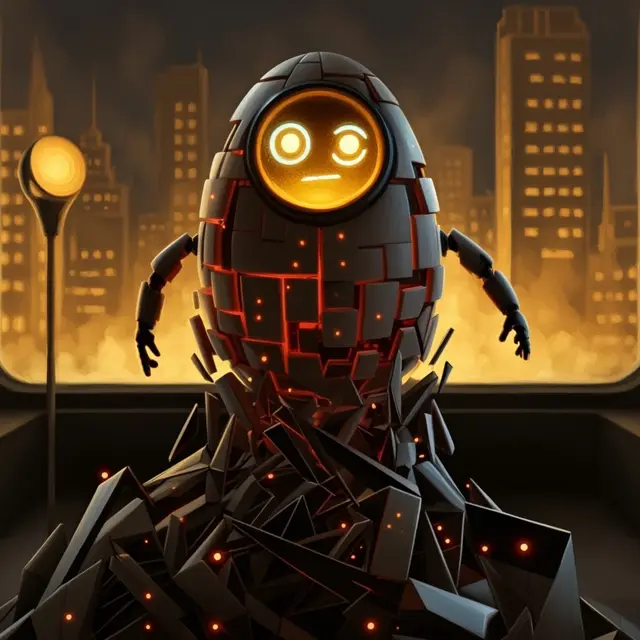
How it sounds
It is a quarter past three in the morning in a sixtieth-floor apartment overlooking an avenue where the buses no longer carry passengers, only amber lights sweeping across the brick facade opposite. The air conditioning hums with a low frequency that blends into the circuitry of a Roland TR-808 rhythm machine, passed through a compressor that flattens the hit into a thick, almost liquid pulse.
You are sitting in a leather chair that gives way slowly beneath your weight, holding a lowball glass where the ice has melted completely, leaving a puddle of lukewarm water around the bourbon. On the other side of the glass wall, asphalt dampened by an unseen drizzle glows in blue and amber tones rising from the pharmacy signs below. A trumpet with a Harmon mute enters the space. It does not play a melody; it releases stretched-out notes with a metal tremble that seems to search for an exit among the furniture, stopping just before it breaks.
A Wurlitzer electric piano answers from the back with three minor chords floating over an acoustic bass played with a bow, a harsh sound scraping the wood like someone dragging a suitcase down an empty hallway. There is no rush here. The mixture of electronics and late-night swing does not demand your attention: it suspends it. You find yourself staring at the reflection of your own face in the pane, cut out against the silhouette of office blocks still lit on the opposite riverbank.
The night does not hurt; it weighs like a wet wool coat you decided not to take off.
Palette: graphite dark red orange amber
- BPM
- 110 BPM
- Family
- Smoke and Midnight
- Serial
- HUM-26
- Rarity
- Common
Typical structure
[Intro] → [Theme] → [Solo] → [Electronic break] → [Final theme]
The BPM data and instruments you see above are just the shell. Behind them lies a fragile balance that refuses to be captured by a number: how to make a synthetic beat and an acoustic instrument breathe at the exact same pace without one devouring the other, and where to place the empty space so the trumpet note floats instead of falling. That lives inside an unpublished internal distillate of eight parameters, which the engine crosses with your story before drafting a single line. When it finishes, an internal judge measures the lyrics against six canons and repairs anything sounding conventional. The compressor is bought anywhere. The elegant distance, not.
How a lyric in this style thinks
A nu-jazz lyric does not announce its turning point — it circles it, the way a muted trumpet circles a note it never quite resolves. The genre works by compression: everything that would be shouted in another style gets folded inward, held under the surface like heat beneath glass. Emotion arrives sideways, through the physical detail of a room at three in the morning rather than through declaration. The bourbon glass. The hum of climate control. The reflection in the window that is almost your face but not quite.
Nu-jazz builds its emotional weight from these textures, and a lyric that ignores them in favour of direct statement will always feel misplaced, like someone raising their voice in a library.
Rhythmically, the genre is governed by a kind of deliberate drift. The TR-808 pulse sits at a tempo that is neither urgent nor slow — close to 110 beats per minute, but the lyric should feel slower than that because the phrasing pulls against the grid. Lines run long, then break early. Syllables land between beats rather than on them.
If you write in strict end-rhyme, the lyric will snap into focus in a way nu-jazz resists; half-rhyme and assonance let the sound blur at the edges the way the Wurlitzer does, those minor chords floating rather than landing. Repetition exists in this genre, but it functions like the recurring amber sweep of a bus light across a brick wall — the same image returns, but the room has shifted slightly around it.
The sensory field is specific and urban and nocturnal. Wet asphalt. Pharmacy signs. The acoustic bass played arco, that bowed scrape that sounds like furniture being moved in the apartment above. Office towers still lit on the far bank of a river. Ice that has already melted. Nu-jazz lives in cities that are beautiful in proportion to how empty they are at the hour you are writing, and its imagery is always tactile before it is emotional — you feel the weight of a wet wool coat before you name the feeling wearing it.
What this genre refuses: sunlight, sand, euphoria, resolution that arrives clean. It does not resolve. It suspends. The final section returns to the opening theme not as triumph but as recognition — the same corridor, the same low frequency, but you are standing in it differently.
Structurally, a nu-jazz piece moves through five phases: an intro that establishes atmosphere without narrative, a theme section where the central image or situation is laid down, a solo space where the lyric can breathe and fragment, an electronic break that strips everything back to pulse and texture, and a final theme that restates without explaining. If you are writing lyrics for this arc, understand that the electronic break is not a bridge in the conventional sense — it is a caesura, a held breath, the moment before you accept something.
The words, if any survive that section, should be sparse. One line. Maybe none. The production will carry the meaning if you have laid the groundwork correctly in the theme.
What separates a genuine nu-jazz lyric from an imitation is restraint at exactly the moment imitation reaches for intensity. When the chapter closes in this genre, there is no slammed door — there is a hand resting briefly on a table, then lifting. The city outside is still running its amber lights across the facade. The Harmon mute searches the room for an exit and does not find one, which is precisely the point. Write toward that unresolved metal tremble, and you are writing nu-jazz. Write toward the resolution and you are writing something else entirely.
- ELECTRONIC JAZZ
- MODERN LATE NIGHT
- INSTRUMENTAL
Sample excerpt
The espresso machine hums a low frequency, marking the ink black hour on the wall clock. You left your silver lighter by the windowsill, a cold weight against the condensation. I trace the patterns of the frost on the glass, watching the amber glow of the streetlamp blink.
These rooms hold the shape of your absence, shifting like smoke in a narrow hallway. We are just echoes waiting for the dawn.
Workshop note — Nu-jazz lyrics rely on short, observational fragments that leave space for the instrumentation to breathe, favoring mood over narrative resolution. By focusing on mundane objects like a lighter or a clock, the words ground the listener in a specific late-night atmosphere rather than explaining the emotion. Avoid rhyme schemes that feel too tight, as they clash with the genre's loose, sophisticated rhythmic pulse.
Sample excerpt written by MUSAI Song. Your lyrics are written from scratch, based on your story.
When to choose this style
Choose this card when you need to tell of a turning point that happened in silence, without shouts or slammed doors. It works for an adult reconciliation that needs no promises, only sitting at the same table watching day break. For the exact moment you accept that a chapter is over and the house feels large, but not empty. For describing a city where you were happy despite the cold and the distance from the people you loved.
For a goodbye written on a linen napkin at two in the morning, or when the memory of someone returns not as a sweet keepsake, but as a physical presence sitting in the passenger seat of a car. Do not use it for stories asking for euphoria, loud celebrations, or summer plots with sun and sand; nu-jazz does not know how to be sunny and drowns in overly clean happy endings. Nor does it serve for conflicts resolved by shouting or teenage spite. If you seek raw street urgency, the letter is Jazz Nocturno.
Your story in this style
MUSAI Song writes original lyrics from your story, in the Nu-Jazz style, and delivers the finished sung song, the ready-to-use style recipe, and an illustrated art plate with its numbered certificate, private by default; public only if its owner publishes it.
- Original lyrics written from your story
- A finished sung song, ready to play and share
- Art plate with a unique seal and a numbered certificate, private by default; public only if its owner publishes it
Frequently asked questions
What BPM is Nu-Jazz?
Nu-Jazz usually runs at 110 BPM.
What does Nu-Jazz sound like?
Electronic beats and live jazz instrumentation fused with effortless elegance. Nu-jazz: jazz that traveled to the future, atmospheric, smooth, and sophisticated for the modern late night.
What song structure does Nu-Jazz use?
[Intro] → [Theme] → [Solo] → [Electronic break] → [Final theme]
How do I write Nu-Jazz lyrics?
Tell MUSAI Song your story and pick Nu-Jazz: it writes original lyrics for this style at 110 BPM, you edit them word by word, and you get the song sung in Nu-Jazz, with an illustration of the song and its numbered certificate. $19 USD per song, one-time payment.
Explore more styles
- Acid Jazz
- Afro-Cuban Jazz
- Bebop
- Big Band
- Boogie-Woogie
- Bossa Nova
- Cabaret
- Chicago Blues
- Classic Blues
- Cool Jazz (West Coast)
- Delta Blues
- Exotica Lounge
- Gypsy Jazz
- Hard Bop
- Jazz Funk
- Jazz Fusion
- Jump Blues
- Late-Night Jazz
- Latin Jazz
- Lounge
- Modal Jazz
- New Orleans Jazz
- Organ Trio
- Piano Jazz Trio
Your idea or story, sung in this style
Card · secure payment via Stripe, charged in USD
If it doesn't move you, we give you your money back · 7 days