Boogie-Woogie
The black keys and white keys finally agreed, and nobody could stop them.
Get your song in Boogie-Woogie
Make yours in this styleHear it before you pay.$19 USD · your first song for $5.50 USDIf it doesn't move you, we give you your money back · 7 days.
Boogie-Woogie is a style from the Smoke and Midnight family. 160 BPM, Experimentation 26, Style strength 92.
What is Boogie-Woogie?
Left-hand piano rolling unstoppable beneath bright, punchy riffs. Boogie-woogie: the party distilled into piano, rolling, infectious, and full of an energy that keeps everyone on their feet.
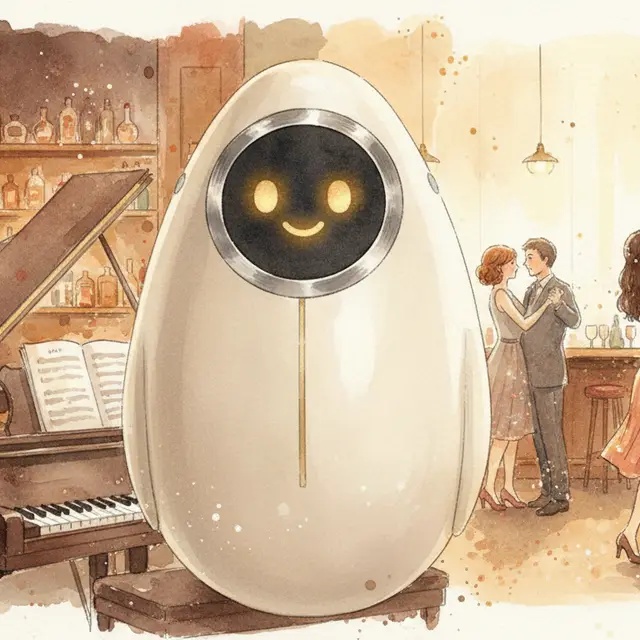
How it sounds
It is half past eleven on a Friday that weighs on the air like overripe fruit. The floorboards are made of dark pine, stained by decades of spilled beer and soles that never learned how to stand still. The heat inside is thick, brewed from cheap tobacco smoke and warm breath, and the smell of aged timber mixes with the cold metal of the brass rail along the bar. Standing beside an upright piano with worn ivory keys turned yellow by age, a man moves his fingers with a fury so precise it defies logic.
His left hand hammers out the bassline in a rolling pattern, a freight train refusing to brake for even a fraction of a second, while his right hand fires off short, bright, splintered riffs that leap over the crowd like sparks off a grinding wheel. Resting on top of the piano lid, three thick glass tumblers dance in unison, threatening to tip over from the relentless tremor of the wood.
Nobody looks at the walls; everyone stares at the leather shoes striking the oak platform, keeping a pulse so furious the floor itself seems to dip and spring back up. Couples spin tightly together, coats brushing, laughing for no other reason than the sheer speed of a keyboard that leaves no empty space to think about the cold street outside where nobody is dancing. There is no mercy here, only the unyielding pressure of a rhythm driving the body forward until the legs obey before the head does.
Palette: warm gold / coral red / reddish brown
- BPM
- 160 BPM
- Family
- Smoke and Midnight
- Serial
- HUM-24
- Rarity
- Common
- Style strength
- 92
- Experimentation
- 26
Typical structure
[Intro] piano → [Theme] → [Variation] → [Solo] → [Final Theme]
What you see above is merely the stage set. Beneath it lies a complex technical problem: sustaining that furious velocity without drowning the lyrics in a rush, and ensuring the constant friction between the percussive bass and the right-hand riffs finds its exact metric mirror without sounding juvenile. That lives inside an unpublished internal distillate of eight parameters that the engine crosses with your story before writing a single syllable. When finished, an internal judge measures the output against six dimensions of the canon and forces a rewrite on anything that fails to burn with the proper heat. The notes run on any keyboard. The urgency, does not.
How a lyric in this style thinks
A boogie-woogie lyric does not describe a party — it becomes the mechanism that makes one happen. The words exist to accelerate, to pull the listener off the seat, to create the sensation that the floor is already moving underfoot before the first chorus lands. This is one of the few genres where the lyric is subordinate to the rhythmic engine, and a good writer knows it: you are not composing poetry to be read, you are loading ammunition into a rolling left-hand bassline that fires at 160 beats per minute and refuses to stop.
Boogie-woogie earns its place in the Smoke and Midnight family through sheer kinetic heat, the kind of warmth that has nothing to do with comfort and everything to do with friction — bodies moving, wood vibrating, glass rattling on top of a piano lid that cannot hold still.
Emotion in this genre arrives physically before it arrives emotionally. The tone is warm gold edged with something rawer, a reddish amber that suggests sweat and cheap whiskey and the specific joy of a night that escapes its own schedule. There is no melancholy permitted, no ironic distance, no winking at the audience from behind a veil of cleverness. When feeling enters a boogie-woogie lyric, it comes in through the body — through the legs, the hands, the chest. Repetition is not a weakness here; it is the structural argument.
A single phrase hammered four times across a verse is not laziness, it is the verbal equivalent of the left-hand ostinato, the rolling octave pattern that locks the groove in place and refuses to let it drift. Line lengths tend to be short and punchy, clipped to match the right-hand riffs that leap across the keyboard like sparks. If a line runs long, it earns that length by building momentum, not by adding nuance.
The sensory field of boogie-woogie is precise and unforgiving. You are in a room with dark pine floors, worn ivory keys, brass fixtures, thick tobacco air, and leather shoes striking wood. The imagery is tactile and immediate — things you can smell and feel before you can name them. What this genre never uses: open landscape, quiet windows, rain on glass, soft light, interior reflection, or any image that implies stillness. The clock on the wall is irrelevant. The cold street outside does not exist. Every concrete detail in a boogie-woogie lyric should make the room feel smaller and hotter and more crowded, because compression is what generates the pressure that makes people move.
Structurally, the genre follows a logic inherited directly from the piano: Intro, Theme, Variation, Solo, Final Theme. As a lyric writer, this means your opening establishes the groove in words the same way the pianist establishes it in the first rolling bars — declarative, rhythmically locked, no preamble. The Theme is your hook, the phrase that will repeat and accumulate weight across the song.
The Variation gives you room to push the image sideways, to add a detail or a turn of phrase that keeps the listener from anticipating the next line exactly. The Solo is instrumental territory; if you are writing for a vocal arrangement, this is your space for a breakdown or a call-and-response passage, not a place to introduce new emotional content. The Final Theme returns with the force of inevitability, not surprise.
What separates a real boogie-woogie lyric from a generic imitation is restraint applied in exactly the right places. The temptation is to overfill every line, to match the density of the piano with verbal density. The opposite works better. Leave space for the rhythm to breathe through the words, not around them. The piano is already saying everything complicated; your job is to say the one true, physical, immediate thing that the room needs to hear shouted over the noise.
If you are producing in Suno, lean into the rolling left-hand bass and let the right-hand riffs cut bright and dry — no heavy reverb, no wash, nothing that softens the attack. Boogie-woogie does not whisper. It does not stand still. And neither should a single line of its lyric.
- ROLLING PIANO
- KEYBOARD PARTY
- INSTRUMENTAL
Sample excerpt
Diner clock struck two past the hour, Spilled my coffee on the vinyl seat, Waiter's laughing, he’s got the power, Bouncing rhythm right beneath our feet. Throwing loose change on the checkered floor, Don't need a map to find the exit door.
Roll it heavy, let the amber keys talk, Shake the ceiling while we dance the walk. High gear engine, no looking back now, Keep the rhythm moving, take a final bow.
Workshop note — This genre thrives on short, punchy lines that mirror the frantic pace of a rolling piano line. The chorus should function as a high-energy hook that demands movement rather than contemplation, avoiding any slow or wordy phrasing that would drag the momentum. Keep the vocabulary focused on physical motion and loud, tactile sensations to ensure the lyrics never outpace the piano's relentless drive.
Sample excerpt written by MUSAI Song. Your lyrics are written from scratch, based on your story.
When to choose this style
Choose this track when you want to capture a night that spiraled out of control and ended with everyone laughing on top of a table. It works to celebrate the untamable energy of an elder who still dances like he is twenty, for a promotion celebrated without checking the clock, or for a loud reconciliation where words are useless and only moving feet matter. It is the ideal vehicle for a moment of pure euphoria, when life accelerates so fast that surrender is the only option.
Do not pick this for a loss, a quiet farewell, or a melancholic memory that asks for silence: boogie-woogie does not know how to lower its voice or stand still. It is equally unsuited for intimate reflections by a window. If you are looking for a contained, nocturnal atmosphere where distance and shadow set the pace, the card is Jazz Nocturno.
Your story in this style
MUSAI Song writes original lyrics from your story, in the Boogie-Woogie style, and delivers the finished sung song, the ready-to-use style recipe, and an illustrated art plate with its numbered certificate, private by default; public only if its owner publishes it.
- Original lyrics written from your story
- A finished sung song, ready to play and share
- Art plate with a unique seal and a numbered certificate, private by default; public only if its owner publishes it
Frequently asked questions
What BPM is Boogie-Woogie?
Boogie-Woogie usually runs at 160 BPM.
What does Boogie-Woogie sound like?
Left-hand piano rolling unstoppable beneath bright, punchy riffs. Boogie-woogie: the party distilled into piano, rolling, infectious, and full of an energy that keeps everyone on their feet.
What song structure does Boogie-Woogie use?
[Intro] piano → [Theme] → [Variation] → [Solo] → [Final Theme]
How do I write Boogie-Woogie lyrics?
Tell MUSAI Song your story and pick Boogie-Woogie: it writes original lyrics for this style at 160 BPM, you edit them word by word, and you get the song sung in Boogie-Woogie, with an illustration of the song and its numbered certificate. $19 USD per song, one-time payment.
Explore more styles
- Acid Jazz
- Afro-Cuban Jazz
- Bebop
- Big Band
- Bossa Nova
- Cabaret
- Chicago Blues
- Classic Blues
- Cool Jazz (West Coast)
- Delta Blues
- Exotica Lounge
- Gypsy Jazz
- Hard Bop
- Jazz Funk
- Jazz Fusion
- Jump Blues
- Late-Night Jazz
- Latin Jazz
- Lounge
- Modal Jazz
- New Orleans Jazz
- Nu-Jazz
- Organ Trio
- Piano Jazz Trio
Your idea or story, sung in this style
Card · secure payment via Stripe, charged in USD
If it doesn't move you, we give you your money back · 7 days