Organ Trio
The organ doesn't need to be in tune — it needs to be believed.
Get your song in Organ Trio
Make yours in this styleHear it before you pay.$19 USD · your first song for $5.50 USDIf it doesn't move you, we give you your money back · 7 days.
Organ Trio is a style from the Smoke and Midnight family. 115 BPM, Experimentation 28, Style strength 92.
What is Organ Trio?
A warm Hammond organ, a jazz guitar, and drums locked into a blues groove. The organ trio is jazz at its most soulful, warm, swinging, and carrying that late-night church feeling.
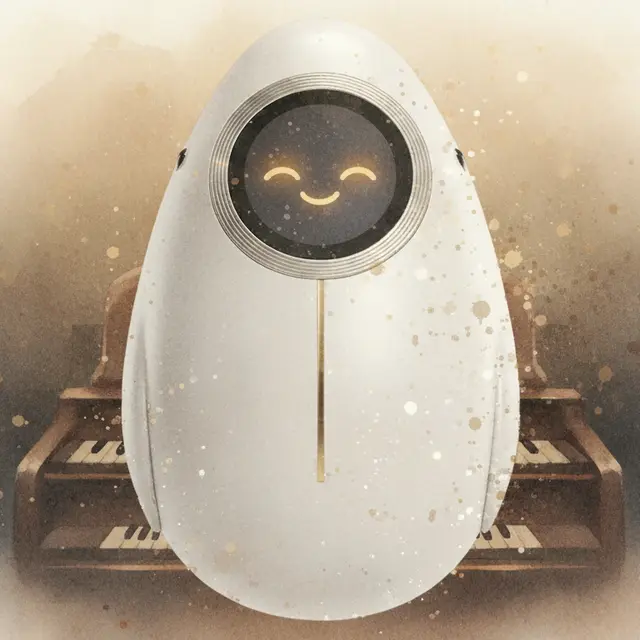
How it sounds
It is a quarter past three in the morning in a room where exposed brick walls trap forty years of stubborn heat. The bourbon glass in your hand holds a single square ice cube that has already rounded its edges against the crystal, clinking softly every time the wooden stage shivers beneath your shoes. No one is standing. Everyone is sunk deep into worn vinyl stools that exhale a sigh of stale air whenever someone shifts their weight.
Up on the cramped stage, the Leslie speaker inside the Hammond B3 cabinet spins with a mechanical purr, pushing thick air toward the corners with infinite patience. The organist keeps his eyes shut, his forehead gleaming from tube heat, while his left hand walks the lower manual, laying down a bass line so round and fat you feel it right in your teeth. Beside him, the guitarist ignores the frets, tilting his chin downward to let three short, dirty notes drop one after another like heavy raindrops on a zinc roof. The drummer is in no rush.
The rimshot lands dry and almost lazy, leaving the space between beats to fill with the scent of cold tobacco and the brush of a stick sliding across the ride cymbal. There is no urgency in this room. The air is dense, smelling of aged wood and hot metal, and the groove moves like a heavy animal settling into the dark, refusing to leave ever again.
Palette: sepia brown gold amber
- BPM
- 115 BPM
- Family
- Smoke and Midnight
- Serial
- HUM-29
- Rarity
- Common
- Style strength
- 92
- Experimentation
- 28
Typical structure
[Head] → [Organ Solo] → [Guitar Solo] → [Head Out]
The four data points above can be copied in a minute. What remains hidden is the invisible architecture of phrasing: how to build a melody that feels improvised while respecting the exact gravity of minor blues, and where to place the guitar's rests so the Hammond sounds like a human voice sighing. All of that lives inside an unpublished internal distillate of eight parameters that the motor crosses with your story before locking down every single chord. Upon completion, an internal judge measures the lyrics against six canonical dimensions and sends back any turn of phrase that smells like a modern cliché. The organ is rented. The midnight groove, not.
How a lyric in this style thinks
A lyric written for organ trio doesn't explain itself. It arrives the way the Hammond B3 does — already warm, already mid-sentence, as if the room has been holding this feeling for hours before you walked in. The genre works by implication rather than declaration. What the words never say directly is exactly what they mean, and the listener understands this because the groove underneath has already confessed everything.
Organ trio is jazz stripped to its structural bones: organ, guitar, drums, and whatever emotional weight you can carry without theatrics. When lyrics appear in this form — and they don't always, since the tradition leans instrumental — they function as a third voice inside the improvisation, not a narrator standing outside it.
The emotional register sits in amber and deep gold, closer to recognition than revelation. There is no urgency. A line in this genre can afford to end without resolution because the bass pedal under the organ's left hand is already providing the resolution nobody asked for out loud. Repetition is not laziness here — it is faith. A single phrase returned two or three times across a song accumulates meaning the way a square ice cube rounds its edges in bourbon: slowly, without announcement, changing the temperature of everything around it.
Line length tends toward the medium and conversational, nothing sprinting, nothing sprawling into confession. The rhythm follows the rimshot — dry, almost lazy — landing just behind where you expected it, which is how trust sounds when it has nothing left to prove.
The sensory world of organ trio is specific and non-negotiable. Exposed brick. Worn vinyl. The mechanical purr of a Leslie speaker cycling through thick air. Hot tube metal and cold tobacco. These are the textures the words live inside. Concrete objects earn their place only if they carry weight without decoration — a glass, a stool, a stage that shudders under a drummer's foot. What this genre refuses is abstraction dressed as depth: you will not find cosmic metaphors, soaring imagery, or the language of arrival and triumph.
The camera stays low, stays close, stays inside the room. A closing bar, a mentor's grease-stained hands, two people in a kitchen at four in the morning who have run out of sentences but not out of loyalty — these are the subjects that fit.
Structurally, organ trio follows a logic that mirrors its instrumental form: Head, solo space, Head Out. When lyrics shadow this architecture, the opening statement is plain and grounded, almost matter-of-fact. The middle opens into something more interior, where the writing loosens slightly the way a guitar solo loosens the tempo without actually rushing it. Then the return to the Head is not a triumphant recap — it is the same words heard differently because the solo changed the air between them. The ending does not resolve so much as settle, like a heavy animal finding its position in the dark and deciding to stay.
What separates a real organ trio lyric from a generic imitation is restraint carried all the way to the final word. Generic versions mistake quietness for emptiness and fill the space with sentiment. The genuine article trusts that the Hammond's tone is already doing the emoting — your job is to give it one honest, specific thing to lean against. Write toward the unostentatious: the loyalty that never needed a speech, the affection proved by staying put. If the line could be shouted, cut it. If it explains what the music already shows, cut it. What remains should read like something said once, quietly, to someone who already knew.
- HAMMOND ORGAN
- SOULFUL GROOVE
- INSTRUMENTAL
Sample excerpt
The neon sign outside is humming, spitting ink black onto the linoleum floor. Your coffee cup has a ring of dried amber sediment near the handle. I count the slow tick of the wall clock while the grease stains on your knuckles catch the light. Neither of us has moved for an hour, just watching the steam dissolve in the quiet.
The organ hums a low, steady prayer, We stay put, and that is enough to say. No clever words to fix the air, Just keeping watch until the break of day.
Workshop note — In this style, short, grounded lines provide the rhythmic pocket for the organ to breathe. The lyrics prioritize physical details—like stained knuckles and cooling coffee—over emotional declarations, mirroring the restrained, steady groove of the trio. Avoid long, complex sentences; keep the cadence loose and unhurried to match the late-night atmosphere.
Sample excerpt written by MUSAI Song. Your lyrics are written from scratch, based on your story.
When to choose this style
Choose this carta when you need to tell of a loyalty that never required speeches. It works for the moment two people sit in silence in the kitchen at four in the morning, knowing everything is over yet breaking no plates. For thanking a mentor who taught you how to work with grease-stained hands without delivering a single theoretical lesson. For a hometown bar closing its doors for the very last time, where old friends drink one final round staring at the floor.
For the relief of leaving haste behind and realizing life happens in the short walk between the bar counter and the exit. The organ trio is the carta of unostentatious maturity, of affection proved simply by staying put when there is nothing clever left to say. Do not choose it for youthful euphoria, desperate love declarations, or loud victories; this style holds no shouts and no epic endings. It also fails when trying to recount sudden betrayal or grief that needs speed to vent.
If you are looking for an accelerated pulse and raw confessions, the carta is Jazz Nocturno.
Your story in this style
MUSAI Song writes original lyrics from your story, in the Organ Trio style, and delivers the finished sung song, the ready-to-use style recipe, and an illustrated art plate with its numbered certificate, private by default; public only if its owner publishes it.
- Original lyrics written from your story
- A finished sung song, ready to play and share
- Art plate with a unique seal and a numbered certificate, private by default; public only if its owner publishes it
Frequently asked questions
What BPM is Organ Trio?
Organ Trio usually runs at 115 BPM.
What does Organ Trio sound like?
A warm Hammond organ, a jazz guitar, and drums locked into a blues groove. The organ trio is jazz at its most soulful, warm, swinging, and carrying that late-night church feeling.
What song structure does Organ Trio use?
[Head] → [Organ Solo] → [Guitar Solo] → [Head Out]
How do I write Organ Trio lyrics?
Tell MUSAI Song your story and pick Organ Trio: it writes original lyrics for this style at 115 BPM, you edit them word by word, and you get the song sung in Organ Trio, with an illustration of the song and its numbered certificate. $19 USD per song, one-time payment.
Explore more styles
- Acid Jazz
- Afro-Cuban Jazz
- Bebop
- Big Band
- Boogie-Woogie
- Bossa Nova
- Cabaret
- Chicago Blues
- Classic Blues
- Cool Jazz (West Coast)
- Delta Blues
- Exotica Lounge
- Gypsy Jazz
- Hard Bop
- Jazz Funk
- Jazz Fusion
- Jump Blues
- Late-Night Jazz
- Latin Jazz
- Lounge
- Modal Jazz
- New Orleans Jazz
- Nu-Jazz
- Piano Jazz Trio
Your idea or story, sung in this style
Card · secure payment via Stripe, charged in USD
If it doesn't move you, we give you your money back · 7 days