Piano Jazz Trio
Three people, a grand piano, and a silence that knows when to speak.
Get your song in Piano Jazz Trio
Make yours in this styleHear it before you pay.$19 USD · your first song for $5.50 USDIf it doesn't move you, we give you your money back · 7 days.
Piano Jazz Trio is a style from the Smoke and Midnight family. 120 BPM, Experimentation 28, Style strength 93.
What is Piano Jazz Trio?
Elegant piano, brushed drums, and upright bass talking like old friends. The piano jazz trio: the most intimate and refined form of jazz, pure conversation between three souls.
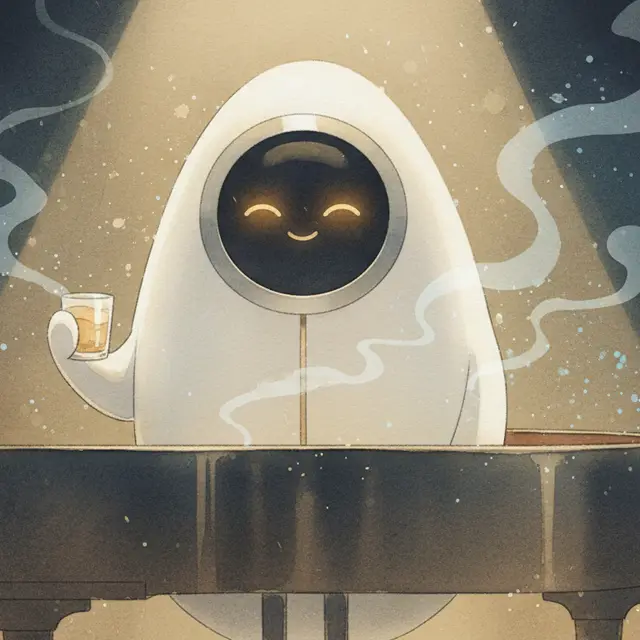
How it sounds
It is three in the morning in the back booth of a room that smells of aged wood, furniture wax, and warm bourbon. The dark parquet floor barely groans under the weight of a waiter wiping down the final table with slow, practiced movements. On the small wooden riser, the pianist leans in close over the keys with surgical precision, fingers brushing the ivory with a gentleness that feels like asking permission before speaking.
Right beside him, the bass player cradles his upright instrument like an old acquaintance who no longer requires small talk; long fingers pull the thick strings in a heavy, rounded pizzicato that settles right against the ribs. Further back, the drummer skims wire brushes across the snare head, a steady, dry friction mimicking fine rain against a dark pane. No one looks at the trio. No one needs to. The music does not ask for applause; it simply occupies the space between two people who have spent hours avoiding the hard truth.
The piano drops a brief phrase, a three-note question hanging in the thick, slow air. The bass answers a full measure later, unhurried, confirming what the other only dared to imply. There is no hook to rescue the night, no sudden drop to jolt the distracted. There is only the quiet certainty that everything worth saying is spoken below a whisper.
Palette: gray smoke blue gold sepia
- BPM
- 120 BPM
- Family
- Smoke and Midnight
- Serial
- HUM-28
- Rarity
- Common
- Style strength
- 93
- Experimentation
- 28
Typical structure
[Theme] → [Piano Solo] → [Bass Solo] → [Final theme]
What you see on the surface is only the atmosphere of a late-night lounge. Beneath it lie two difficult hurdles: how to maintain dramatic tension without speeding up the pulse, and how to make a lyric handle complex emotion using only everyday objects and measured silences. That lives inside an unpublished internal distillate of eight parameters that the motor crosses with the buyer's history. When finished, an internal judge measures against six canons and repairs whatever sounds forced. The tempo can be copied. Exact restraint, cannot.
How a lyric in this style thinks
A lyric in piano jazz trio does not announce itself. It enters the room the way a thought arrives at three in the morning — already half-formed, already weighted with everything that came before it. The form's fundamental gesture is withholding: the line that stops one word short of the confession, the image that names the object but not the feeling attached to it. Piano jazz trio lives in that gap between what is said and what is understood, and a lyric that fills every silence with explanation has already failed the genre. The emotional contract here is not catharsis but recognition — the listener leans in because the song trusts them to complete the thought themselves.
The base tone is gray-blue, like smoke held too long before exhaling. Emotion arrives laterally, through texture and implication rather than declaration. A line about the particular weight of a coat left on a chair carries more grief than any direct statement of loss. Repetition in this genre is sparse and deliberate: a phrase returns not for emphasis but because the speaker cannot quite leave it alone, the way a tongue finds a sore tooth.
Line lengths tend toward the short and asymmetrical — a four-syllable phrase followed by a long rest, then eight syllables that arrive in a rush and stop cold. The rhythm breathes against the walking bass, neither fighting the pulse nor surrendering to it entirely. Syllables land slightly behind the beat, the vocal equivalent of a pianist voicing a chord with the left hand fractionally late.
The sensory field of piano jazz trio is narrow and specific: aged wood, the creak of a bar stool, the amber ring a glass leaves on a table, low lamplight, the particular silence after a door closes. These are interiors, always interiors — late rooms, hallways, the back seat of a cab after an argument that ended without resolution. The genre has no use for open landscapes, bright weather, crowds, or velocity. It does not shout and it does not sprint. If a lyric reaches for a metaphor involving fire or flight, it has wandered into the wrong room. The correct temperature is warm but not hot, the way a room feels an hour after the guests have left and the windows are still closed.
Structurally, the form follows the canon of theme, solo, solo, and return: the piano jazz trio states a premise, unpacks it through instrumental conversation, and returns to the original idea with the understanding that everything has shifted slightly. A lyric should mirror this architecture. Open with the image or confession that anchors the song — not the backstory, not the setup, the thing itself.
Let the middle sections breathe and digress, trusting that the bass line and the brushed snare are doing emotional work the words do not need to duplicate. Return to the opening image in the final theme, but allow one word to be different, one detail to have turned. That single changed word is where the whole song lives.
What separates a genuine piano jazz trio lyric from a generic imitation is restraint exercised under pressure. The temptation in any confessional form is to explain, to justify, to make sure the listener understands why the speaker did what they did. This genre refuses that comfort. The discipline is to name the fact — the unanswered call, the borrowed book never returned, the birthday that passed without a word — and then trust the space that follows. The instruments will carry what the voice cannot.
Three musicians in conversation do not interrupt each other; they listen and respond. A lyric that understands this will leave the same quality of silence between its lines, and that silence is where the truth actually sits.
- THREE IN CONVERSATION
- REFINED INTIMACY
- INSTRUMENTAL
Sample excerpt
Three a.m. on the upright strings. Your coat still hangs on the iron hook. I poured two fingers of amber rye and closed the cover of that old book.
We leave the heavy names unsaid. The brushed drum keeps the quiet time. A slow descent of octave keys where every truth is left unbound.
Workshop note — This genre relies on immense restraint, using sparse phrasing and sensory details like amber rye or iron hooks to carry heavy unspoken histories. Notice how the lines stay short to mimic a conversational cadence, leaving space for the piano and bass to speak between the words. Never clutter this canvas with loud declarations or grand gestures, because the power lives entirely in the quiet intervals.
Sample excerpt written by MUSAI Song. Your lyrics are written from scratch, based on your story.
When to choose this style
Choose this card when you need to confess something kept secret for years that no longer tolerates shouting or grand gestures. It works for a late apology between estranged siblings, for a love that has grown mature and quiet, or for remembering someone who is gone without falling into melodrama. It is the precise form for delivering an uncomfortable truth with the calm elegance of someone who has already accepted the cost.
Do not choose it for a furious breakup or a loud celebration with cheap drinks; the piano jazz trio has no gear for rage and no volume for a party. It also fails for stories that require lengthy explanations, because this genre relies entirely on what is left unsaid. If you are looking for a direct and unfiltered confession, the card is Night Jazz.
Your story in this style
MUSAI Song writes original lyrics from your story, in the Piano Jazz Trio style, and delivers the finished sung song, the ready-to-use style recipe, and an illustrated art plate with its numbered certificate, private by default; public only if its owner publishes it.
- Original lyrics written from your story
- A finished sung song, ready to play and share
- Art plate with a unique seal and a numbered certificate, private by default; public only if its owner publishes it
Frequently asked questions
What BPM is Piano Jazz Trio?
Piano Jazz Trio usually runs at 120 BPM.
What does Piano Jazz Trio sound like?
Elegant piano, brushed drums, and upright bass talking like old friends. The piano jazz trio: the most intimate and refined form of jazz, pure conversation between three souls.
What song structure does Piano Jazz Trio use?
[Theme] → [Piano Solo] → [Bass Solo] → [Final theme]
How do I write Piano Jazz Trio lyrics?
Tell MUSAI Song your story and pick Piano Jazz Trio: it writes original lyrics for this style at 120 BPM, you edit them word by word, and you get the song sung in Piano Jazz Trio, with an illustration of the song and its numbered certificate. $19 USD per song, one-time payment.
Explore more styles
- Acid Jazz
- Afro-Cuban Jazz
- Bebop
- Big Band
- Boogie-Woogie
- Bossa Nova
- Cabaret
- Chicago Blues
- Classic Blues
- Cool Jazz (West Coast)
- Delta Blues
- Exotica Lounge
- Gypsy Jazz
- Hard Bop
- Jazz Funk
- Jazz Fusion
- Jump Blues
- Late-Night Jazz
- Latin Jazz
- Lounge
- Modal Jazz
- New Orleans Jazz
- Nu-Jazz
- Organ Trio
Your idea or story, sung in this style
Card · secure payment via Stripe, charged in USD
If it doesn't move you, we give you your money back · 7 days