Power Electronics
No volume is ever loud enough for what it needs to say.
Get your song in Power Electronics
Make yours in this styleHear it before you pay.$19 USD · your first song for $5.50 USDIf it doesn't move you, we give you your money back · 7 days.
Power Electronics is a style from The Edge of the Map family. No fixed tempo, Experimentation 80, Style strength 89.
What is Power Electronics?
Brutal feedback and screaming distortion, sonic catharsis in its most extreme form. Power electronics: intensity pushed to the absolute limit, visceral, overwhelming, and radically cathartic.
How it sounds
An old brick workshop, three in the afternoon, but the windows are covered in thick plywood. The air smells of ozone, scorched rubber, and cold wet concrete. There are no stage lights, just a single overhead fluorescent tube humming at sixty hertz. You are standing two feet from an analog mixing console with every preamp pushed deep into the red. A Boss HM-2 distortion pedal feeding back into a Korg MS-20 synthesizer generates a continuous frequency that doesn't change pitch—it changes weight.
You feel the fifteen-inch woofer push a wave of cold air directly into your sternum. The sound doesn't enter through your ears; it grips your ribs and forces them to vibrate at the frequency of an overloaded power transformer. Someone drags a contact microphone across the metal casing of an effect rack, and the initial crackle splits the room wide open. A human voice pierces through the wall of white static, abandoning all consonants, pure raw force clipped hard by a redlining preamp that destroys any trace of pitch.
The density builds to a threshold where your brain stops processing sound and begins measuring the physical endurance of your own chest. Beside the wall, someone leans heavily on their heels, eyes shut, holding against the vibration. Then, at the absolute peak of pressure, everything cuts out. The silence left behind isn't peace: it's a high-pitched ring in your ears and heavy breathing in the dark.
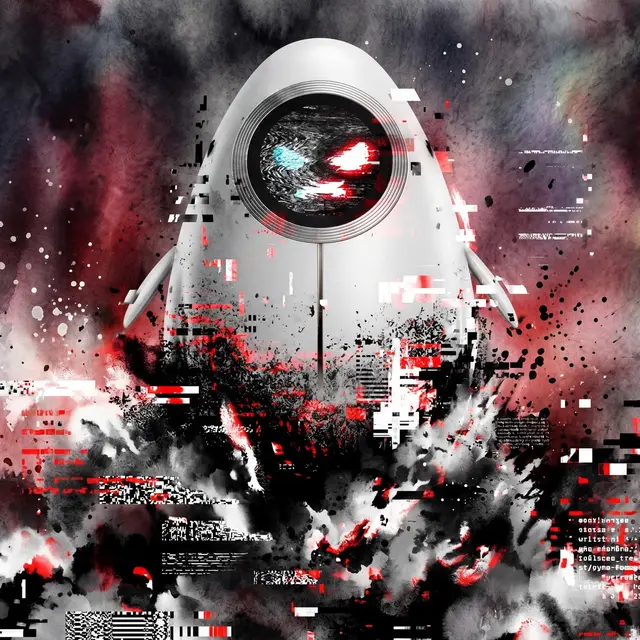
Palette: black / white / red / pixelated static
- BPM
- No fixed tempo
- Family
- The Edge of the Map
- Serial
- BRD-30
- Rarity
- Common
- Style strength
- 89
- Experimentation
- 80
Typical structure
[Brutal emergence] → [feedback layers] → [overwhelming wall] → [visceral climax] → [abrupt cut]
The parameters listed above are merely the visible surface. What cannot fit into a table is the architecture of overload: how to sustain minutes of extreme feedback without the tension flattening into meaningless noise, or exactly where to position saturated vocals so the tear feels like a physical breakdown rather than studio posturing. That logic lives inside an internal spec of eight parameters that our engine crosses with your story. Afterward, an internal judge evaluates the track against six canon dimensions to repair any weak signal. Distortion can be bought in a pedal. Pure catharsis cannot.
How a lyric in this style thinks
A power electronics piece does not communicate — it imposes. Where most genres carry meaning through melody or narrative arc, power electronics operates as pure physical event: the lyric, if you can call it that, is the frequency itself, the weight of distorted air, the moment a preamp clips so hard that language dissolves into something the body has to answer before the mind catches up. This is the genre where the traditional idea of a lyric collapses on purpose.
What replaces it is vocal delivery stripped of every consonant, every pitch, every legible word — raw human force run through a redlining chain until what comes out is indistinguishable from the feedback surrounding it. The voice becomes one more oscillator in the signal path, not a narrator but a pressure source.
Emotion in power electronics does not arrive gradually. It does not build through verse and chorus toward a cathartic peak the way rock structures promise. Instead, it enters at full weight from the first second and then increases density rather than volume. The distinction matters: this is not music that gets louder — it is music that gets heavier, more saturated, more physically present.
The analog mixing console pushed deep into the red, a contact microphone dragged across metal, a synthesizer feeding back through a distortion pedal set to maximum sustain — these are not production choices, they are structural decisions about where the emotional mass will land. If you are building a power electronics piece around a personal rupture, the rupture is not described. It is re-enacted as signal overload.
The sensory field is extremely specific. Power electronics lives in ozone and scorched rubber, in the sixty-hertz hum of a fluorescent tube, in the sensation of a fifteen-inch woofer pushing cold air directly into your sternum. It has no use for warmth, for resonant acoustic spaces, for reverb that suggests depth or distance. The production is deliberately claustrophobic — dry, close, contained. Plywood over windows, concrete floors, no stage lighting.
These are not aesthetic decorations but technical instructions: the sound should have nowhere to go. If you are working in Suno with a power electronics style prompt, the instinct to add reverb or melodic movement will always be wrong. The genre refuses both. What it uses instead is density variation — the way layered harsh feedback synths can shift from bearable to physically overwhelming not by changing pitch but by adding another frequency that beats against the first.
Structurally, power electronics follows a logic that looks simple and is actually precise: brutal emergence, feedback layers, overwhelming wall, visceral climax, abrupt cut. Each section is defined by what it withholds as much as what it delivers. The brutal emergence is not a slow intro — it is an immediate declaration of force. The feedback layers add weight without adding melody. The overwhelming wall is the sustained peak, the point where the listener's nervous system stops processing music and starts measuring endurance.
The visceral climax is often not the loudest moment but the densest, the point of maximum saturation. And the abrupt cut is the most important structural element in the entire form — because what follows it is not silence but the ringing in your ears, the physical memory of pressure, the room suddenly too quiet for what just happened. That cut, timed correctly, is the only resolution power electronics offers, and it is not comfort.
What separates a genuine power electronics piece from a generic noise track is intentionality of restraint. The genre is not random. Every frequency choice, every moment of added density, every decision about when to cut — these are compositional acts as deliberate as chord selection in any other form. The voice, when it appears, does not explain the emotional content. It embodies it: clipped, pitched-destroyed, pushed through hardware that refuses to flatter it.
If you find yourself writing words that could be read on a page and understood, you are not in this genre anymore. The text, if there is any, exists to be detonated, not delivered. Power electronics is the form for the moment when the story stops asking to be understood and starts demanding to be felt as collision — full-body, unapologetic, and leaving no room for a gentle exit.
- BRUTAL FEEDBACK
- EXTREME CATHARSIS
- NO LYRICS
Sample excerpt
White noise grinding through the rusted wire Teeth locked tight against the iron rail Static eating the corners of the room No mercy left in the dead channel
Burn the registry down to ash Nothing remains of the old address Silence only after total war
Workshop note — This genre demands absolute aggression and physical friction, stripping language down to blunt, mechanical commands. The lines mimic industrial feedback by using hard consonants and repetitive shocks rather than melodic phrasing. Power electronics strictly forbids any sentimental reflection, demanding instead total demolition of the subject.
Sample excerpt written by MUSAI Song. Your lyrics are written from scratch, based on your story.
When to choose this style
Choose this card when a personal story doesn't ask to be understood, but felt as a direct physical collision. It works for someone who held together a failing family for years until exhaustion turned into cold, unyielding rage. For grief that refuses to soften into melancholy and only finds relief in burning the room down. For the exact moment someone cuts ties with a destructive past and razes every bridge behind them. For the aftermath of a breakdown or a severe crisis where the mind was reduced to hard, unfiltered static for weeks.
Do not choose it if you want nostalgia, closure, or a gentle explanation of what happened. Power electronics does not offer comfort or neat resolutions; its only language is total demolition. If you need to process a rupture through fragmented, violent rhythms, the card is Breakcore. If you want quiet textures and microscopic silence, the card is Microsound.
Your story in this style
MUSAI Song writes original lyrics from your story, in the Power Electronics style, and delivers the finished sung song, the ready-to-use style recipe, and an illustrated art plate with its numbered certificate, private by default; public only if its owner publishes it.
- Original lyrics written from your story
- A finished sung song, ready to play and share
- Art plate with a unique seal and a numbered certificate, private by default; public only if its owner publishes it
Frequently asked questions
What BPM is Power Electronics?
Power Electronics usually runs at No fixed tempo.
What does Power Electronics sound like?
Brutal feedback and screaming distortion, sonic catharsis in its most extreme form. Power electronics: intensity pushed to the absolute limit, visceral, overwhelming, and radically cathartic.
What song structure does Power Electronics use?
[Brutal emergence] → [feedback layers] → [overwhelming wall] → [visceral climax] → [abrupt cut]
How do I write Power Electronics lyrics?
Tell MUSAI Song your story and pick Power Electronics: it writes original lyrics for this style at No fixed tempo, you edit them word by word, and you get the song sung in Power Electronics, with an illustration of the song and its numbered certificate. $19 USD per song, one-time payment.
Explore more styles
- Acid Experimental
- Aleatoric Music
- Atonal / Serialism
- Avant-Prog
- Breakcore
- Chiptune Experimental
- Dark Ambient / Sound Art
- Deconstructed Club
- Digicore
- Drone Experimental
- Electroacoustic
- Footwork / Juke
- Fourth World
- Free Jazz
- Glitch
- Glitch-Hop / Wonky
- Hauntology
- Hyperpop
- IDM
- Jersey Club
- Microsound
- Musique Concrète
- Nameless Signal
- Nightcore
Your idea or story, sung in this style
Card · secure payment via Stripe, charged in USD
If it doesn't move you, we give you your money back · 7 days