Fourth World
Between the jungle and the circuit board, there is a frequency with no name.
Get your song in Fourth World
Make yours in this styleHear it before you pay.$19 USD · your first song for $5.50 USDIf it doesn't move you, we give you your money back · 7 days.
Fourth World is a style from The Edge of the Map family. 80 BPM, Experimentation 58, Style strength 93.
What is Fourth World?
Processed trumpet and percussion from a culture that never existed. Fourth world is the music of an imaginary planet where the ancestral and the electronic never parted ways — mysterious and breathtakingly beautiful.
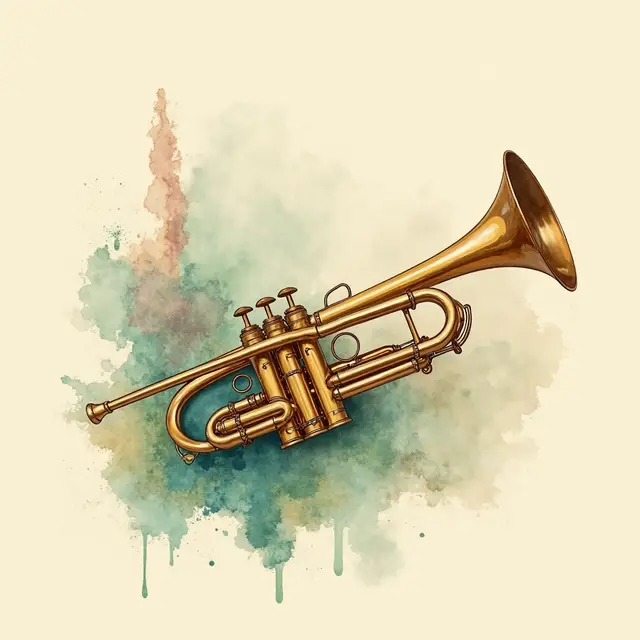
How it sounds
It is four-ten in the morning in a room with no east-facing doors. The only light comes from an electronic jade block on the table pulsing at an eight-hertz frequency, a cold green glow reflecting off the oxidized gold metal of a frame that might hold up the ceiling or the earth itself. Outside, rivers flow upward through miles of roots that creak with the dry sound of clay baked under three different suns. The air smells of iridescent dust and heavy moisture, as if the entire jungle were breathing through circuits hidden beneath the bark.
Then the ambient drone enters, a continuous note with neither origin nor end, deep as an ocean floor untouched by light. Above that sonic ground, the processed trumpet exhales its first breath: a curve of damp metal wrapped in infinite reverb that plays no known scale, instead bending time backward. Clay drums answer from a distance, ethnic percussion built from skins stretched over woods that grow on no known planet, setting a limp, uneven pulse that forces the body to hunt for a moving center.
There are no words because no language of this world can name what is happening. The trumpet stretches out, dissolving into the violet smoke rising from the floor, and what remains is only the certainty that this place existed before we began remembering it.
Palette: iridescent green / gold / violet / turquoise
- BPM
- 80 BPM
- Family
- The Edge of the Map
- Serial
- BRD-09
- Rarity
- Rare
- Style strength
- 93
- Experimentation
- 58
Typical structure
[Ambient drone] → [processed trumpet] → [ethnic percussion] → [imaginary soundscape] → [dissolution]
The data above can be copied in a minute. What cannot be copied is the precise distance between the ambient drone and the exact point where the processed trumpet stops sounding like an instrument and becomes weather. Two problems persist here: writing a melody that sounds earthbound instead of alien, and letting the text—when it appears—drop like a stone inscription without turning into a pretentious riddle. That lives in an internal distillate of eight unpublished parameters, which the engine cross-references with the buyer's story before writing a line. Upon completion, an internal judge measures the lyrics against six dimensions of the canon and repairs what smells too familiar. The synthesizer is bought anywhere. The archaeology of a fake world, no.
How a lyric in this style thinks
A Fourth World lyric does not describe a place — it constructs one that has no prior name. The genre operates in the space between ethnographic field recording and electronic abstraction, and its central formal task is to make the listener feel that they have arrived somewhere both ancient and entirely invented. The emotional architecture is not narrative; it is spatial. Tension does not build toward resolution. Instead, it accumulates like sediment, layer pressing on layer, until the weight itself becomes the meaning.
If you are writing text for a Fourth World piece — and the genre often dispenses with words altogether — your first obligation is to resist the familiar. Nothing here should be recognizable on first contact.
The base tone lives in a register that might be called sacred unease: not fear, not wonder, but the precise sensation of standing at the threshold of a civilization whose rules you cannot yet decode. Emotion in Fourth World arrives obliquely, carried by timbre rather than by statement.
A processed trumpet line wrapped in deep reverb communicates grief more effectively than any declarative lyric could, because the sound itself enacts the quality of distance — the way memory thins as it ages, the way certain losses retreat into architecture rather than language. If words appear at all, they function as texture: syllables chosen for their phonetic weight rather than their denotative content, vowels held until they dissolve into the surrounding drone. Repetition is structural, not rhetorical.
A phrase does not return to emphasize; it returns because time in this genre moves in slow spirals rather than forward lines.
The sensory field of Fourth World is specific and austere. The genre lives inside oxidized metals, stretched animal skins, the low hum of electronics that have been running long enough to seem geological. Concrete objects matter: a frame holding up a ceiling, clay drums answering from a distance, the particular green of a light source that has no name in the visible spectrum. Reverb is not decoration here — it is the room, and the room is the landscape.
Tempo hovers around 80 BPM but the pulse is deliberately elusive, built from ethnic percussion patterns that shift the downbeat just enough to prevent the body from settling. This limp, asymmetric rhythm is not a mistake; it is the genre's way of insisting that the listener search for center rather than receive it. Fourth World never uses clean attack transients, bright synth leads, or any sound that signals contemporary commercial production. Those textures would collapse the imaginary world instantly.
Structurally, a Fourth World piece follows a logic of geological accumulation rather than verse-chorus architecture. The canonical sequence moves from ambient drone through processed melodic breath into rhythmic texture and then into what might be called imaginary soundscape — a middle section where all elements are present but none dominates — before dissolving. That dissolution is not an ending in the conventional sense; it is a recession, the way a coastline disappears into fog rather than stopping.
If you are writing words to sit inside this structure, place them in the imaginary soundscape section, where the rhythmic and harmonic elements are already blurring into each other. Words spoken or sung too early will interrupt the world-building; words spoken too late will feel like an intrusion into silence that has already become sacred.
What separates a genuine Fourth World lyric from a generic imitation is the quality of its invented specificity. The imitation reaches for vague mysticism — undefined spirits, unnamed rivers, the general feeling of otherness. The real thing names things that could not exist but feels as though it is reporting accurately from a source. The iridescent dust has weight. The roots creak with the specific sound of clay baked under three suns, not simply under heat.
The trumpet plays no known scale but bends time in a direction the listener can almost locate. This precision is what gives the genre its authority. You are not gesturing at the unknown; you are cartographing it, with instruments that predate cartography and electronics that postdate everything we currently call the present.
- IMAGINARY CULTURE
- ANCESTRAL AND FUTURE
- NO LYRICS
Sample excerpt
The dust in the hallway tastes of hammered iron. Seven bronze keys rest on the indigo ceramic slab. My grandfather never spoke of the river's bridge, only the way the shadows lean toward the violet hills.
Deep blue echoes carry the weight of untethered names. The amber wind erodes what we built in the dark.
Workshop note — Fourth World lyrics rely on static imagery and the ritualistic quality of naming objects rather than explaining emotions. The lines should feel like relics found in a dry well, prioritizing fragmented, sensory nouns over narrative verbs to match the expansive, mysterious soundscape. Avoid rhyming or standard pop structures, as the goal is to create an atmosphere of ancient, alien stillness.
Sample excerpt written by MUSAI Song. Your lyrics are written from scratch, based on your story.
When to choose this style
Choose this card when your story demands a territory absent from any standard map. It works to honor the origins of someone from a place so remote their habits feel extraterrestrial. For a permanent move to an unknown country where everything must be invented from scratch. For a grief so deep it evades everyday sadness, requiring a new architecture, a private landscape where loss becomes an entire civilization retreating in silence.
It serves when family memory has turned mythical, when grandparents are figures from an era without witnesses and only mute objects remain on a table. Do not choose it for routine office tales, domestic disputes, or loud celebrations where joy calls for a steady pulse and direct melodies; Fourth World collapses under the weight of commercial radio clarity. It is equally wrong for a conventional birthday or a quick reconciliation. If you look for a hummable tune for family gatherings, the card is Chiptune Experimental.
Your story in this style
MUSAI Song writes original lyrics from your story, in the Fourth World style, and delivers the finished sung song, the ready-to-use style recipe, and an illustrated art plate with its numbered certificate, private by default; public only if its owner publishes it.
- Original lyrics written from your story
- A finished sung song, ready to play and share
- Art plate with a unique seal and a numbered certificate, private by default; public only if its owner publishes it
Frequently asked questions
What BPM is Fourth World?
Fourth World usually runs at 80 BPM.
What does Fourth World sound like?
Processed trumpet and percussion from a culture that never existed. Fourth world is the music of an imaginary planet where the ancestral and the electronic never parted ways — mysterious and breathtakingly beautiful.
What song structure does Fourth World use?
[Ambient drone] → [processed trumpet] → [ethnic percussion] → [imaginary soundscape] → [dissolution]
How do I write Fourth World lyrics?
Tell MUSAI Song your story and pick Fourth World: it writes original lyrics for this style at 80 BPM, you edit them word by word, and you get the song sung in Fourth World, with an illustration of the song and its numbered certificate. $19 USD per song, one-time payment.
Explore more styles
- Acid Experimental
- Aleatoric Music
- Atonal / Serialism
- Avant-Prog
- Breakcore
- Chiptune Experimental
- Dark Ambient / Sound Art
- Deconstructed Club
- Digicore
- Drone Experimental
- Electroacoustic
- Footwork / Juke
- Free Jazz
- Glitch
- Glitch-Hop / Wonky
- Hauntology
- Hyperpop
- IDM
- Jersey Club
- Microsound
- Musique Concrète
- Nameless Signal
- Nightcore
- Noise
Your idea or story, sung in this style
Card · secure payment via Stripe, charged in USD
If it doesn't move you, we give you your money back · 7 days