Digicore
The screen cracked and nobody closed the tabs.
Get your song in Digicore
Make yours in this styleHear it before you pay.$19 USD · your first song for $5.50 USDIf it doesn't move you, we give you your money back · 7 days.
Digicore is a style from The Edge of the Map family. 150 BPM.
What is Digicore?
Autotuned rap and glitch born on the internet, emotional and chaotic all at once. Digicore is the voice of the screen generation: sentimental, distorted, and proudly terminal-online.
How it sounds
It is a quarter past three in the morning inside a room where the only light source is the blinding white-and-blue glare of a twenty-seven-inch monitor reflecting in your dilated pupils. The mechanical keyboard chatters like a burst of gravel hitting sheet metal, each keystroke an obsessive, relentless tap.
Across the open-back headphones, the 808 arrives with a saturation so extreme the chassis vibrates against your ear, a low-end frequency that does not push the air but slices through it, a metallic hum dragging a child-synth melody smeared through three layers of digital distortion.
The vocal arrives pushed entirely through aggressive pitch correction, not to fix a pitch but to fracture it into a robotic trail where every syllable leaves a wake of sonic pixels, a synthetic tremor sounding precisely like a tear splashing onto an exposed motherboard. You have fifty browser tabs open, three chat windows blinking in the lower corner, and an unsaved audio project that has spent thirty minutes trying to export while stuck at ninety-eight percent.
You drag the cursor in tiny, erratic circles, a purposeless orbit across the desktop wallpaper while the processing stretches your voice into a pixelated shriek nobody will ever hear in this dark room. There is no fresh air, only the dry heat radiating from the tower under the desk and the persistent blinking of a notification you choose to ignore because the audio file is about to corrupt entirely, and that sudden loss feels more real than anything that happened today outside this display.
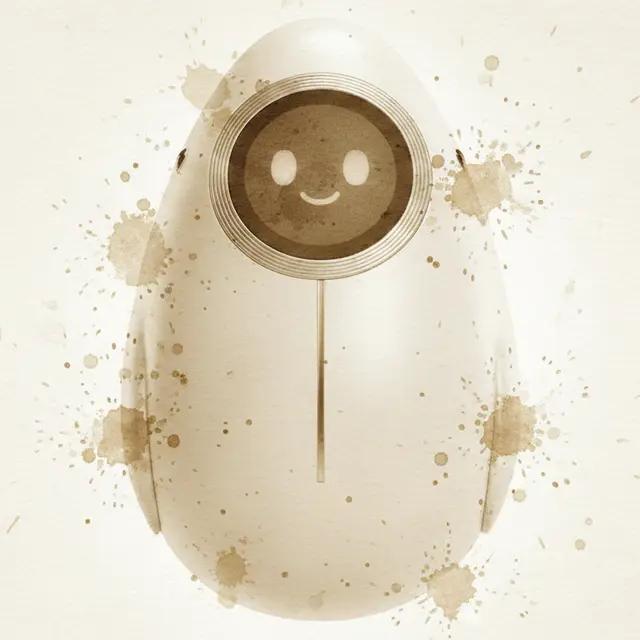
Palette: toasted beige brown sepia
- BPM
- 150 BPM
- Family
- The Edge of the Map
- Serial
- BRD-12
- Rarity
- Common
Typical structure
[Glitch Intro] → [Autotune Verse] → [Drop] → [Verse 2] → [Final Drop]
What you see on the surface is merely the interface. Beneath this spec sheet lie two problems a table cannot solve: how to make digital distortion sound like raw vulnerability rather than a cheap preset, and how to structure lyrics so that screen terminology does not drown out the emotional punch. That lives inside an internal distillate of eight parameters crossed with your story before the first bar is written. Upon completion, an internal judge measures the text against six canons and sends back whatever sounds too human or too sterile for repair. The pitch correction is downloadable. The pixelated fracture, no.
How a lyric in this style thinks
A digicore lyric does not describe pain — it performs the system crash of it. The words arrive already corrupted, pushed through pitch correction not as a cosmetic fix but as a structural choice: the voice becomes a synthetic artifact, a signal that has been processed so many times it no longer sounds human, and that is precisely the point. Digicore lives at 150 BPM in the space where emotion and machine processing are indistinguishable from each other, and the lyric has to honor that ambiguity. You are not confessing; you are exporting a file that keeps stalling at ninety-eight percent and calling that feeling love.
The base tone in digicore sits somewhere between exhaustion and obsession — not the warm amber of nostalgia, but the cold blue-white glare of a monitor at three in the morning. Emotion does not build gradually the way it does in a verse-chorus pop song; it arrives in sudden voltage spikes. A verse can sit almost flat, syllables delivered with mechanical detachment, and then a single line will fracture into autotune wobble, the pitch correction turning what might have been a cry into a pixelated tremor.
That contrast is the genre's primary emotional lever. The drop is not a chorus in any traditional sense — it is a collapse, the 808 arriving with enough saturation to feel like the chassis of the song itself is vibrating. Lyrically, the drop strips language down to its most obsessive, looping fragment. A phrase like "you never logged back on" or "still refreshing" repeats until it stops meaning and starts functioning as texture.
Line length in digicore is deliberately unstable. Verses tend to run in dense, stacked clusters — short syllable counts hit in rapid succession, mimicking the rhythm of typing rather than breathing. The sensory field is aggressively specific and aggressively digital: notification badges, export bars, hidden folders, voice channels, the dry heat radiating from a tower under a desk, the mechanical rattle of a keyboard. These are not metaphors standing in for real-world objects; they are the real world of this genre.
Digicore never reaches for pastoral imagery, natural light, or physical landscape. There is no walk outside. The room is the universe, the monitor is the sun, and the lyric trusts that completely.
Structurally, the canon moves from a glitch intro that disorients the listener before a single word lands, through two autotune verses that establish the emotional data — the screenshots, the timestamps, the silence of a voice channel that nobody rejoined — toward drops that function as emotional overloads rather than hooks. The final drop does not resolve; it compounds. A generic imitation of digicore mistakes the aesthetic for the content and writes about screens without writing from inside them.
The real thing understands that the distortion is not decoration applied over a conventional lyric — the distortion is the lyric's actual emotional logic. When you run a vocal through aggressive pitch correction, you are saying that the feeling is too unstable to exist in natural pitch, and the production technique and the lyric must make the same argument simultaneously.
What separates a digicore lyric from a generic hyperpop pastiche is precision in the mundane. The genre earns its chaos by anchoring it in exact, almost forensic details: not "I was sad online" but the specific number of hours logged, the exact moment the export failed, the Tuesday with no drama when someone simply never came back. Sentimentality is allowed — digicore is genuinely emotional, not ironic — but it must be rendered in the grammar of internet-native experience. The grief here is measured in digital artifacts, in unsaved projects and unread pings, and the lyric has to speak that language without apology or translation.
- GLITCH RAP
- SCREEN GENERATION
Sample excerpt
Four AM in the violet glow of the monitor You said "BRB" and left your cursor in the corner Now the voice channel is just me and the green ring Static on the headset, waiting for the ping I saved the screenshots of the lobby in a hidden folder The CPU is burning but the room is getting colder
Glitch in the audio, status on idle I’m just refreshing the page for survival You went offline on a random Tuesday Nothing to say, nothing to say
Workshop note — Digicore relies on rapid-fire, conversational phrasing broken up by digital jargon and sudden rhythmic shifts that mimic online chatter. The chorus works by repeating simple, devastating status updates as rhythmic hooks rather than poetic metaphors, capturing the coldness of screen-mediated grief. The genre rejects flowery, analog romanticism in favor of literal, glitchy, and hyper-specific modern artifacts.
Sample excerpt written by MUSAI Song. Your lyrics are written from scratch, based on your story.
When to choose this style
Choose this card when your story refuses a clean conversation or an acoustic confession. It works when a breakup happened entirely through text messages and the emptiness is measured in online hours and screenshots saved in a hidden folder. For the exact moment you realized you spend more time inhabiting identities on chat servers than walking outside, and that detour no longer hurts, it just defines you. For when the anger of ruining everything turns into an obsession of refreshing the same blank page until your fingers ache.
To tell the story of a friendship that existed solely across a voice channel while gaming at four in the morning, ending without a fight, just a random Tuesday when nobody logged back on.
Do not choose this if you are looking for a warm reconciliation, a nostalgic ballad to remember simpler times without screens involved, or a story where pain resolves by going for a walk under the sun. If you need a straightforward structure without distortion and an analog tone of clean guitar and voice, the card is Breakcore.
Your story in this style
MUSAI Song writes original lyrics from your story, in the Digicore style, and delivers the finished sung song, the ready-to-use style recipe, and an illustrated art plate with its numbered certificate, private by default; public only if its owner publishes it.
- Original lyrics written from your story
- A finished sung song, ready to play and share
- Art plate with a unique seal and a numbered certificate, private by default; public only if its owner publishes it
Frequently asked questions
What BPM is Digicore?
Digicore usually runs at 150 BPM.
What does Digicore sound like?
Autotuned rap and glitch born on the internet, emotional and chaotic all at once. Digicore is the voice of the screen generation: sentimental, distorted, and proudly terminal-online.
What song structure does Digicore use?
[Glitch Intro] → [Autotune Verse] → [Drop] → [Verse 2] → [Final Drop]
How do I write Digicore lyrics?
Tell MUSAI Song your story and pick Digicore: it writes original lyrics for this style at 150 BPM, you edit them word by word, and you get the song sung in Digicore, with an illustration of the song and its numbered certificate. $19 USD per song, one-time payment.
Explore more styles
- Acid Experimental
- Aleatoric Music
- Atonal / Serialism
- Avant-Prog
- Breakcore
- Chiptune Experimental
- Dark Ambient / Sound Art
- Deconstructed Club
- Drone Experimental
- Electroacoustic
- Footwork / Juke
- Fourth World
- Free Jazz
- Glitch
- Glitch-Hop / Wonky
- Hauntology
- Hyperpop
- IDM
- Jersey Club
- Microsound
- Musique Concrète
- Nameless Signal
- Nightcore
- Noise
Your idea or story, sung in this style
Card · secure payment via Stripe, charged in USD
If it doesn't move you, we give you your money back · 7 days