Glitch
The error wasn't a mistake — it was the song.
Get your song in Glitch
Make yours in this styleHear it before you pay.$19 USD · your first song for $5.50 USDIf it doesn't move you, we give you your money back · 7 days.
Glitch is a style from The Edge of the Map family. 120 BPM, Experimentation 66, Style strength 93.
What is Glitch?
The malfunction turned into art: clicks, cuts, and broken textures that pull you in. Glitch: the aesthetic of digital failure made music, jittery, fragmented, and strangely beautiful.
How it sounds
It is four in the morning and the only light source is a monitor with a failing refresh rate casting horizontal scanlines across your face. The file is eight hundred megabytes and has been stuck at ninety-nine percent for half an hour. In the headphones, the audio does not flow: it stutters. An aggressive bit-crush chews the high frequencies down to white sand, while the buffer dumps its cache instantly, leaving a three-millisecond gap of absolute silence that hurts more than the noise.
A fragile melody, built from four FM synthesizer notes, tries to move forward but gets snagged in a sixteen-bit loop, repeating the same digital syllable over and over until all meaning disintegrates. The cursor freezes. You try to move the mouse and the screen responds with a viscous lag, leaving a trail of cyan and magenta pixels that take seconds to dissolve into the black background.
There is no warm sub-bass or kick drum to mark the pace; only compression artifacts, random clicks generated by an overloaded plugin, and a signal deliberately corrupted as it progresses. The error is not an accident here; it is the entire structural framework. You stare as the image fractures into perfect rectangles that flash once before vanishing entirely.
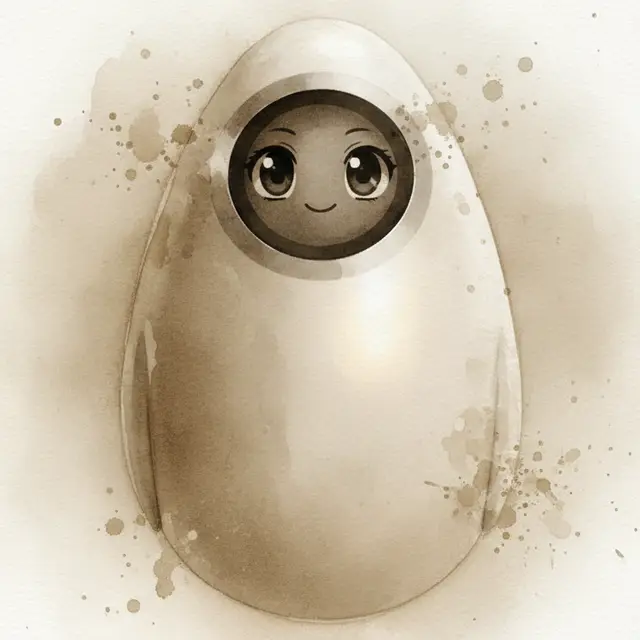
Palette: neutral grayish brown sepia
- BPM
- 120 BPM
- Family
- The Edge of the Map
- Serial
- BRD-03
- Rarity
- Epic
- Style strength
- 93
- Experimentation
- 66
Typical structure
[Artifacts] → [rhythmic stutter] → [fragmented melody] → [glitch climax] → [cut silence]
The parameters above are merely the visible surface of the system. What remains hidden is how to solve rhythmic stuttering without making it sound like a cheap audio gimmick, or how to make a repeated phrase function as a digital glitch rather than a standard pop hook. That lives inside an unpublished distillation of eight parameters that the motor cross-references with the raw material of your memory before writing a single line. When it finishes, an internal judge measures the lyrics against six strict dimensions of the canon and commands repairs on anything that sounds too human or predictable. The distortion plugin can be downloaded anywhere. The exact error, not.
How a lyric in this style thinks
A Glitch lyric does not narrate — it stutters. Where most songwriting moves from tension to release, from wound to scar, a Glitch lyric freezes on the wound itself, replaying the same corrupted frame until the repetition becomes its own kind of meaning. The genre is built on the premise that failure is not an interruption of the signal but the signal itself. If you are writing in Glitch, your first job is to stop trying to explain what happened and start documenting the exact texture of the malfunction: the lag, the gap, the three-millisecond silence that lands harder than any crescendo.
Emotion in Glitch arrives through interruption rather than declaration. The palette is not grief or rage in their clean forms — it is the sepia-toned numbness of a system that has stopped responding, the neutral flatness of a person watching their own screen freeze and not knowing whether to wait or force-quit. Lyrically, this means avoiding catharsis. Lines do not resolve; they repeat with slight variation, like a buffer caught in a loop. A phrase might appear whole in one section, then return in the next with a word dropped, a syllable clipped, a vowel stretched into noise. The repetition is not for emphasis in the traditional sense — it is to show the mechanism breaking down in real time.
The sensory field of Glitch is narrow and precise: monitor glow, scanlines, compression artifacts, the physical sensation of a cursor that won't move. These are not metaphors for emotional states — they are the emotional states, rendered in their most literal, hardware-level form. Glitch lyrics live inside the machine. They do not reach for the natural world, for warmth, for bodies in rooms with windows.
What they reach for is the click of an overloaded plugin, the cyan pixel trail that takes too long to dissolve, the FM synthesizer note that gets snagged and repeats its single digital syllable until all semantic content drains out of it. If your draft contains a sunset or a heartbeat, you are in the wrong genre.
Structurally, Glitch follows a logic of escalating fragmentation rather than conventional verse-chorus architecture. The sections — artifacts first, then rhythmic stutter, then fragmented melody, then the glitch climax, and finally cut silence — behave less like musical chapters and more like stages in a system crash. Each section inherits the damage of the previous one. By the time you reach the climax, the material should feel genuinely beyond repair. The cut silence at the end is not resolution — it is the screen going black mid-process, no save prompt, no confirmation dialog. Lyrically, this means your closing lines should not land; they should cut. Mid-thought. Mid-word, if necessary.
What separates a real Glitch lyric from a generic imitation is whether the form enacts the content or merely describes it. A lazy approach writes about glitching — uses the word 'broken,' gestures at fragmentation, then delivers a complete and coherent emotional arc underneath. An actual Glitch lyric is structurally compromised. The instrumental nature of the genre means that when words do appear, they carry enormous weight precisely because they are sparse and damaged.
Bit-crushed production at 120 BPM with jittery, hypnotic rhythms will do much of the emotional work, but the lyrical fragments you place inside that architecture need to feel like data that survived a partial corruption — recognisable enough to haunt, incomplete enough to refuse closure.
- ERROR AS ART
- FAILURE AESTHETIC
- INSTRUMENTAL
Sample excerpt
Copper wires fray in the wall static hum at 4:03 AM your face pixelates into sepia a cursor blinks in the void input rejected system loop re-engaged.
Data corruption fragmented ghost in the machine repeat the crash until the frame burns out.
Workshop note — This sample relies on short, telegraphic lines that mimic a stuttering digital processor rather than traditional poetic flow. By focusing on mechanical failure and sensory artifacts, it creates a cold, detached atmosphere that avoids emotional cliché. The structure prioritizes the repetition of corrupted sequences, ensuring the listener feels the frustration of an incomplete, circular narrative.
Sample excerpt written by MUSAI Song. Your lyrics are written from scratch, based on your story.
When to choose this style
Choose this card when your story refuses a linear narrative and demands the exact record of a system failure. It works when memory freezes on a single frame and refuses to advance. For a moment when your life's operating system crashed without warning, turning the following days into a locked program repeating the same broken scene endlessly. For a breakup that left no room for closure, only corrupted data and loose ends that refuse to fit back together.
For when the brain processes trauma through disjointed fragments, stuttering every time you try to explain what happened. Do not choose this for a clean comeback story, an unblemished affection, or a reconciliation where everything falls neatly back into place. Glitch has no use for sweet nostalgia or pain that gently fades with time. If your tale requires a peaceful resolution or an uplifting moral, this card will leave you unsatisfied.
If you want a narrative that embraces the defect and turns the fracture into its only form of beauty, the card is Breakcore.
Your story in this style
MUSAI Song writes original lyrics from your story, in the Glitch style, and delivers the finished sung song, the ready-to-use style recipe, and an illustrated art plate with its numbered certificate, private by default; public only if its owner publishes it.
- Original lyrics written from your story
- A finished sung song, ready to play and share
- Art plate with a unique seal and a numbered certificate, private by default; public only if its owner publishes it
Frequently asked questions
What BPM is Glitch?
Glitch usually runs at 120 BPM.
What does Glitch sound like?
The malfunction turned into art: clicks, cuts, and broken textures that pull you in. Glitch: the aesthetic of digital failure made music, jittery, fragmented, and strangely beautiful.
What song structure does Glitch use?
[Artifacts] → [rhythmic stutter] → [fragmented melody] → [glitch climax] → [cut silence]
How do I write Glitch lyrics?
Tell MUSAI Song your story and pick Glitch: it writes original lyrics for this style at 120 BPM, you edit them word by word, and you get the song sung in Glitch, with an illustration of the song and its numbered certificate. $19 USD per song, one-time payment.
Explore more styles
- Acid Experimental
- Aleatoric Music
- Atonal / Serialism
- Avant-Prog
- Breakcore
- Chiptune Experimental
- Dark Ambient / Sound Art
- Deconstructed Club
- Digicore
- Drone Experimental
- Electroacoustic
- Footwork / Juke
- Fourth World
- Free Jazz
- Glitch-Hop / Wonky
- Hauntology
- Hyperpop
- IDM
- Jersey Club
- Microsound
- Musique Concrète
- Nameless Signal
- Nightcore
- Noise
Your idea or story, sung in this style
Card · secure payment via Stripe, charged in USD
If it doesn't move you, we give you your money back · 7 days