IDM
The machine thinks too — just faster than you.
Get your song in IDM
Make yours in this styleHear it before you pay.$19 USD · your first song for $5.50 USDIf it doesn't move you, we give you your money back · 7 days.
IDM is a style from The Edge of the Map family. 110 BPM, Experimentation 64, Style strength 94.
What is IDM?
Impossible broken rhythms beneath melodies that move you without warning. IDM, or Intelligent Dance Music: electronic music that thinks, cerebral and emotional at once, beautiful in its fractured complexity.
How it sounds
It is a quarter past three in the morning in front of a twenty-seven-inch monitor casting the only light in a room where the air smells of cold coffee and warm plastic. Data cascades in green columns against a black background while you process a WAV file that has spent three weeks refusing to sound human.
The sequencer interface displays a grid divided so finely that notes no longer land on downbeats: they float in the interstitial spaces, pushed by a controlled randomization algorithm that dictates the exact velocity of every snare hit milliseconds before it happens. A modular synthesizer patched with gray and yellow braided cables emits a twelve-step arpeggio that mutates imperceptibly with every cycle, shifting a single frequency every four bars until what was a cold sequence suddenly turns unbearably fragile.
There is no kick drum anchoring the floor. There is a dense, near-silent sub-bass vibrating through the fingertips resting on the desk and against the glass pane overlooking a completely silent city. Suddenly, a harmonic pad opens from deep within the mix like a fracture of cyan light cutting across the entire screen, unannounced, shattering the mathematical coldness with a beauty so sudden it leaves you breathless, staring at the blinking cursor in the lower left corner.
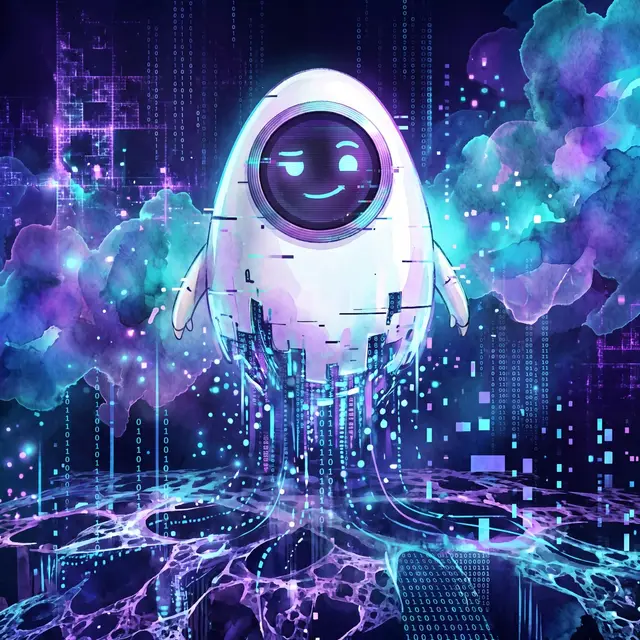
Palette: intense violet / bright cyan / deep black
- BPM
- 110 BPM
- Family
- The Edge of the Map
- Serial
- BRD-02
- Rarity
- Epic
- Style strength
- 94
- Experimentation
- 64
Typical structure
[Atmospheric pad] → [Fractured beat] → [Rhythmic layers] → [Melodic climax] → [Glitch dissolution]
The BPM numbers and frequency blocks are the easiest parts to copy. The real difficulty lies in keeping the digital coldness from sounding like cheap cardboard, and making sure the syllable count lands precisely in the dead spaces of the fractured beat without feeling forced. That lives in an unpublished internal distillate of eight parameters that the engine cross-references with the raw fragments of your memory. When finished, an internal judge measures the lyric against six dimensions of the canon and sends back anything that smells like human cliché or boring machinery for immediate rewrite. The software is open source. The surgical precision, not.
How a lyric in this style thinks
A lyric built for IDM does not confess — it encodes. Where other genres deliver emotion as declaration, Intelligent Dance Music delivers it as structure: the feeling arrives not in what is said but in the gap between what the sequencer predicted and what actually lands. This is a genre where the lyric, when it exists at all, functions less like a message and more like a signal intercepted mid-transmission, partially corrupted, partially beautiful. The listener does not receive a statement about longing or distance; they experience the sensation of a memory file rebuilding itself in non-sequential fragments, with the damp-paper smell arriving before the chronology does.
The emotional architecture of IDM sits in the interstitial spaces of rhythm. Beats in this genre do not anchor to the downbeat the way a pop snare does — they float at micro-offsets, pushed by controlled randomization, landing milliseconds early or late in ways the body registers before the mind can name them. A lyric written for this context must respect that same logic. Lines do not resolve into tidy end-rhymes. They break mid-clause, restart at a different syntactic angle, or simply stop before the expected word arrives.
The sensory field is narrow and precise: cold monitors casting the only light in a room, sub-bass felt through fingertips rather than heard, warm plastic and cold coffee, a cursor blinking in a lower-left corner. These are not decorative details — they are the emotional anchors the genre trusts because they are specific enough to bypass sentiment entirely.
Repetition in Intelligent Dance Music works through mutation, not through chorus logic. A twelve-step arpeggio that shifts a single frequency every four bars is not repeating — it is transforming so slowly that the transformation only becomes visible in retrospect. Lyric writers working in this space should think the same way: return to a phrase, but alter one word, one syllable, one stress pattern each time it comes back. The listener should not be able to point to the moment the meaning shifted.
Line length is irregular by design — short fractured fragments followed by a longer clause that carries unexpected weight, then silence, then something that sounds like it might be a chorus but refuses to behave like one. The structural logic follows the genre's own section arc: atmosphere first, then rhythmic complexity layering in, then a melodic climax that arrives with the sudden violence of a harmonic pad opening from deep inside the mix, unannounced, and finally a dissolution into glitch and near-silence.
What separates a genuine IDM lyric from a generic imitation is the discipline of withholding. The genre does not want catharsis. It does not want the closed-eyes belt or the singalong release. It wants the moment just before those things — the suspended tension of a complex emotion that never learned to speak directly and chose instead to hide behind technical precision, overtime hours, shared silence in a dark kitchen. If your draft ends with resolution, pull back. If your draft builds to a statement, interrupt it.
The beauty in this genre is always sudden and always slightly wrong: a fracture of cyan light across a black screen, a melody that moves you before you understood it was a melody. The lyric should work the same way — felt in the body before it is understood in the mind.
- RHYTHMS THAT THINK
- FRACTURED BEAUTY
- INSTRUMENTAL
Sample excerpt
seven lines of commented out syntax in the cache you left the desk lamp angled toward the wall an amber glow on plaster where the wallpaper peeled we measured distance in gigabytes of lost mail now the hard drive clicks in the empty hallway
trace the logic backward to the noise and let the static hold what we left unsaid a fractured pulse beneath the floorboards
Workshop note — This sample relies on fragmented imagery and technical lexicon to evoke emotional distance without direct confession. Keeping lines clipped and observant mirrors the fractured beat of intelligent dance music, avoiding neat resolutions or singalong cadences.
Sample excerpt written by MUSAI Song. Your lyrics are written from scratch, based on your story.
When to choose this style
Choose this card when your story does not ask for a singalong melody, but rather for an invisible architecture to hold a mental state too complex for simple confession. It works when you are processing a distance you thought was gone for good, only for it to reappear inside an old line of code or an outdated address. When memory is not an orderly sequence of happy or sad milestones, but a corrupted file rebuilding itself in jumps, where the smell of damp paper outweighs an entire chronology.
To name an affection that never learned to speak directly and chose instead to hide behind technical precision, overtime hours, and shared silence in a dark kitchen. Do not choose this if you are looking for an explosive release, a direct confession to belt out with closed eyes, or a party where bodies move as one: IDM does not seek mass applause or easy catharsis. If you need a warm lyric, a chantable chorus, or a neat resolution to a family argument, this card will leave you cold.
If you are looking for predictable comfort that hugs without scratching, the card is Experimental Chiptune.
Your story in this style
MUSAI Song writes original lyrics from your story, in the IDM style, and delivers the finished sung song, the ready-to-use style recipe, and an illustrated art plate with its numbered certificate, private by default; public only if its owner publishes it.
- Original lyrics written from your story
- A finished sung song, ready to play and share
- Art plate with a unique seal and a numbered certificate, private by default; public only if its owner publishes it
Frequently asked questions
What BPM is IDM?
IDM usually runs at 110 BPM.
What does IDM sound like?
Impossible broken rhythms beneath melodies that move you without warning. IDM, or Intelligent Dance Music: electronic music that thinks, cerebral and emotional at once, beautiful in its fractured complexity.
What song structure does IDM use?
[Atmospheric pad] → [Fractured beat] → [Rhythmic layers] → [Melodic climax] → [Glitch dissolution]
How do I write IDM lyrics?
Tell MUSAI Song your story and pick IDM: it writes original lyrics for this style at 110 BPM, you edit them word by word, and you get the song sung in IDM, with an illustration of the song and its numbered certificate. $19 USD per song, one-time payment.
Explore more styles
- Acid Experimental
- Aleatoric Music
- Atonal / Serialism
- Avant-Prog
- Breakcore
- Chiptune Experimental
- Dark Ambient / Sound Art
- Deconstructed Club
- Digicore
- Drone Experimental
- Electroacoustic
- Footwork / Juke
- Fourth World
- Free Jazz
- Glitch
- Glitch-Hop / Wonky
- Hauntology
- Hyperpop
- Jersey Club
- Microsound
- Musique Concrète
- Nameless Signal
- Nightcore
- Noise
Your idea or story, sung in this style
Card · secure payment via Stripe, charged in USD
If it doesn't move you, we give you your money back · 7 days