Plunderphonics
Everything that already existed deserves a second chance to unsettle you.
Get your song in Plunderphonics
Make yours in this styleHear it before you pay.$19 USD · your first song for $5.50 USDIf it doesn't move you, we give you your money back · 7 days.
Plunderphonics is a style from The Edge of the Map family. 100 BPM.
What is Plunderphonics?
A thousand stolen fragments recontextualized into a dizzying collage. Plunderphonics: music made entirely from other people's music, surreal, clever, and like a dream assembled from clippings.
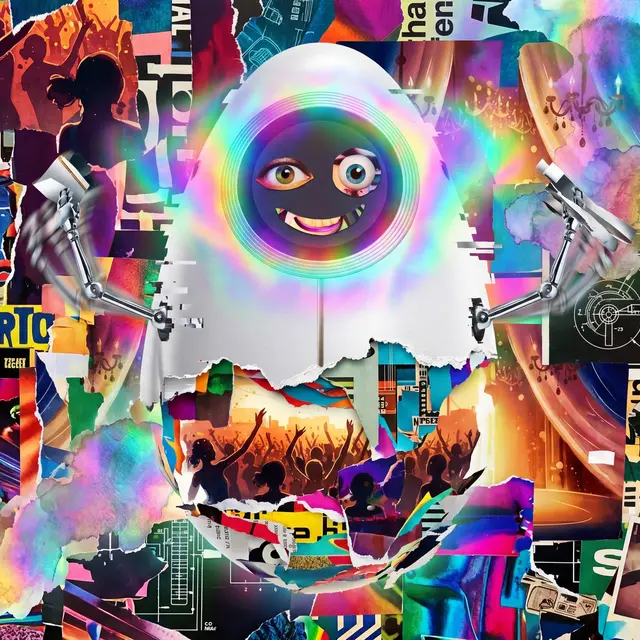
How it sounds
Three cassette decks play simultaneously in a room where dust floats beneath a shaft of dirty sunlight. Scissors hit the table with a dry click against the wood. On the open reel recorder screen, the VU meter hits bright red while two voices from a 1974 commercial collide with the compressed kick of a circuit-bent Roland TR-808 drum machine. There is no melody; there are fragments.
A big band saxophone lingers for barely two seconds before being sliced in half, replaced by the grainy static of a shortwave frequency catching a weather report from another province. Strips of brown magnetic tape hang off the desk edge like dead vines. Someone holds a piece of celluloid between their fingers, eyeballing where to splice a stranger's laugh onto a presidential speech recorded in the background of an old answering machine. The sound does not flow; it trips over itself.
Every time signature change is a pair of scissors biting the air. The loop repeats but never returns to the same place, because between the second loop and the third someone scotch-taped a sliver of silence pulled from somewhere else. The air smells of old plastic and hot solder. The accumulation of so many borrowed lives playing at once creates a dense weight, an invisible room where dead people who never met are forced to dance together by a mechanical pulse until the tape snaps.
Palette: chrome iridescent saturated multicolor
- BPM
- 100 BPM
- Family
- The Edge of the Map
- Serial
- BRD-06
- Rarity
- Rare
Typical structure
[Fragment] → [Sample collage] → [Juxtaposition] → [Dense climax] → [Abrupt cut]
The data above is barely the visible surface of the collage. What no technical preset explains is how to keep the cut from sounding like a cheap internet gag or how to make the juxtaposition of thirty borrowed audios reveal an intimate, personal truth. That lives in an unreleased internal distillate of eight parameters that the engine crosses with the buyer's history before slicing the first second of audio. Upon finishing, an internal judge measures the lyrics against six dimensions of the canon and repairs anything that sounds artificial. The sample can be found anywhere. The criteria to steal it without showing, not.
How a lyric in this style thinks
A plunderphonics lyric does not tell a story. It assembles evidence. Where other genres give you a narrator walking you through feeling, plunderphonics hands you a shoebox upended on the floor — ticket stubs, a weather report, a laugh clipped from someone else's answering machine — and lets the collision do the emotional work. The genre operates on juxtaposition as syntax. Two fragments placed against each other create a third meaning that neither source contained, and that third meaning is where the real statement lives. This is not accidental noise. It is a precise act of editorial violence.
Because the signature markers here are fragment collage, clipping dream, and no lyrics in the conventional sense, the writer's job shifts entirely. You are not composing lines so much as selecting, cutting, and sequencing found material until the gaps between pieces carry as much weight as the pieces themselves.
The structural logic follows a specific arc: Fragment opens with an isolated sonic object — a single phrase, a snatch of a 1974 commercial, a shortwave weather bulletin — before the Sample collage section thickens the air with layered found sounds playing simultaneously. Juxtaposition then forces incompatible registers against each other, a big band saxophone sliced in half and replaced by the compressed kick of a circuit-bent drum machine.
The Dense climax is exactly that: the accumulated mass of borrowed lives playing at once, pressing down until the room feels airless. Then the Abrupt cut. No resolution, no fade, no earned quiet. Just scissors biting tape and silence where something used to be.
The sensory field of plunderphonics is analogue and physical. Brown magnetic tape, hot solder, the dry click of scissors on wood, the VU meter slamming into the red. The textures are degraded on purpose: grainy static, warped vinyl artifacts, the hiss of a cassette that has been dubbed too many times. What this genre never uses is clean signal. A pristine recording inserted into a plunderphonics collage reads as dishonest, too whole, too present-tense. Everything should sound like it survived something.
The emotional palette, chrome iridescent and saturated, comes not from melody but from the disorienting shimmer of recognition — you almost know this voice, you almost remember where that phrase comes from — and that almost is where the feeling hides.
In production terms, at around 100 BPM the pulse is present but unstable. Time signature shifts function less as musical events and more as editorial decisions: a loop that repeats but lands differently on the third pass because someone scotch-taped a sliver of silence into the gap. Circuit-bent drum machines, open reel recorders, shortwave radio bleed, and the occasional splice of celluloid are the instruments here. Vocal delivery, when it exists at all, is almost never a performance.
It is a found object: a presidential speech recorded in the background of another recording, a stranger's laugh repositioned until it becomes elegy. The weirdness index runs high and should. Suno prompts for this genre reward specificity — dense sample collage, recontextualized fragments, avant-garde montage — because vague instructions produce vague collisions, and vague collisions produce neither surrealism nor meaning.
What separates a genuine plunderphonics piece from a generic imitation is intentionality at the edit point. Anyone can stack samples. The craft is in choosing which two fragments, placed adjacently, produce an emotion that neither could produce alone. The dead people who never met, forced to dance together by a mechanical pulse until the tape snaps — that image is the whole poetics of the genre. If your story is too clean to survive being cut in half and reassembled out of order, this is not the right card.
But if the archive of your experience is already scattered, already degraded, already full of borrowed phrases from lives you only glimpsed through a bus window, then plunderphonics does not distort your material. It finally tells the truth about its shape.
- FRAGMENT COLLAGE
- CLIPPING DREAM
- NO LYRICS
Sample excerpt
The static hum of a 1984 weather report, a dry voice mentioning high pressure in the valley. I cut the tape exactly where the silence begins, layering the sound of a fork hitting porcelain three times. These are the textures of a Tuesday left forgotten, ink black shadows stretching across the linoleum.
Caught in the glitch of a skipped carousel, amber light flickering over the missing pieces. Nothing is whole, everything is repurposed.
Workshop note — In Plunderphonics, lyrics function as artifacts rather than narrative lines, acting as brief, rhythmic textures that mimic the fragmented nature of the collage. By focusing on mundane, hyper-specific objects and mechanical sounds, you create a sense of displacement that prevents the song from becoming a conventional confession. Avoid emotional directness or flowery language; the lyrics must feel like repurposed scraps found in an old shoebox.
Sample excerpt written by MUSAI Song. Your lyrics are written from scratch, based on your story.
When to choose this style
Choose this card when your personal history is not a straight line but a scattered archive. It works when family memory survives only on poor audio home recordings, on worn-out cassettes where a single loose phrase is barely audible. For when you try to explain an absence that left behind no letters, just misplaced objects, old utility bills, newspaper clippings kept in a shoebox under the bed.
For when a breakup feels like a rummaged drawer where you find train tickets, cut photographs, and napkin notes that no longer mean what they once promised. For when your own identity is made of crumbs stolen from other cities, from other lives you watched pass through a bus window. Plunderphonics is not for telling a clean sorrow, an orderly beginning-to-end biography, or a linear gratitude. It is not the genre for a direct love letter, a happy birthday, or a memory that still sleeps in peace.
If the emotion can be summed up with a single pretty sentence, this card will drown it in too much noise. If your story needs a clear chronology to be understood, look elsewhere. If you are looking for a clear narrative without artifice, the card is Chiptune Experimental.
Your story in this style
MUSAI Song writes original lyrics from your story, in the Plunderphonics style, and delivers the finished sung song, the ready-to-use style recipe, and an illustrated art plate with its numbered certificate, private by default; public only if its owner publishes it.
- Original lyrics written from your story
- A finished sung song, ready to play and share
- Art plate with a unique seal and a numbered certificate, private by default; public only if its owner publishes it
Frequently asked questions
What BPM is Plunderphonics?
Plunderphonics usually runs at 100 BPM.
What does Plunderphonics sound like?
A thousand stolen fragments recontextualized into a dizzying collage. Plunderphonics: music made entirely from other people's music, surreal, clever, and like a dream assembled from clippings.
What song structure does Plunderphonics use?
[Fragment] → [Sample collage] → [Juxtaposition] → [Dense climax] → [Abrupt cut]
How do I write Plunderphonics lyrics?
Tell MUSAI Song your story and pick Plunderphonics: it writes original lyrics for this style at 100 BPM, you edit them word by word, and you get the song sung in Plunderphonics, with an illustration of the song and its numbered certificate. $19 USD per song, one-time payment.
Explore more styles
- Acid Experimental
- Aleatoric Music
- Atonal / Serialism
- Avant-Prog
- Breakcore
- Chiptune Experimental
- Dark Ambient / Sound Art
- Deconstructed Club
- Digicore
- Drone Experimental
- Electroacoustic
- Footwork / Juke
- Fourth World
- Free Jazz
- Glitch
- Glitch-Hop / Wonky
- Hauntology
- Hyperpop
- IDM
- Jersey Club
- Microsound
- Musique Concrète
- Nameless Signal
- Nightcore
Your idea or story, sung in this style
Card · secure payment via Stripe, charged in USD
If it doesn't move you, we give you your money back · 7 days