Noise
When there's no signal left, that's music too.
Get your song in Noise
Make yours in this styleHear it before you pay.$19 USD · your first song for $5.50 USDIf it doesn't move you, we give you your money back · 7 days.
Noise is a style from The Edge of the Map family. No fixed tempo, Experimentation 78, Style strength 91.
What is Noise?
Walls of feedback and distortion with no rhythm or melody — pure extreme texture. Noise: sound in its rawest, most cathartic form, abrasive, overwhelming, and radically free.
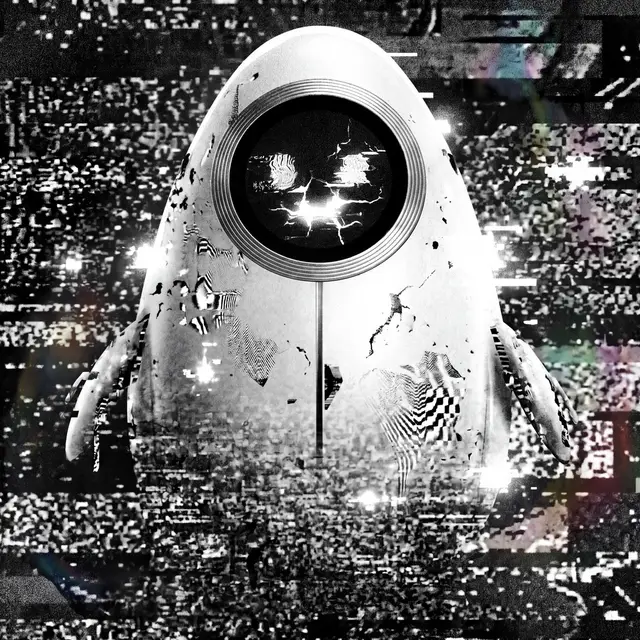
How it sounds
The room has no windows and the walls are lined with matte black egg crate foam that already smells of old damp. It is four in the morning and the only source of light is the ash-gray glow of a CRT monitor projecting green lines across an empty face. In front of you sits a wobbly table holding three distortion pedals chained together without order, a bass amplifier with a torn cone, and a Behringer mixer with its volume knobs ripped off so the shafts are soldered straight to the circuit board.
You plug an old microphone cable directly into its own auxiliary input and the system instantly collapses into a metallic squeal so sharp your teeth ache from the inside. There is no beat. There is no tuning to salvage. There is a compact wall of pure frequency pushing the air of the room outward and pinning you against the closed door. The amp cone starts smelling of hot copper and burned coil. The walls vibrate with a physical force that rattles your ribs, like a massive machine crushing stone on the other side of the partition.
Your hand stays on the gain knob, pushing it a millimeter past reason, until the sound stops being something entering through the ears and becomes a solid weight immobilizing your shoulders. The entire room contracts around that white hum that never ends.
Palette: sparkles with gray black white
- BPM
- No fixed tempo
- Family
- The Edge of the Map
- Serial
- BRD-05
- Rarity
- Rare
- Style strength
- 91
- Experimentation
- 78
Typical structure
[Noise emergence] → [feedback layers] → [sonic wall] → [abrasive climax] → [decay]
The data above can be copied in a minute. What cannot be copied is the internal criteria: how to maintain extreme sonic density without the mix turning into an illegible sludge, and how to use text erosion so the few words function as grain rather than literature. That lives in an unpublished eight-parameter distillate, and the engine crosses it with your history before writing a single line. When finished, an internal judge measures the lyrics against six dimensions of the canon and orders repairs on anything falling out of frequency. The pedal is bought. The exact saturation, not.
How a lyric in this style thinks
A Noise piece does not communicate — it displaces. Where most genres use sound to carry meaning toward a listener, Noise uses sound to occupy the listener's body entirely, crowding out thought, narrative, and the polite distance that language maintains between experience and receiver. The lyric question in Noise is therefore radical: if the genre's own signature markers declare no lyrics, what does a writer bring to it? The answer is that Noise demands a different kind of authorship — the composition of texture, density, and duration as the primary expressive acts, with any text that exists functioning less as language and more as raw phonetic matter fed into a physical system.
The emotional architecture of Noise does not build toward a peak and release in the way a verse-chorus structure does. Its canon moves from emergence through feedback layers into a sustained sonic wall, then into an abrasive climax, and finally into decay — but none of those transitions are marked by melody or harmonic shift. They are marked by mass.
The emergence is the moment a feedback loop is allowed to stabilize into something intentional; the layers accumulate not by addition of parts but by the interaction of frequencies that were already present, folding back on themselves through chained distortion pedals or a mixer input fed into its own auxiliary return. The sonic wall is not a metaphor. It is a physical condition in which the air in a room stops behaving like air and starts behaving like pressure.
If you are writing toward this genre, your structural decisions are decisions about when to push gain, when to let resonance collapse, and how long to hold a frequency before introducing the next abrasive element.
The sensory field of Noise lives in specific, unglamorous materials: torn amplifier cones, the smell of hot copper and burned coil, egg crate foam that has absorbed years of damp, the green light of a CRT monitor at four in the morning. These are not decorations. They are the genre's actual environment, and any text that enters a Noise piece — whether spoken, screamed, or processed into unrecognizability — needs to carry that same material weight. Noise never uses warmth, sweetness, or acoustic softness.
It does not use the vocabulary of resolution. The palette here runs from ash gray through matte black to a white that is not clean but blinding, the white of total saturation. The textures that belong to this genre are metallic, industrial, abrasive — a squeal that makes teeth ache, a hum that immobilizes shoulders, a vibration that rattles ribs rather than stirs them.
What separates a genuine Noise work from an imitation is the willingness to commit to duration and discomfort without retreat. A generic attempt at Noise will introduce feedback and then pull back, softening the gain before the listener becomes genuinely uncomfortable, inserting a rhythmic element to give the ear something to hold. Real Noise holds the gain past the point of reason.
It treats the absence of beat not as a limitation but as a structural choice that removes the listener's most basic coping mechanism — the ability to count time and therefore anticipate when relief will arrive. The weirdness index of this genre sits near the ceiling not because Noise is arbitrary but because it has stripped away every convention that makes sound feel safe, including melody, tuning, rhythm, and the implied promise that a song will end in a place different from where it began.
For the songwriter working with Noise as a processing tool — and that is the honest frame for why this card exists — the craft question is not what words to write but what to do with the material that cannot be said. When pain has accumulated past the point where explanation sounds true, when rage has become a dense mass rather than an emotion with a name, Noise offers a structure that does not ask you to understand what you are expressing. The decay section at the end of the canon is not resolution.
It is exhaustion — the frequency slowly losing its ability to sustain itself, the wall thinning not because something was resolved but because the system has used everything available to it. That is the emotional logic of Noise, and it is a precise one.
- FEEDBACK WALL
- EXTREME TEXTURE
- NO LYRICS
Sample excerpt
Copper wires biting into wet concrete. Splintered glass inside the hollow of a sink. Static pulse tracing the veins of the plaster. Iron filings on the tongue, ink black taste. Pressure mounting behind the orbital bone.
Saturate the void. Delete the sequence. Nothing remains but the friction.
Workshop note — In noise, language functions as a texture rather than a narrative, so keep your phrasing fragmented and physical. By focusing on sensory discomfort and visceral objects, you mirror the mechanical saturation of the soundscape. Avoid traditional rhyme schemes, as the genre thrives on raw, unyielding dissonance instead of musicality.
Sample excerpt written by MUSAI Song. Your lyrics are written from scratch, based on your story.
When to choose this style
Choose this card when what you need to process no longer fits into a melody or a song with orderly verses. It works when pain accumulated over years demands a physical discharge that asks for neither understanding nor comfort. For when a loss leaves a hollow so dull that any attempt at explanation sounds like a lie. For the exact moment when rage stops being an emotion and becomes a dense mass pressing against your chest from the inside. For a saturation so profound that the only honest response is the destruction of everything that came before.
Do not choose it to tell a story of tender love, nor for a family memory looking for a smile, nor for a reconciliation where it still matters who was to blame. Noise serves neither nuances nor clean morals. If your story requires someone to understand every word or seeks a gentle resolution, this card will not do it. If you are looking for a melodic structure with a chorus, the card is Breakcore.
Your story in this style
MUSAI Song writes original lyrics from your story, in the Noise style, and delivers the finished sung song, the ready-to-use style recipe, and an illustrated art plate with its numbered certificate, private by default; public only if its owner publishes it.
- Original lyrics written from your story
- A finished sung song, ready to play and share
- Art plate with a unique seal and a numbered certificate, private by default; public only if its owner publishes it
Frequently asked questions
What BPM is Noise?
Noise usually runs at No fixed tempo.
What does Noise sound like?
Walls of feedback and distortion with no rhythm or melody — pure extreme texture. Noise: sound in its rawest, most cathartic form, abrasive, overwhelming, and radically free.
What song structure does Noise use?
[Noise emergence] → [feedback layers] → [sonic wall] → [abrasive climax] → [decay]
How do I write Noise lyrics?
Tell MUSAI Song your story and pick Noise: it writes original lyrics for this style at No fixed tempo, you edit them word by word, and you get the song sung in Noise, with an illustration of the song and its numbered certificate. $19 USD per song, one-time payment.
Explore more styles
- Acid Experimental
- Aleatoric Music
- Atonal / Serialism
- Avant-Prog
- Breakcore
- Chiptune Experimental
- Dark Ambient / Sound Art
- Deconstructed Club
- Digicore
- Drone Experimental
- Electroacoustic
- Footwork / Juke
- Fourth World
- Free Jazz
- Glitch
- Glitch-Hop / Wonky
- Hauntology
- Hyperpop
- IDM
- Jersey Club
- Microsound
- Musique Concrète
- Nameless Signal
- Nightcore
Your idea or story, sung in this style
Card · secure payment via Stripe, charged in USD
If it doesn't move you, we give you your money back · 7 days