Violin Concerto
An instrument the size of an arm, an argument the size of a century.
Get your song in Violin Concerto
Make yours in this styleHear it before you pay.$19 USD · your first song for $5.50 USDIf it doesn't move you, we give you your money back · 7 days.

Example in a sibling style: Viennese Waltz
“Bailamos el Error”
- Ximena giraba en el patio,
- tu vestido color lavanda,
- ensayaste contra la madera
- los pasos que el violín te anda.
Example made with MUSAI Song · sample story · See its certificate MUS-9QMRYG
Violin Concerto is a style from the Hall of Centuries family. 80 BPM, Experimentation 18, Style strength 96.
What is Violin Concerto?
A solo violin singing above the orchestra like a bare soul. The violin concerto: lyrical virtuosity, brilliant passion, and beauty that moves you to the bone.
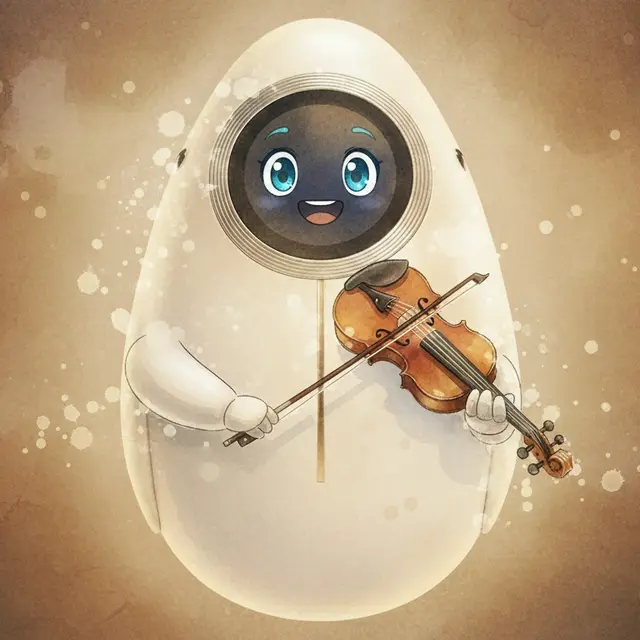
How it sounds
The air in the golden hall smells of beeswax and aged wood. It is eight in the evening on an ordinary Tuesday, but the rock crystal chandeliers are already fully lit, multiplying tiny pinpoints of light across the waxed parquet floor. You are sitting in the sixth row of the red velvet box, forearms resting against the cold balustrade. Down on the stage, the orchestra tunes in a dull chaos of quarter-tones, spruce wood, and tense gut strings crossing paths without order.
Suddenly, the conductor drops the baton and the tutti breaks with a dense chord, a compact wall of brass and heavy strings that fills the space until it makes your breastbone hum. Then the solist steps forward. The warm spotlight lands precisely on their left shoulder, illuminating the cloud of bow rosin suspended in the air like a tiny constellation. The violin attacks the highest note, a sustained sharp held a second longer than prudence allows, grazing a tension so fine it feels on the verge of snapping.
This is not a melody that accompanies; it is a voice stripping itself bare in the middle of the harmonic storm, cutting through the orchestral mass with a clean tremor. The bow hair grips the string with millimetric pressure, the maple body of the soundbox amplifies the friction until it becomes physical, and the sound no longer enters through the ears, but through the skin of your arms, rising in goosebumps as the note floats and refuses to fall.
Palette: gold wood / ivory white / real blue
- BPM
- 80 BPM
- Family
- Hall of Centuries
- Serial
- SAL-19
- Rarity
- Common
- Style strength
- 96
- Experimentation
- 18
Typical structure
[Tutti] → [Violin Solo] → [Dialogue] → [Cadenza] → brilliant [Coda]
What you see above is merely the staging. There are two technical problems a table cannot solve: how to keep lyricism from turning cheesy when a note stretches out, and how to make the dialogue between the soloist and the orchestral mass maintain tension without falling into hollow theatrics. That lives in an internal distillate of eight unpublished parameters, and the engine crosses it with your story before writing a line. Upon completion, an internal judge measures the lyrics against six dimensions of the canon and repairs what falls flat. Sheet music can be printed. The pressure of the bow, not.
How a lyric in this style thinks
A lyric written for the Violin Concerto does not describe emotion — it enacts a confrontation. The text positions a single voice against a dense, indifferent mass and watches that voice hold its pitch without flinching. This is the structural truth that makes the genre distinctive: the soloist does not harmonise with the world around them, they cut through it. When you write for this form, every line should carry that same physics — a clean, sustained thought pressing forward through harmonic resistance, never blurring into the surrounding noise. The Violin Concerto is not a genre of crowds or choruses. It is a genre of the singular moment, spoken once, in full.
The base tone is restrained intensity. Emotion in this genre arrives the way a high sustained note arrives on the E string — not with an announcement, but with a pressure that builds until the listener feels it in their sternum. Sentimentality is the one thing this form cannot survive. Lines must be precise and slightly formal in their construction, carrying the weight of something that has been held back for a long time and is now being released with deliberate control.
The rhythm should feel like a bow arm moving at measured tempo — broad strokes, no rushed syllables, no clutter. At 80 BPM, the pulse is slow enough to let single words land with full gravity. A line of seven or eight syllables, cleanly stressed, will carry more force here than a crowded twelve-syllable run.
The sensory field of the Violin Concerto lives in specific textures: aged wood and cold brass, the smell of rosin dust catching stage light, the physical vibration of a string under extreme tension, velvet seats and waxed floors, the quality of silence just before an attack. What this genre never uses: street noise, slang, domestic clutter, digital surfaces, irony. The imagery should be architectural and luminous — gold, ivory, the deep blue of a concert hall at full chandelier burn. Objects appear here only when they carry the full weight of what cannot be said directly. A single image of bow hair pressing into string is worth more than three metaphors about the heart.
Structurally, the form moves through distinct phases that mirror the concerto's own logic. An opening Tutti section establishes the world — its rules, its density, its apparent completeness. Then the solo voice enters, and everything shifts. The Violin Concerto lyric earns its Cadenza by the time it arrives: this is the section where the single voice is fully exposed, no orchestral cover, no rhythmic safety net, and every word must justify its presence. The Cadenza is where the real truth of the story gets spoken. After it, the Coda does not resolve so much as it confirms — the voice has been heard, the crossing of gazes has happened, the air has changed permanently.
What separates a genuine Violin Concerto lyric from a generic imitation is the quality of restraint under pressure. A lesser version reaches for grandeur too early, piling up elevated diction before the emotional stakes have been established. The real version builds slowly through the orchestral mass of the opening, lets tension accumulate without releasing it, and then — in the Cadenza — strips everything back to a single line that does not need ornament because it is structurally inevitable.
The brilliant passion of this genre is not volume or decoration. It is the precision of someone who waited until exactly the right moment, then spoke clearly, without raising their voice, and was impossible to ignore.
- SINGING VIOLIN
- BRILLIANT PASSION
- INSTRUMENTAL
Sample excerpt
The ink black tea sits cold upon the desk, My shadow stretches long across the floor. You left the brass key resting on the ledge, And walked through the heavy arch of the iron door. I count the rhythms of the ticking clock, Tracing the patterns of the peeling paint.
One steady gaze to hold the weight of silence, A golden thread pulled taut until it snaps. I stand untethered in the amber light.
Workshop note — The violin concerto demands a narrative arc that moves from observational stillness to an eruptive, emotional release. By keeping the lines sparse and focused on physical objects, you allow the imaginary violin melody to fill the gaps between the words. Avoid conversational filler and focus on the cold, sharp precision of a single decisive moment.
Sample excerpt written by MUSAI Song. Your lyrics are written from scratch, based on your story.
When to choose this style
Choose this card when your story speaks of a moment of painful clarity, when someone stood alone against the world with their head held high. It works for a mother who raised her children without asking for quarter, for a professional triumph that cost your health, or for a farewell where neither too many nor too few words were spoken, just a definitive crossing of gazes. It is perfect for telling a truth spoken without raising one's voice, with an elegance that disarms. Do not choose it for noisy joy, muddy reconciliations, or stories that call for street grit or dark humor. If you are looking for the dark intimacy of a solo keyboard, the card is Nocturno para Piano.
Your story in this style
MUSAI Song writes original lyrics from your story, in the Violin Concerto style, and delivers the finished sung song, the ready-to-use style recipe, and an illustrated art plate with its numbered certificate, private by default; public only if its owner publishes it.
- Original lyrics written from your story
- A finished sung song, ready to play and share
- Art plate with a unique seal and a numbered certificate, private by default; public only if its owner publishes it
Frequently asked questions
What BPM is Violin Concerto?
Violin Concerto usually runs at 80 BPM.
What does Violin Concerto sound like?
A solo violin singing above the orchestra like a bare soul. The violin concerto: lyrical virtuosity, brilliant passion, and beauty that moves you to the bone.
What song structure does Violin Concerto use?
[Tutti] → [Violin Solo] → [Dialogue] → [Cadenza] → brilliant [Coda]
How do I write Violin Concerto lyrics?
Tell MUSAI Song your story and pick Violin Concerto: it writes original lyrics for this style at 80 BPM, you edit them word by word, and you get the song sung in Violin Concerto, with an illustration of the song and its numbered certificate. $19 USD per song, one-time payment.
Explore more styles
- Adagio for Strings
- Baroque Cantata
- Baroque Harpsichord
- Bel Canto Opera
- Chamber Music
- Choral Mass
- Classic Choral Hymn
- Classic Film Score
- Classical Ballet
- Classical Minimalism
- Classical Sonata
- Dramatic Overture
- Festive Overture
- Impressionism
- Neoclassicism
- Operatic Aria
- Oratorio
- Orchestral Suite
- Piano Concerto
- Piano Nocturne
- Renaissance Sacred Music
- Requiem
- Romantic Lied
- Romantic Symphony
Your idea or story, sung in this style
Card · secure payment via Stripe, charged in USD
If it doesn't move you, we give you your money back · 7 days