Operatic Aria
The human body as an instrument that accepts no half-measures.
Get your song in Operatic Aria
Make yours in this styleHear it before you pay.$19 USD · your first song for $5.50 USDIf it doesn't move you, we give you your money back · 7 days.

Example in a sibling style: Viennese Waltz
“Bailamos el Error”
- Ximena giraba en el patio,
- tu vestido color lavanda,
- ensayaste contra la madera
- los pasos que el violín te anda.
Example made with MUSAI Song · sample story · See its certificate MUS-9QMRYG
Operatic Aria is a style from the Hall of Centuries family. 60 BPM, Experimentation 22, Style strength 99.
What is Operatic Aria?
A full orchestra and a human voice pushed to the edge of what's possible. The aria: the moment the soul sings without armor, sublime and eternal.
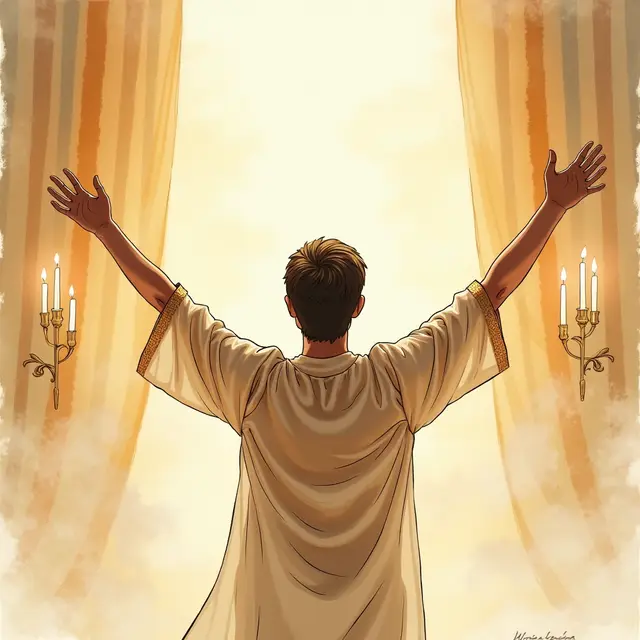
How it sounds
Row twelve of a nineteenth-century theatre, twenty-three minutes after the house lights went down. The velvet of the seat in front smells of warm dust. You have the programme folded in your hand and you stopped remembering you were holding it a while ago.
Down in the pit, the oboe gives a long note nobody applauds. The strings come in underneath, pianissimo, so low that for two seconds you cannot tell whether it is the orchestra or the air in the room.
On stage there is one person, standing. Not moving. She has not moved for forty seconds.
When she opens her mouth, the first thing that reaches you is not the voice: it is how much of the room the voice takes up. No microphone. Twelve hundred seats, and the sound reaches the back row with body, with vibrato, with that exact tremor nobody can fake.
The recitative is almost speech. It runs fast, tumbling, like someone explaining something urgent before it is too late. Then the harp strikes two chords, everything brakes, and the aria begins: time starts being measured some other way.
The cabaletta accelerates. The strings push underneath. There is an instant when orchestra and voice run at the same point and neither gives way.
And on the final note, the sustained one, something strange happens: twelve hundred people stop breathing at once. You notice because the silence changes texture.
You come out onto the street half an hour later and your chest is still tight.
Palette: ochre ivory orange warm gold
- BPM
- 60 BPM
- Family
- Hall of Centuries
- Serial
- SAL-01
- Rarity
- Master
- Style strength
- 99
- Experimentation
- 22
Typical structure
[Orchestral Intro] → [Recitative] → [Slow Aria] → [Cabaletta] accelerating → [Climax] sustained note → [Orchestral Finale]
Tempo, circuit and settings: that is what you can see, and in an aria what you can see is the architecture, not the writing. What does not fit in the table: how to write a recitative that sounds like urgent speech and stays singable, which phrase survives being held for four seconds on a single vowel without turning ridiculous, where the limit sits so that the feeling is enormous and not mawkish, which is the finest line in the catalogue. That lives in this card's internal distillation, eight parameters that are not published, and the engine crosses it with your story before a single syllable is written. At the end, an internal judge measures against six dimensions of the canon and repairs. An orchestra can be scored. The phrase that deserves that voice cannot be improvised.
How a lyric in this style thinks
An operatic aria lyric does not describe emotion — it enacts it at a scale the speaking voice cannot reach. The aria operática is the form Western music invented for feelings that refuse to stay inside a person: grief that has swollen past the capacity of ordinary language, love confessed too late, devotion that was never named while it still had time. The lyric's first obligation is to justify the size of what is about to happen. If the feeling does not genuinely require a full romantic orchestra and an unmiked voice filling twelve hundred seats, this is the wrong form. The aria earns its grandeur or it becomes parody.
The structure follows a logic that is almost physiological. The recitative arrives first, and it moves like urgent speech — syllables tumbling forward, the melodic line close to natural cadence, the orchestra holding back beneath it. This is where exposition lives, where circumstance is named. Then something brakes. A harp chord, a fermata, a moment of held breath, and the slow aria opens. Time reorganises itself. Line length expands. A single vowel can sustain across six beats.
The lyric here works in long arcs rather than quick images: the sentence does not resolve, it accumulates, bending toward the sustained note the way a wave bends before it breaks. The cabaletta that follows accelerates, strings pushing underneath, the rhythm tightening, until orchestra and voice arrive at the climax together and neither yields. The final sustained note is not decoration — it is the structural destination everything before it was building toward.
The sensory field of the aria operática is warm and interior: ivory, ochre, amber candlelight, velvet, the dust smell of old upholstery, the resonance of wood and plaster. The imagery stays large and elemental — night, hands, years, silence, a name. What the form refuses is the small and ironic: no wry observations, no contemporary slang, no self-aware deflection. Irony here reads as mockery. The aria requires a lyric that stands in the open without armour, which is why the card's own language calls it soul unguarded. Concrete objects appear, but they carry weight — a letter that was never sent, a threshold crossed or not crossed, a face seen for the last time.
Vocal delivery in the aria operática is the primary instrument, and the lyric must be written to serve it. Italian vowels have historically dominated the form because open vowels sustain vibrato without distortion; if you are writing in English, place your sustained syllables on open sounds — ah, oh, ay — and avoid consonant clusters on high notes.
The soprano or tenor voice pushed to its upper register produces a physical pressure in the listener's chest; the lyric should earn that pressure by arriving there only once, at the true emotional peak, not three times across the song. The orchestral introduction and finale are not filler: they are the frame that tells the listener this event is worth attending to.
What separates a real aria lyric from a generic imitation is proportion and restraint in the approach to the climax. The temptation is to begin at full emotional intensity and stay there. But the aria operática builds through contrast — the near-speech of the recitative makes the slow aria feel like revelation; the slow aria makes the cabaletta feel like necessity; the cabaletta makes the sustained final note feel inevitable.
A lyric that skips the recitative's urgency, or rushes the slow section, or multiplies climaxes, loses the architecture that gives the form its weight. Write the quiet parts with as much care as the loud ones. The twelve hundred people who stop breathing at the final note do so because everything before it taught them to.
- VOICE THAT TOUCHES THE SKY
- SOUL UNGUARDED
Sample excerpt
I lay the heavy iron key upon your desk. Your silver thimble rests beside the ink black thread. For thirty years I bore what you could never ask, And walked across the stone with every truth unsaid. Now winter floods the room in amber light, And silence yields at last to open air.
Hear my voice before the theater fades! I name you now, I call your name aloud! No shield remains between my heart and yours, Only the vow that time leaves unbowed!
Workshop note — An operatic aria requires poetic nobility and severe emotional clarity, entirely stripped of casual idioms or defensive irony. The verse anchors the dramatic tension in heavy, concrete imagery before the chorus opens into broad, sustained vowels designed for dynamic vocal scaling. It succeeds by elevating a private, unspoken truth into a monumental theatrical declaration.
Sample excerpt written by MUSAI Song. Your lyrics are written from scratch, based on your story.
When to choose this style
Choose this card when the feeling is larger than the person carrying it. For a loss that still has not been said out loud. For a lifelong love that arrives late to its own declaration. For a tribute to someone who was enormous to three people and unknown to everyone else. For a mother who was never told what it cost her. For a farewell that deserves a whole theatre even if only two people hear it.
It is the card of feeling with no defences: nobody hides behind irony here.
Do not choose it for the everyday, for quiet affection, or for a cheerful birthday: the aria turns everything it touches into tragedy, and some kinds of love do not want to be tragedy. Not for humour either, which here sounds like mockery. And if you want the same solemnity in Spanish, at half voice and with a guitar instead of an orchestra, the card is Bolero Clásico.
Your story in this style
MUSAI Song writes original lyrics from your story, in the Operatic Aria style, and delivers the finished sung song, the ready-to-use style recipe, and an illustrated art plate with its numbered certificate, private by default; public only if its owner publishes it.
- Original lyrics written from your story
- A finished sung song, ready to play and share
- Art plate with a unique seal and a numbered certificate, private by default; public only if its owner publishes it
Frequently asked questions
What BPM is Operatic Aria?
Operatic Aria usually runs at 60 BPM.
What does Operatic Aria sound like?
A full orchestra and a human voice pushed to the edge of what's possible. The aria: the moment the soul sings without armor, sublime and eternal.
What song structure does Operatic Aria use?
[Orchestral Intro] → [Recitative] → [Slow Aria] → [Cabaletta] accelerating → [Climax] sustained note → [Orchestral Finale]
How do I write Operatic Aria lyrics?
Tell MUSAI Song your story and pick Operatic Aria: it writes original lyrics for this style at 60 BPM, you edit them word by word, and you get the song sung in Operatic Aria, with an illustration of the song and its numbered certificate. $19 USD per song, one-time payment.
Explore more styles
- Adagio for Strings
- Baroque Cantata
- Baroque Harpsichord
- Bel Canto Opera
- Chamber Music
- Choral Mass
- Classic Choral Hymn
- Classic Film Score
- Classical Ballet
- Classical Minimalism
- Classical Sonata
- Dramatic Overture
- Festive Overture
- Impressionism
- Neoclassicism
- Oratorio
- Orchestral Suite
- Piano Concerto
- Piano Nocturne
- Renaissance Sacred Music
- Requiem
- Romantic Lied
- Romantic Symphony
- String Quartet
Your idea or story, sung in this style
Card · secure payment via Stripe, charged in USD
If it doesn't move you, we give you your money back · 7 days