Saya Caporal
The bass drum gives the signal; the feet obey without asking the brain.
Get your song in Saya Caporal
Make yours in this styleHear it before you pay.$19 USD · your first song for $5.50 USDIf it doesn't move you, we give you your money back · 7 days.

Example in a sibling style: Traditional Mariachi
“El Vapor de Lupita”
- Te plantabas al pie del metro Constitución,
- cinco en punto, de frío y de afán,
- con la olla humeando y el atole de guayaba,
- vapor que a tres hijos nos dio pan.
Example made with MUSAI Song · sample story · See its certificate MUS-MURRZP
Saya Caporal is a style from the Roots That Hold Fast family. 100 BPM, Experimentation 18, Style strength 92.
What is Saya Caporal?
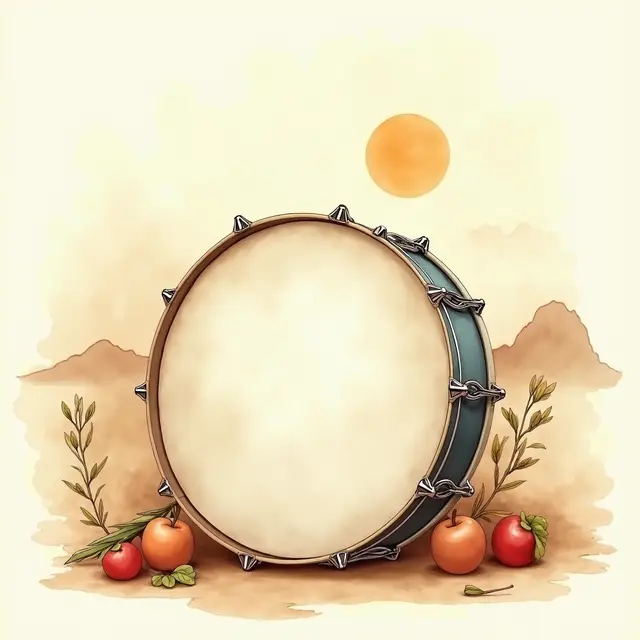
Afro-Bolivian bass drums and brass on parade. The driving force of saya caporal, a style that shakes the ground of the Andean highlands with pride.
How it sounds
It is three in the afternoon and the high plateau sun falls vertically, bleaching the adobe walls and baking the cobblestones until the air shimmers. You stand in the middle of the square, wearing a heavy suit of golden threads and mirrors pressing down on your shoulders like ceremonial armor. Dust rises with every step, clinging to the sweat on your forehead. Ahead, the column of dancers tenses before the break.
Then the bass drum hits: taut hide that does not just sound, it rattles straight against your ribs, marking the exact pulse of a ground that refuses to stay silent. The cymbals slice through the dry air and the brass crashes in, a trumpet and a trombone hurling a sharp melody against the snow-capped mountain watching from afar. You are not dancing alone; you are driven by the weight of fifty people stepping as one, the ankle bells ringing like a single metal snake, the red and blue skirts spinning in a solid block. No one stops.
Your body aches from the exertion and the altitude, but your chest swells because the rhythm commands you forward and fatigue means nothing when the whole community shoves the earth beneath your feet.
Palette: gray blue / red / gold orange / green
- BPM
- 100 BPM
- Family
- Roots That Hold Fast
- Serial
- RAI-16
- Rarity
- Common
- Style strength
- 92
- Experimentation
- 18
Typical structure
[Intro] bass drums → [Verse] → [Group Chorus] → [Brass Instrumental] → [Final Chorus]
The data above is copied in a minute. What cannot be copied is the judgment: how to tune the brass fanfare so it sounds like a true procession rather than a loose fair, and how to write a group chorus without sliding into empty slogans. All of that lives in the unpublished internal distillate, eight parameters that the motor intersects with your history before writing a single line. When finished, an internal judge measures the lyric against six canons and forces a rewrite of anything that misses the mark. The drum is bought. The steady march, not.
How a lyric in this style thinks
A lyric in saya caporal does not confide — it proclaims. The words are aimed outward, at a crowd already moving, and their job is to confirm what the body already knows: that this community is here, that it has survived, and that it is not asking for recognition. Saya caporal carries Afro-Bolivian roots into the Andean highlands and turns that collision of traditions into forward motion. The genre does not pause for introspection. Every line lands like a footfall on cobblestone — deliberate, weighted, public. If the lyric whispers, it has already failed the form.
The emotional register of saya caporal sits at the intersection of pride and exertion, the specific feeling of joy that costs something physical. Emotion does not arrive through confession or vulnerability; it arrives through accumulation. The verse builds the scene — the dust, the altitude, the weight of the costume, the column of dancers — and the group chorus detonates it. That detonation is not a release of tension but a confirmation of it. The crowd sings together because unity is the argument the song is making. Grief, when it appears at all, is ancestral and collective, never solitary. It is grief that has already been converted into momentum.
Repetition in this genre is structural and intentional. A phrase in the chorus may return three or four times without variation, and that repetition is the point — it mimics the locked step of the parade, the ankle bells ringing in unison, the bombo drums marking a pulse that does not negotiate. Line lengths tend to be short and declarative, built to be shouted rather than sung softly. The rhythm at around 100 BPM is march-tempo, not dance-floor tempo, and the lyric has to honor that: syllables need to land on the beat, not float above it. Syncopation exists in the brass arrangements, but the vocal lines hold the spine straight.
The sensory field of saya caporal is specific. You are on a high-altitude plaza in vertical afternoon sun. Adobe walls, bleached cobblestones, the shimmer of heat off stone. The costume carries real weight — golden thread, mirrors, the press of ceremonial armor on the shoulders. The brass, trumpet and trombone cutting through dry air, is not ornamental; it is confrontational. The bombo drum hits the chest before it reaches the ear. A lyric in this genre earns its right to exist by grounding itself in this physical world.
Abstract declarations of pride ring hollow; the pride has to be located somewhere specific, tied to a square, a mountain visible on the horizon, a neighborhood, a family name carved into something permanent. The genre has no room for vague uplift or soft imagery. Pastel scenes and whispered metaphors belong somewhere else entirely.
Structurally, saya caporal follows a logic built around the brass instrumental break. The intro establishes the bombo pulse and nothing else — the drums arrive before the melody, before the words, because the ground speaks first. The verse names the story: who marched, what they carried, what the altitude cost them. The group chorus transforms that story into collective statement.
Then the brass instrumental does something lyrics cannot — it gives the body time to process what has been claimed, the trumpet line doing the arguing while the dancers drive it home. The final chorus returns with the weight of everything that came before it, and it should feel inevitable rather than climactic. The structure does not build to a peak; it builds to a confirmation.
What separates a genuine saya caporal lyric from a generic imitation is the refusal to be modest. Generic versions reach for universal themes — family, struggle, hope — and leave them unanchored. A real lyric in this genre names the specific: the particular crossing, the specific pickaxe, the exact brick. The pride is not aspirational; it is declarative of something already accomplished. The community did not hope to build the school. It built it. The lyric speaks in the past tense of achievement and the present tense of continuation. That grammatical confidence — we are here, we built this, we march forward — is the heartbeat the bombo drum is already marking before the first word arrives.
- RUMBLING BASS DRUMS
- PARADE
Sample excerpt
Dust on the boots from the high stone road Pickaxe resting on the courtyard wall Forty years carrying the heavy load Now the brass starts up and the shadows fall
Hear the drum strike deep in the frozen ground We walk this street and we own the sound Step heavy now let the metal ring We built this town and we learned to sing
Workshop note — This sample relies on steady, marching syllable counts that match the heavy pulse of the bass drum. The verse anchors the story in concrete physical labor before the chorus opens up into collective pride and shared movement. Avoid quiet or fragile imagery here, because this rhythm demands an unyielding and heavy vocal presence.
Sample excerpt written by MUSAI Song. Your lyrics are written from scratch, based on your story.
When to choose this style
Choose this card when the story speaks of roots that cannot be pulled up, of a people rising without asking for permission, or of a family that crossed borders carrying their celebration as their only flag. It works to celebrate returning home after years away, to honor grandparents who carved paths with pickaxes, or to mark the collective triumph of a neighborhood that built its own school brick by brick.
This is the card for unyielding pride, for joy held together with clenched teeth, and for the body marching because staying still is disappearing. Do not choose it for quiet, private sorrows or solitary grief where the voice barely emerges, because this rhythm does not know how to whisper and demands a crowd. It also fails for mild nostalgia or hushed reconciliations. If you are looking to tell a private, inward ache, the card is Bolero Ranchero.
Your story in this style
MUSAI Song writes original lyrics from your story, in the Saya Caporal style, and delivers the finished sung song, the ready-to-use style recipe, and an illustrated art plate with its numbered certificate, private by default; public only if its owner publishes it.
- Original lyrics written from your story
- A finished sung song, ready to play and share
- Art plate with a unique seal and a numbered certificate, private by default; public only if its owner publishes it
Frequently asked questions
What BPM is Saya Caporal?
Saya Caporal usually runs at 100 BPM.
What does Saya Caporal sound like?
Afro-Bolivian bass drums and brass on parade. The driving force of saya caporal, a style that shakes the ground of the Andean highlands with pride.
What song structure does Saya Caporal use?
[Intro] bass drums → [Verse] → [Group Chorus] → [Brass Instrumental] → [Final Chorus]
How do I write Saya Caporal lyrics?
Tell MUSAI Song your story and pick Saya Caporal: it writes original lyrics for this style at 100 BPM, you edit them word by word, and you get the song sung in Saya Caporal, with an illustration of the song and its numbered certificate. $19 USD per song, one-time payment.
Explore more styles
- Andean Huayno
- Appalachian Old-Time
- Argentine Tango
- Balkan Brass
- Bluegrass
- Bolero Ranchero
- Cajun
- Cape Verdean Morna
- Celtic Folk
- Corrido Tumbado
- Creole Waltz
- Epic Ranchera
- Flamenco Rumba
- Greek Rebetiko
- Huapango Huasteco
- Irish Ballad
- Joropo Llanero
- Klezmer
- Milonga
- Moroccan Gnawa
- Nordic Folk
- Norteño with Sax
- Pacific Currulao
- Portuguese Fado
Your idea or story, sung in this style
Card · secure payment via Stripe, charged in USD
If it doesn't move you, we give you your money back · 7 days