Old-School Hip-Hop
The party started long before there was an app to request it.
Get your song in Old-School Hip-Hop
Make yours in this styleHear it before you pay.$19 USD · your first song for $5.50 USDIf it doesn't move you, we give you your money back · 7 days.
Old-School Hip-Hop is a style from the Street and Verse family. 110 BPM, Experimentation 20, Style strength 94.
What is Old-School Hip-Hop?
Funky breakbeats and party scratches with a playful flow. Old-school hip-hop is the block party of the 80s, joyful, fresh, and foundational.
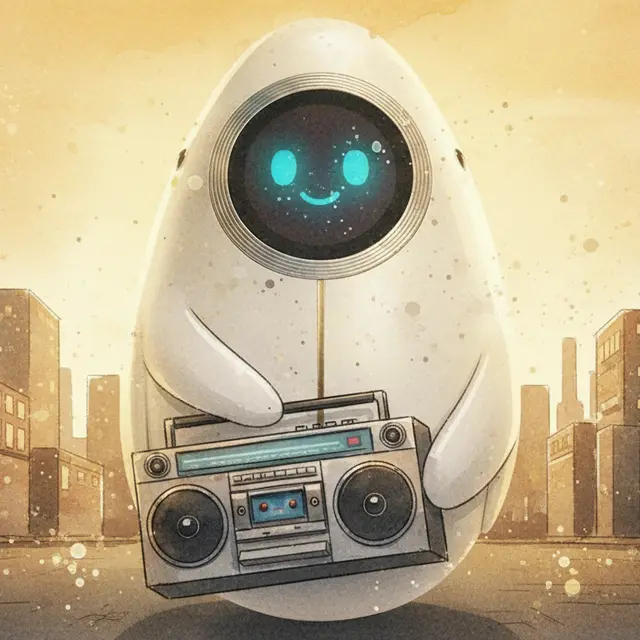
How it sounds
An orange extension cord snakes out of a first-floor window, tapped straight into the streetlamp to bleed city power. It is seven-thirty on an August evening in the Bronx, and the asphalt still radiates the day's retained heat, a heavy exhaust smell mixed with hot tar. A massive flattened cardboard box is taped down right across the sidewalk, hemmed in by a tight circle of scuffed white sneakers, backwards caps, and lukewarm cans.
A pair of Technics 1200s rests on a wobbly folding table; the DJ rocks the vinyl back and forth, dragging the needle across the grooves to carve out that sharp metallic scratch before the funk breakbeat kicks the door in. Nobody is in a hurry. A kid in a gray hoodie steps to the edge of the cardboard, tapping his toe to the invisible count, waiting for the snare to drop so he can hit the deck. When the drum loop locks in, the bassline hits you right in the ribs—bouncy and dry—forcing every single head in the alley to nod in unison.
Voices stack on top of the rhythm, barking out ad-libs and calling back the punchlines with raw neighborhood pride. The sun drops fast behind the red-brick tenements, painting the sky a dirty magenta that swallows the smoke from a barbecue down the block. Nobody is asking for permission to take up space here.
Palette: warm yellow / cyan / graffiti magenta
- BPM
- 110 BPM
- Family
- Street and Verse
- Serial
- CLL-16
- Rarity
- Rare
- Style strength
- 94
- Experimentation
- 20
Typical structure
[Intro] scratch → [Verse] → [Hook] crowd-ready → [Verse 2] → [Final Hook]
The specs above fit neatly on a spec sheet. What stays hidden is the invisible engine: how to keep a playful flow without sliding into cheap 1980s parody, and exactly where to drop the call-and-response gaps so the listener feels the pavement beneath their feet. All of that lives inside an unpublished eight-parameter distillate that the system cross-checks with your personal anecdotes. In the final pass, an internal judge grades the lines against six canon dimensions and strips out anything that smells like a tourist postcard. The breakbeat belongs to the crates. The block party spirit does not.
How a lyric in this style thinks
A lyric in old-school hip-hop does one specific thing: it claims territory. Not metaphorically — it names the block, the crew, the moment, the year, and it dares anyone in earshot to dispute it. The claim lands through rhythm before it lands through meaning. The words arrive on top of a funky breakbeat, usually somewhere around 110 BPM, and the syllables have to ride that bounce without drowning it. Old-school hip-hop is not a confessional genre. It is a public address, and every line is written as if there is already a crowd nodding in the alley.
The base tone is warm and combative in equal measure — not angry, but alert. Emotion arrives through boast and through laughter, often in the same bar. The voice does not crack or reach for vulnerability; it plants its feet. Repetition is structural and intentional: a hook in this genre is a chant before it is a melody, and it has to survive being yelled back by people who only heard it once. Lines tend to run long, filling the bar with dense syllable stacks, then snapping short for the punchline.
That contrast — the build and the drop — is where the personality lives. Rhyme schemes are clean and end-stopped; internal rhyme adds wit without muddying the bounce. The delivery is dry and rhythmically precise, leaning into the snare, never floating above it.
The sensory world of old-school hip-hop is concrete and specific. Cardboard on asphalt. The metallic drag of a needle across vinyl. Scuffed sneakers on a sidewalk that still holds the August heat. Electro synths cutting through the low end. Party scratches that arrive like punctuation. The bassline is bouncy and dry — it hits you in the ribs, not in the chest. This genre lives in the borough, on the block, under the orange glow of a streetlamp, and it never retreats indoors. It does not use candlelight, soft focus, or pastoral imagery. The textures are urban, tactile, and slightly worn at the edges in a way that reads as earned rather than neglected.
Structurally, old-school hip-hop follows a lean and functional logic: a scratch intro that signals the DJ and sets the tempo, two verses that build the story or the boast with increasing specificity, and a crowd-ready hook that arrives early enough to teach itself to the listener. The hook is not a chorus in the singer-songwriter sense — it is a call that expects a response. Ad-libs and crowd barks sit in the spaces between lines, and they are not decoration; they are confirmation that the room is locked in. The final hook lands harder because the verses have done their work, and by then the crowd already owns it.
What separates a real old-school hip-hop lyric from a generic imitation is the specificity of the claim and the refusal to apologize for joy. Imitations reach for toughness and end up with posture. The real thing is too busy celebrating to perform menace. The origin story, the crew that stayed tight, the something made from nothing — these subjects work because old-school hip-hop treats collective memory as a reason to throw a block party, not to light a candle. The grin is not naive; it is hard-won. Write the name of the thing. Name the street, the summer, the exact sound of the snare dropping. If the lyric could be about anyone anywhere, it is not old-school hip-hop yet.
- 80S BREAKBEAT
- BLOCK PARTY
Sample excerpt
Cardboard on the pavement, spin the needle right We got the 808 booming till the morning light No leather jackets, just a fresh pair of kicks Building up a kingdom out of busted-up bricks My man on the turntables slicing up the groove Making every single pedestrian move
Throw your hands high when the bassline drops We keep rocking till the very last block Yeah, we keep it live, we keep it loud Getting real kinetic for the neighborhood crowd
Workshop note — This verse relies on punchy, rhythmic internal rhymes and concrete objects like cardboard and turntables to establish an authentic street-level atmosphere. The chorus uses direct call-and-action phrasing that invites crowd participation, keeping the energy high and communal without slipping into passive cliches.
Sample excerpt written by MUSAI Song. Your lyrics are written from scratch, based on your story.
When to choose this style
Pick this card when you need to tell an origin story, a community win, or a moment where the only valid response was to stand tall and laugh back. It works for celebrating a crew that has stayed tight for decades against all odds, for a milestone birthday that rejects quiet solemnity, or for recounting how you made something out of nothing without losing your grin. It fits the person who believes the best way to honor history is to throw a block party about it.
Do not choose this for a quiet late-night confession, a heavy grief that demands silence, or a low-key romance: old-school hip-hop requires a crowd, a sidewalk, and a solar energy that refuses to whisper. If you are looking for sober introspection, the card is Boom Bap.
Your story in this style
MUSAI Song writes original lyrics from your story, in the Old-School Hip-Hop style, and delivers the finished sung song, the ready-to-use style recipe, and an illustrated art plate with its numbered certificate, private by default; public only if its owner publishes it.
- Original lyrics written from your story
- A finished sung song, ready to play and share
- Art plate with a unique seal and a numbered certificate, private by default; public only if its owner publishes it
Frequently asked questions
What BPM is Old-School Hip-Hop?
Old-School Hip-Hop usually runs at 110 BPM.
What does Old-School Hip-Hop sound like?
Funky breakbeats and party scratches with a playful flow. Old-school hip-hop is the block party of the 80s, joyful, fresh, and foundational.
What song structure does Old-School Hip-Hop use?
[Intro] scratch → [Verse] → [Hook] crowd-ready → [Verse 2] → [Final Hook]
How do I write Old-School Hip-Hop lyrics?
Tell MUSAI Song your story and pick Old-School Hip-Hop: it writes original lyrics for this style at 110 BPM, you edit them word by word, and you get the song sung in Old-School Hip-Hop, with an illustration of the song and its numbered certificate. $19 USD per song, one-time payment.
Explore more styles
- Afro-Trap
- Boom Bap
- Cloud Rap
- Confessional Hip-Hop
- Conscious Hip-Hop
- Dirty South
- Drill
- Dub
- East Coast Hip-Hop
- Emo Rap
- French Rap
- G-Funk
- Gangsta Rap
- Grime
- Hardcore Hip-Hop
- Jazz Rap
- Latin Boom Bap
- Latin Melodic Trap
- Latin Trap
- Mumble Rap
- Phonk
- Plugg
- Rage Rap
- Ragga Hip-Hop
Your idea or story, sung in this style
Card · secure payment via Stripe, charged in USD
If it doesn't move you, we give you your money back · 7 days