Grime
The tower doesn't listen, but it remembers everything.
Get your song in Grime
Make yours in this styleHear it before you pay.$19 USD · your first song for $5.50 USDIf it doesn't move you, we give you your money back · 7 days.
Grime is a style from the Street and Verse family. 140 BPM, Experimentation 28, Style strength 92.
What is Grime?
Raw electronic beats and an unstoppable rapid-fire flow. Grime, born in London, carries the energy of pirate radio: fast, urban, and electric as the city itself.
How it sounds
It is three in the morning on the nineteenth floor of a concrete tower block in Bow. The lift has been out for three months and the stairwell smells of dampness and fried takeout. Outside, the East End fog swallows the yellow glow of the streetlights, turning the pavement into a dead-end corridor. Inside the room, a modified Roland TR-606 drum machine spits a distorted signal at one hundred and forty beats per minute straight into a guitar amplifier that crackles with every hit.
The square-wave bass doesn't just play; it shakes the window panes until they buzz with static. On the table, a dual-deck radio is tuned to an unlicensed frequency, bleeding white noise that fights the beat. You are standing in front of the mic with a crumpled sheet of paper in your right hand, though you stopped looking at the lines because they are already locked in your jaw. The syllables stack up like bricks thrown against a metal door, packed so tight they bruise each other. The air in the room burns your throat every time you swallow.
Pressure builds at your temples, matching the hum of the electrical transformer bolted to the outer wall. There is no room to breathe between bars; you just keep shoving the words outward before the frequency devours your thoughts. Everything vibrates at the exact same furious speed.
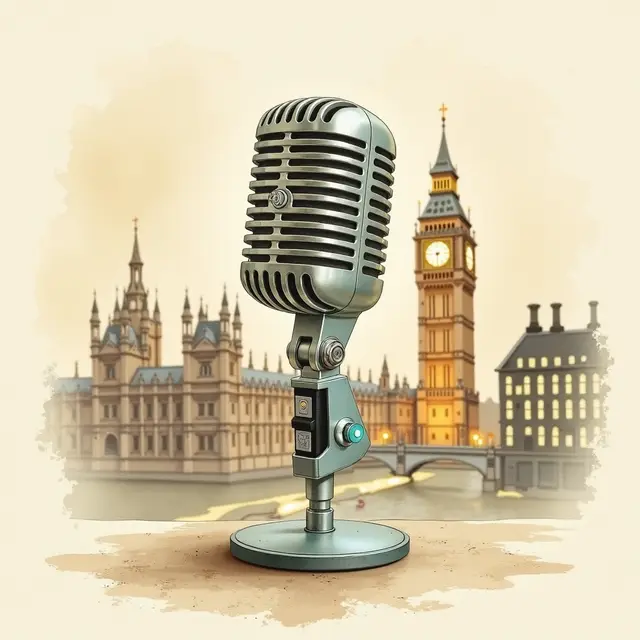
Palette: silver gray / bluish cyan / background warm yellow
- BPM
- 140 BPM
- Family
- Street and Verse
- Serial
- CLL-04
- Rarity
- Rare
- Style strength
- 92
- Experimentation
- 28
Typical structure
[Intro] → [Verse] fast → [Hook] → [Verse 2] → [Final Hook]
What you see on the sheet is merely the casing of the frequency. Two concrete writing traps ruin this style: overloading the line with too many nouns until the 140 BPM pulse drowns, or rushing the flow without locking internal rhymes every half-bar, which kills the punch. That lives inside a hidden distillate of eight parameters that the engine crosses with your story before drafting. Afterward, an internal judge measures the lyrics against six canons and repairs every flaw. The tempo is copied in seconds. The voltage, not.
How a lyric in this style thinks
A grime lyric does not confess — it declares. Where other genres invite the listener to feel alongside the writer, grime positions the speaker at the front of the room and dares anyone to look away. The syllables arrive in clusters, stacked so tightly against each other that individual words lose their edges and the phrase becomes a single blunt instrument. This is not carelessness; it is precision under pressure. Grime, born from the concrete geometry of East London tower blocks and the crackling frequencies of unlicensed radio, is a genre built on the idea that your voice is the only transmitter you have, and you will not waste a single beat of dead air.
The emotional register sits in a narrow but intense band: controlled fury, territorial pride, the specific satisfaction of outlasting everyone who wrote you off. Sentiment is not absent — it is compressed. A line about a broken lift shaft or a stairwell that smells of mildew carries more weight than an open declaration of hardship, because the listener understands immediately what it costs to live in that building and still come out swinging.
The sensory field in grime is hyper-specific and urban: fluorescent light on wet concrete, the static bleed of a pirate station at 3 a.m., a square-wave bass shaking single-glazed windows. What grime never uses is pastoral softness, vague metaphor, or any image that asks for stillness. The genre has no patience for quiet rooms.
At 140 BPM, the rhythm is not a backdrop — it is a structural constraint the lyricist writes into rather than over. Lines must land on the grid or they will be swallowed by it. The rapid-fire flow works in bursts of dense syllables followed by a single hard-stopped word that functions as punctuation. This rhythm mimics the MC's physical breath under pressure: no long melodic phrases, no sustained vowels, just the jaw working fast and the chest staying tight.
Repetition in grime is used sparingly and strategically; when a phrase repeats in the hook, it carries the weight of a statement already proven in the verse, not a plea being made for the first time. The hook in the canonical structure — Intro, fast Verse, Hook, Verse 2, Final Hook — is short, declarative, and almost percussive in itself.
The production architecture matters to the lyric because the two are inseparable. The modified drum machine signal, distorted and dry, leaves no reverb cushion for the voice to rest in. The square-wave bass is not warm; it is electrical and abrasive, and the lyric has to match that texture. Delivery is raw and unprocessed in feel even when the recording is technically clean — any vocal affectation that sounds borrowed from another genre will immediately read as false. The voice must sound like it belongs to someone who climbed nineteen flights of stairs to get to the microphone and is not interested in explaining why.
What separates a genuine grime lyric from an imitation is specificity of place and a refusal of self-pity. Generic versions of the genre reach for aggression as an aesthetic, stacking hard-sounding words without grounding them in a real coordinate. The real thing names the road, the floor, the smell, the exact nature of what was lost and what was rebuilt. The speaker is not performing toughness; they are reporting conditions. That distinction lives in the verb choices — not 'I struggled' but 'I climbed,' not 'they doubted me' but 'they counted me out on a Tuesday and I was back by Friday.' Grime's authority comes from precision, and precision is the only thing the genre rewards.
- RAPID-FIRE FLOW
- LONDON ENERGY
Sample excerpt
Six in the morning, the council flat is freezing cold Counting up the copper coins that left my pockets bold They said I'd stay down on the carpet where the dust is old Now I got the blueprint and the iron in the mold Step to the barrier, you know I hold the line Every single block is mine, I'm working overtime
Pull up the fader, let the speaker breathe Nowhere to run when the circuit leaves Got the heavy metal pulse running through the street No turning back when the bassline peaks
Workshop note — This excerpt uses rapid, punchy syllable clusters and aggressive internal rhymes to match the 140 BPM electronic pulse. The lines remain short and heavy, reflecting direct street confrontation without softening the language. Avoid slow metaphors or melodic padding here; every syllable must land like a step on concrete.
Sample excerpt written by MUSAI Song. Your lyrics are written from scratch, based on your story.
When to choose this style
Choose this card when you need to drop a truth that has been compressed in your chest for too long and refuses a soft tone or a quiet confession. It works when you rebuilt your life from scratch after losing everything and you want it shown in your stride, not your complaints. For staking your claim against everyone who bet you would stay down. For the exact moment patience runs out and the only valid response is speed and force.
It fits recounting a forced relocation, a hard-earned climb, or a family standoff where nobody apologized but everyone understood where you stood. Do not choose it for stories requiring calm, slow reconciliations, or quiet grief; grime never lowers its guard or drops its volume. If you need to process a loss with tenderness or unpack the grey shades of doubt, the card is Drill.
Your story in this style
MUSAI Song writes original lyrics from your story, in the Grime style, and delivers the finished sung song, the ready-to-use style recipe, and an illustrated art plate with its numbered certificate, private by default; public only if its owner publishes it.
- Original lyrics written from your story
- A finished sung song, ready to play and share
- Art plate with a unique seal and a numbered certificate, private by default; public only if its owner publishes it
Frequently asked questions
What BPM is Grime?
Grime usually runs at 140 BPM.
What does Grime sound like?
Raw electronic beats and an unstoppable rapid-fire flow. Grime, born in London, carries the energy of pirate radio: fast, urban, and electric as the city itself.
What song structure does Grime use?
[Intro] → [Verse] fast → [Hook] → [Verse 2] → [Final Hook]
How do I write Grime lyrics?
Tell MUSAI Song your story and pick Grime: it writes original lyrics for this style at 140 BPM, you edit them word by word, and you get the song sung in Grime, with an illustration of the song and its numbered certificate. $19 USD per song, one-time payment.
Explore more styles
- Afro-Trap
- Boom Bap
- Cloud Rap
- Confessional Hip-Hop
- Conscious Hip-Hop
- Dirty South
- Drill
- Dub
- East Coast Hip-Hop
- Emo Rap
- French Rap
- G-Funk
- Gangsta Rap
- Hardcore Hip-Hop
- Jazz Rap
- Latin Boom Bap
- Latin Melodic Trap
- Latin Trap
- Mumble Rap
- Old-School Hip-Hop
- Phonk
- Plugg
- Rage Rap
- Ragga Hip-Hop
Your idea or story, sung in this style
Card · secure payment via Stripe, charged in USD
If it doesn't move you, we give you your money back · 7 days