East Coast Hip-Hop
Every bar is an unpaid debt to the city.
Get your song in East Coast Hip-Hop
Make yours in this styleHear it before you pay.$19 USD · your first song for $5.50 USDIf it doesn't move you, we give you your money back · 7 days.
East Coast Hip-Hop is a style from the Street and Verse family. 92 BPM, Experimentation 20, Style strength 95.
What is East Coast Hip-Hop?
Hard drums, dark jazz piano, and a dense flow packed with internal rhymes. East Coast hip-hop: New York in its purest form, lyrical and street-hardened.
How it sounds
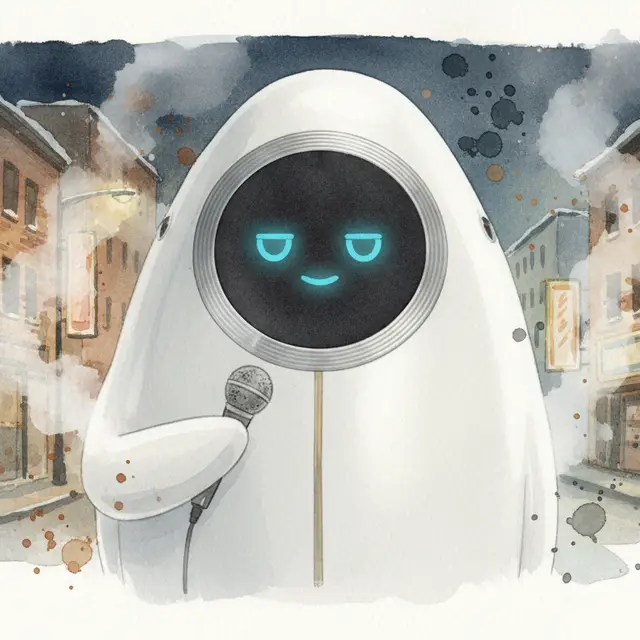
It is three in the morning on a Bedford Avenue corner where the wind cuts hard between red brick tenements. Steam rises thick from a manhole cover, mixing with the jaded amber glare of an all-night bodega sign humming above the wet pavement. You lean against the rusted iron bars of a fire escape, hands deep in your coat pockets, January frost biting into your knuckles. Three yards away, a patrol car rolls past slowly, tires crunching over grit, but nobody turns to look.
The only thing that matters bleeds from a basement with a cracked door: an E-mu SP-1200 drum machine hitting with a dry rimshot that shoves the air outward, backed by a dusty jazz piano lifted from a scratched LP looping three grim chords over and over. That loop weighs heavy. There are no friendly hooks; there is a bassline crawling beneath the concrete and a dense flow packed with internal rhymes locking into each other with zero room to breathe. Every bar drops with the exact mass of a heavy boot hitting frozen asphalt.
No shouting, no theatrics. Just a low voice rattling off cold facts, street names, dark doorways, and half-kept promises, rhyming with surgical precision that strips away all doubt. The air smells of wet asphalt and exhaust fumes. Time freezes on every beat.
Palette: dark amber brick cyan white gray
- BPM
- 92 BPM
- Family
- Street and Verse
- Serial
- CLL-12
- Rarity
- Rare
- Style strength
- 95
- Experimentation
- 20
Typical structure
[Intro] → [Verse 1] → [Hook] → [Verse 2] → [Hook] → [Verse 3] → [Outro]
What you see in the data is just the surface. Beneath it lie invisible problems: how to keep internal rhyme density from crushing the core narrative, and where to place breaths so the lyric reads like hard urban journalism instead of forced wordplay. That lives inside an unpublished eight-parameter distillate, and the engine crosses it with your story. When it finishes, an internal judge checks the lyric against six canonical dimensions and repairs what falls short. The vinyl can be bought anywhere. The grit, no.
How a lyric in this style thinks
A lyric in East Coast hip-hop does not invite the listener in — it confronts them. The words land like a deposition: specific, sequential, and stripped of sentiment it hasn't earned. The genre works by accumulating undeniable detail until the weight of lived experience becomes its own argument. You are not explaining how hard things were; you are placing the listener on that corner at three in the morning, naming the street, describing the frost on the iron railing, letting the cold do the talking.
The emotion arrives through compression, not confession. Anger, grief, and hard-won clarity don't announce themselves — they surface through the precision of the language and the density of the rhyme scheme pressing down on every line.
The rhythmic architecture of East Coast hip-hop is built around a dry, hard-hitting drum pattern — typically around 92 BPM — where the snare hits with the finality of a door slamming. Underneath, a bassline moves low and deliberate, less melodic than structural, holding the whole thing in place like load-bearing concrete. The sample source, often a dusty jazz piano or a horn loop pulled from a worn LP, sits in the mid-range and adds harmonic weight without offering comfort. This is not a warm sound.
The production is intentionally unglamorous: no reverb wash, no glossy sheen, just a dry mix where every element has mass. When you write for this palette, your syllables need to match that density — each bar should feel like it costs something to say.
Internal rhyme is the defining technical feature of the genre, and it is where most imitations fail. The rhymes do not simply land at the end of the line; they interlock within it, often stacking two or three rhyming clusters per bar so that the flow moves with a kind of locked mechanical pressure. Line length is generous — East Coast hip-hop tolerates long bars because the instrumental leaves space for the voice to work — but every syllable is load-bearing. There is no filler phrasing.
The sensory field draws from a very specific world: brick and iron, amber streetlight, wet asphalt, the hum of a bodega refrigerator, the slow roll of a patrol car, January cold. What the genre refuses is abstraction without grounding. You cannot write about struggle in general; you write about this hallway, this door, this particular kind of silence after a bad decision.
Structurally, the genre earns its sections. The intro establishes the sonic environment — often just the beat running for a bar or two, sometimes a spoken phrase that sets the tone without ornamentation. The verses carry the narrative and the argument; this is where the lyrical density lives.
The hook in East Coast hip-hop is not a chorus designed for singalong — it functions more like a refrain that sharpens the thesis, often more rhythmic than melodic, returning to a central image or a hard declarative statement rather than a lifted emotional peak. The outro earns the right to step back and let the beat breathe, occasionally letting a final bar land without resolution, because the genre does not owe the listener a clean ending.
What separates a real East Coast hip-hop lyric from a generic imitation is accountability to place and specificity of consequence. The genre was built on the understanding that vagueness is dishonesty. If you write about survival, you name what you survived. If you write about loyalty, you name what it cost. The voice stays low and controlled — no vocal theatrics, no performed anguish — because the material is supposed to speak louder than the delivery.
When the flow is working correctly, the internal rhymes create a forward momentum that feels inevitable, like the logic of events that already happened and cannot be revised. That irreversibility is the emotional core of East Coast hip-hop: the permanent record of what you came through and the fact that you are still here to say it.
- DENSE RHYMES
- PURE NEW YORK
Sample excerpt
D train screeching on the rusted iron track I’m pacing through the lobby with a duffel on my back Amber streetlights flickering on the cracked cement Counting up the hours that the landlord never spent My shadow is a silhouette against the brickwork wall Watching how the ink black winter makes the city crawl I keep the ledger steady where the quiet turns to noise Trading in the hollow promises for broken boys.
Concrete teeth bit down but I’m still standing tall Tracing out the blueprint just to watch the empire fall We built it from the gravel when the skyline turned to gray Just another ghost in the borough looking for the way.
Workshop note — This sample relies on dense internal rhyme schemes and specific urban imagery to maintain the grit essential to the genre. Notice how the lines are packed with syllables to mimic a rhythmic flow over a boom-bap beat, keeping the tone observational and detached. Avoid melodic hooks or soft sentiments; the vocal delivery here is meant to be steady, punchy, and grounded in the reality of the pavement.
Sample excerpt written by MUSAI Song. Your lyrics are written from scratch, based on your story.
When to choose this style
Choose this card when you need to drop a harsh truth about where you come from and how you outlived it. It works when life pinned you against the pavement and you are not looking for anyone's pity, but rather a permanent record that you took the punch and stayed standing. It fits an old friend who built his life back brick by brick in a city that hands out nothing, or drawing a hard line under a chapter you left behind. Do not pick this for a gentle reconciliation, a celebratory birthday, or a bright love story asking for open melodies and clean guitars; East Coast hip-hop refuses to soften without sounding fake. If you want a tender confession or family gratitude, the card is Boom Bap.
Your story in this style
MUSAI Song writes original lyrics from your story, in the East Coast Hip-Hop style, and delivers the finished sung song, the ready-to-use style recipe, and an illustrated art plate with its numbered certificate, private by default; public only if its owner publishes it.
- Original lyrics written from your story
- A finished sung song, ready to play and share
- Art plate with a unique seal and a numbered certificate, private by default; public only if its owner publishes it
Frequently asked questions
What BPM is East Coast Hip-Hop?
East Coast Hip-Hop usually runs at 92 BPM.
What does East Coast Hip-Hop sound like?
Hard drums, dark jazz piano, and a dense flow packed with internal rhymes. East Coast hip-hop: New York in its purest form, lyrical and street-hardened.
What song structure does East Coast Hip-Hop use?
[Intro] → [Verse 1] → [Hook] → [Verse 2] → [Hook] → [Verse 3] → [Outro]
How do I write East Coast Hip-Hop lyrics?
Tell MUSAI Song your story and pick East Coast Hip-Hop: it writes original lyrics for this style at 92 BPM, you edit them word by word, and you get the song sung in East Coast Hip-Hop, with an illustration of the song and its numbered certificate. $19 USD per song, one-time payment.
Explore more styles
- Afro-Trap
- Boom Bap
- Cloud Rap
- Confessional Hip-Hop
- Conscious Hip-Hop
- Dirty South
- Drill
- Dub
- Emo Rap
- French Rap
- G-Funk
- Gangsta Rap
- Grime
- Hardcore Hip-Hop
- Jazz Rap
- Latin Boom Bap
- Latin Melodic Trap
- Latin Trap
- Mumble Rap
- Old-School Hip-Hop
- Phonk
- Plugg
- Rage Rap
- Ragga Hip-Hop
Your idea or story, sung in this style
Card · secure payment via Stripe, charged in USD
If it doesn't move you, we give you your money back · 7 days