Confessional Hip-Hop
What couldn't be said to anyone got said to the mic.
Get your song in Confessional Hip-Hop
Make yours in this styleHear it before you pay.$19 USD · your first song for $5.50 USDIf it doesn't move you, we give you your money back · 7 days.
Confessional Hip-Hop is a style from the Street and Verse family. 88 BPM, Experimentation 35, Style strength 88.
What is Confessional Hip-Hop?
Melancholic piano and a flow that confesses wounds without armor. Confessional hip-hop: the most intimate truth spoken quietly, almost like a prayer.
How it sounds
It is half past three in the morning in a room where the only light comes from a phone screen facedown, blinking with notifications you no longer plan to open. The radiator gives a dry knock, the metal ticking as it cools, and the mist of your own breath barely smudges against the windowpane. Outside, the corner streetlamp washes the wet asphalt in a dirty yellow, stretching the shadow of a dumpster all the way to the opposite curb.
In the headphones, the piano loops a four-note progression repeating with the stubbornness of an old clock, never resolving the chord, leaving it suspended in a space where the air feels heavy. The 808s do not rattle the walls; they barely hum underneath, like a slow pulse felt through your fingertips rather than your ears. The voice is so close to the mic you can hear saliva on the palate, a confession spoken without rush, as if raising the volume would snap something barely holding together.
There is a worn sweatshirt slumped in the corner, a mug of cold coffee left over from yesterday, and an open notebook with a single line crossed out so many times the paper is nearly torn through. There is no anger here, only the exact weight of what you kept quiet for years, told with the stillness of someone who grew tired of running.
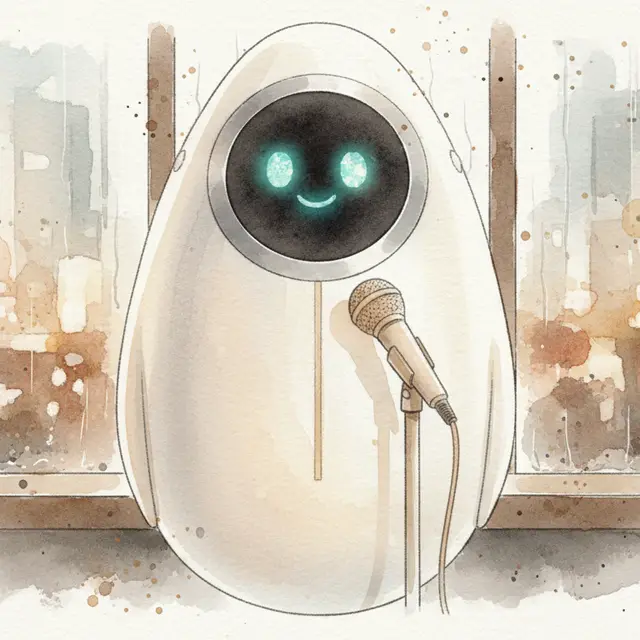
Palette: luminous cyan / black / toasted gray
- BPM
- 88 BPM
- Family
- Street and Verse
- Serial
- CLL-08
- Rarity
- Rare
- Style strength
- 88
- Experimentation
- 35
Typical structure
[Intro] piano → [Verse 1] → [Hook] → [Verse 2] → [Hook] → [Verse 3] → outro
The four specs above are just the parts of the recipe that fit on a mixing board. What stays hidden is how to hold tension without sliding into cheap self-pity or melodrama. Behind this card sits an invisible calculation: exactly where to cut a line so the silence outweighs the words, and how to stop a metaphor from sounding like poetry so it stays a plain everyday object. The motor crosses all of that with your story, and when it finishes, an internal judge measures the lyrics against six canons to strip out any excess ornament. A piano loop is easy to sample. The truth spoken in a whisper, not.
How a lyric in this style thinks
A lyric in confessional hip-hop does one specific thing: it closes the distance between the mouth and the thing that has been unsaid for years. This is not a genre of performance or persuasion. The writing does not argue a position or build toward triumph. Confessional hip-hop delivers the truth at the exact temperature it has been sitting at — room temperature, slightly stale, still real — and trusts that the weight of the admission is enough. The lyric arrives not as an announcement but as a statement made to a wall, to a ceiling, to no one in particular, which is exactly why it reaches everyone.
The emotional register here is not grief, exactly, and it is not anger. It is the specific exhaustion of someone who has carried something long enough to stop pretending it is not heavy. Emotion in this genre does not spike — it accumulates. A verse begins with a small, concrete detail: a crossed-out line in a notebook, a mug of coffee left from the day before, the radiator ticking as it cools. The image does the emotional work. Adjectives are used sparingly, almost suspiciously.
When a feeling is named directly, it lands harder because the lyric has earned it through accumulation rather than declaration. The hook does not release tension; it holds it still, returning to the suspended chord, the unresolved question. Structurally, the intro lets the piano establish the loop before a single word is spoken — those four notes cycling with the patience of something that has been waiting — and by the time the first verse arrives, the listener is already inside the room.
Rhythm in confessional hip-hop behaves differently from what most producers and writers expect when they hear the word flow. At 88 BPM, there is space between syllables that would feel like dead air in a harder track but here functions as breath, as hesitation, as the pause before you say the thing you have been rehearsing. Lines are often uneven in length — a short declarative followed by a longer clause that runs slightly past the bar, as if the thought could not quite fit inside the beat. That overflow is intentional.
It mimics the way actual confession works: you plan what you will say, and then something extra comes out. The 808 underneath does not punch; it pulses, felt more through the sternum than the ears. The piano sample loops without resolution, and the vocal sits so close to the microphone that breath, saliva, the faint catch in the throat all become part of the text. Intimacy is a production decision as much as a lyrical one.
The sensory world of this genre is narrow and specific. Wet asphalt under a yellow streetlamp. A sweatshirt slumped in a corner. The blue light of a phone screen face-down on a table. These are objects that exist at 3 a.m. when there is no audience and no performance left in you. The genre never reaches for grandeur — no wide landscapes, no crowd imagery, no clean symbolic gestures. What it uses instead are textures: the dry knock of a cooling radiator, the smudge of breath on cold glass, the ink-black of a notebook page where a line has been crossed out until the paper nearly tears. These are the details that prove the lyric is not invented, even when it is.
What separates a real confessional hip-hop lyric from a generic imitation is the refusal to explain. A lesser version of this genre tells you how to feel about what is being confessed — it editorializes, it apologizes inside the lyric, it reaches for absolution before the verse is finished. The genuine article states the fact and stops. It trusts the listener to hold the discomfort without being guided through it.
There is no resolution in the outro, no earned peace, no clean chord landing — only a slight loosening, the sense that naming the thing has not fixed it but has at least made it visible. If you are writing in this genre and you feel the urge to end on hope, ask yourself whether that hope is true or whether it is just fear of leaving the listener in the dark. Confessional hip-hop is not afraid of the dark. It lives there, quietly, with the phone screen blinking and the coffee going cold.
- MELANCHOLIC PIANO
- INTIMATE TRUTH
Sample excerpt
The amber light hits the floorboards where your keys used to slide, I still find your coffee mug tucked behind the stack of bills. It is quiet here, not the peaceful kind, but the weight of unsaid things, I trace the dust on the table where we stopped looking at each other. I kept the receipt for the dinner we ruined in mid-sentence, Proof that I was there, even when I was miles away in my head.
And the piano keys drag like a pulse in the dark, I am naming the ghosts that I built in this room, Just an ink black confession for a debt I cannot pay.
Workshop note — This style relies on a steady, conversational cadence that mimics a private monologue rather than a performance. The lines should remain grounded in specific, mundane objects to anchor the emotional weight, avoiding metaphors that obscure the truth. By keeping the rhythm slow and the delivery understated, you create a space for the listener to feel the exhaustion of the narrator's reckoning.
Sample excerpt written by MUSAI Song. Your lyrics are written from scratch, based on your story.
When to choose this style
Choose this card when you need to put words to a truth you are ashamed to say out loud. It works for when a relationship ended not with shouting, but in a silence so thick there was no way back. For when you look back and finally understand why your father never knew how to apologize, leaving you with a strange quiet instead of hate. For when a mistake of your own chases you in the dark and you need to name it without excuses or alibis.
It fits late reconciliations, quiet reckonings with a sibling you no longer speak to, or staring straight at the place you left without romanticizing the hard edges. Do not choose it if you want a track to lift a crowd, for loud celebrations, or for a cheerful dedication where everything resolves with a clean smile at the end. Confessional hip-hop has no party energy or easy victory; if you force it to sound optimistic, it breaks and turns fake. If you are looking for hard, unblinking street reportage, the card is Drill.
Your story in this style
MUSAI Song writes original lyrics from your story, in the Confessional Hip-Hop style, and delivers the finished sung song, the ready-to-use style recipe, and an illustrated art plate with its numbered certificate, private by default; public only if its owner publishes it.
- Original lyrics written from your story
- A finished sung song, ready to play and share
- Art plate with a unique seal and a numbered certificate, private by default; public only if its owner publishes it
Frequently asked questions
What BPM is Confessional Hip-Hop?
Confessional Hip-Hop usually runs at 88 BPM.
What does Confessional Hip-Hop sound like?
Melancholic piano and a flow that confesses wounds without armor. Confessional hip-hop: the most intimate truth spoken quietly, almost like a prayer.
What song structure does Confessional Hip-Hop use?
[Intro] piano → [Verse 1] → [Hook] → [Verse 2] → [Hook] → [Verse 3] → outro
How do I write Confessional Hip-Hop lyrics?
Tell MUSAI Song your story and pick Confessional Hip-Hop: it writes original lyrics for this style at 88 BPM, you edit them word by word, and you get the song sung in Confessional Hip-Hop, with an illustration of the song and its numbered certificate. $19 USD per song, one-time payment.
Explore more styles
- Afro-Trap
- Boom Bap
- Cloud Rap
- Conscious Hip-Hop
- Dirty South
- Drill
- Dub
- East Coast Hip-Hop
- Emo Rap
- French Rap
- G-Funk
- Gangsta Rap
- Grime
- Hardcore Hip-Hop
- Jazz Rap
- Latin Boom Bap
- Latin Melodic Trap
- Latin Trap
- Mumble Rap
- Old-School Hip-Hop
- Phonk
- Plugg
- Rage Rap
- Ragga Hip-Hop
Your idea or story, sung in this style
Card · secure payment via Stripe, charged in USD
If it doesn't move you, we give you your money back · 7 days