Champeta
The picó speaks louder than any argument ever could.
Get your song in Champeta
Make yours in this styleHear it before you pay.$19 USD · your first song for $5.50 USDIf it doesn't move you, we give you your money back · 7 days.

Example in a sibling style: Cumbia Sonidera
“Esta Cumbia Va por Karla”
- Karla hoy cumples treinta
- y el barrio prende bocinas,
- la que armaba los karaokes
- nos recorre las esquinas.
Example made with MUSAI Song · sample story · See its certificate MUS-E3C4BD
Champeta is a style from The Party That Never Ends family. 100 BPM, Experimentation 20, Style strength 92.
What is Champeta?
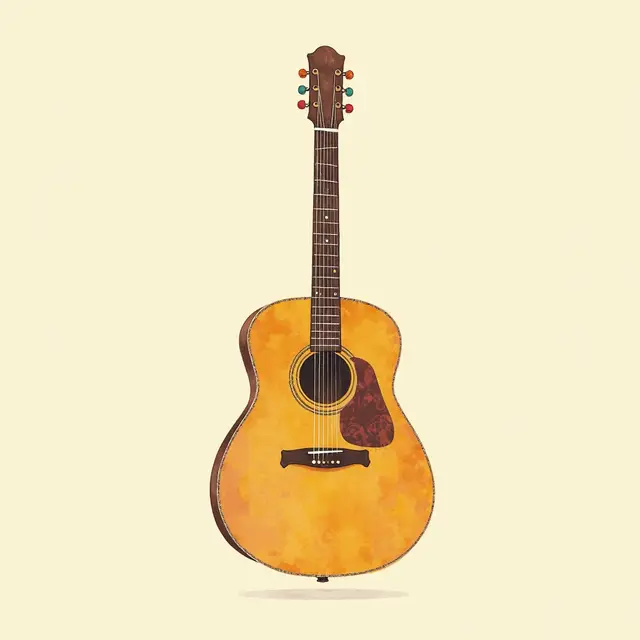
Afro-Colombian guitar and a deep picó bass that shakes the walls. Champeta, from Cartagena, is the Black Caribbean dancing hard under the sun.
How it sounds
It is four in the afternoon and the asphalt in Bazurto steams under an unforgiving sun. Humidity clings to the skin like an extra layer of clothing, thick with the scent of fried fish, green mango, and diesel exhaust. Halfway down the block, the sound system towers over the street: a massive stack of speakers painted in violent greens, sun yellows, and deep blues. This is no ordinary rig; it is a wooden altar vibrating before the first note even drops.
The Afro-Colombian guitar kicks in with an offbeat picking pattern, sharp and clean, slicing through the heavy air like a blade. Immediately, the bass hits from underneath, a low-frequency punch felt in the ribs rather than heard through the ears. It rattles your sternum and forces your shoulders to roll even if you try to stand still. The güiro scrapes with metallic persistence, driving an undeniable pulse that pulls bodies toward the center of the street.
A circle forms around a couple dancing close, their feet sliding across the dust with millimeter precision, hips locking into the African cadence without a moment's hesitation. A woman passes by balancing a tray of sweets on her head, posture immaculate while the rest of the alley erupts in cheers and laughter. Sweat cuts paths down foreheads and necks, evaporating instantly in the heat. There is no pause. The bass keeps hammering the chest, the speakers roar with the force of distant thunder, and the guitar loops that hypnotic phrase that empties your head and leaves you with pure motion.
Palette: yellow / red / turquoise
- BPM
- 100 BPM
- Family
- The Party That Never Ends
- Serial
- FST-17
- Rarity
- Common
- Style strength
- 92
- Experimentation
- 20
Typical structure
[Guitar Intro] → [Verse] → [Chorus] → [Despeluque instrumental] → [Final chorus]
Those stats above take a minute to copy. What cannot be copied is the exact tension between the crisp guitar riffs and the muffled thunder of the speaker bass, nor how to sustain four minutes of pure euphoria without the lyrics sounding like empty slogans. All of that lives inside an unpublished eight-parameter distillate that the engine cross-references with your story before writing a single line. Afterward, an internal judge measures the lyrics against six dimensions of the canon and forces a rewrite if anything falls short. The beat can be found anywhere. The pulse of the Black Caribbean, cannot.
How a lyric in this style thinks
A champeta lyric does not describe celebration from a distance — it places the listener inside the heat, inside the crowd, inside the chest-rattling frequency of a picó sound system that makes the asphalt vibrate. The genre works by collapsing the gap between singer and street. The voice is not reporting on joy; it is joy, performing itself at full volume with doors open and neighbors watching.
Champeta, rooted in Afro-Colombian tradition and most alive in the streets of Cartagena's popular barrios, carries the emotional logic of collective triumph: not one person's victory but the neighborhood's, the family's, the entire block's. That communal ownership is the first thing a lyric must establish, or the song rings hollow.
The base tone is exuberant and unapologetic, but emotion in champeta arrives through the body before it reaches the mind. Lines tend to be short and rhythmically blunt, built to lock into the offbeat guitar pattern and the low-frequency punch of the bass. The güiro's metallic scrape defines the pulse underneath the words, and a lyric that fights that pulse instead of riding it will always feel wrong. Repetition is not a shortcut here — it is the structural principle.
A central phrase, sometimes as short as four or five syllables, gets hammered into the listener across the verse and explodes into something louder in the chorus. That repetition is how champeta makes a feeling collective: the crowd needs to know the words before the song ends, because singing together is part of what the song is for.
The sensory field of champeta is precise and non-negotiable. Fried food, humid air, dust underfoot, sweat on skin, the physical weight of bass frequencies — these are the textures that belong here. Concrete imagery of street life, of bodies moving close, of speakers taller than the buildings around them, of afternoon heat that refuses to ease. What champeta never uses is interior, private, or meditative language. There are no whispered confessions, no rooms with closed doors, no abstract grief. The imagery stays outdoors, communal, and physical. If a line could be sung in a library, it probably does not belong in a champeta lyric.
Structurally, champeta is economical and relentless. The guitar intro establishes the hypnotic phrase that will anchor everything — it is not a warm-up, it is a declaration. The verse loads the specific story: who is being celebrated, what was survived, what is now standing tall. The chorus strips that story down to its emotional core and repeats it with enough force to feel like a collective chant.
The despeluque, the instrumental break, is the section where the music takes over and the dancer's body becomes the lyric — this is not dead air but the genre's most honest moment, the point where words admit they are not enough and the bass takes the argument from there. The final chorus returns with the crowd already warmed, voices already open, and lands with the weight of something earned.
What separates a real champeta lyric from a generic imitation is specificity of place and collective voice. Generic versions celebrate vaguely, with interchangeable imagery that could belong to any warm-weather genre. Authentic champeta names its street, its people, its particular kind of heat. The vocal delivery is direct and percussive, consonants hitting hard against the beat, vowels stretching only when the rhythm allows.
Producing champeta for platforms like Suno means foregrounding the picó bass as a physical presence, keeping the African-influenced guitar pattern sharp and bright rather than washed in reverb, and letting the güiro sit high enough in the mix that the pulse is felt before anything else. At 100 BPM, the tempo is not fast — it is relentless, which is a different thing entirely.
- PICÓ BASS
- SWEATY CARIBBEAN
Sample excerpt
Sixteen speakers line the narrow street of Bazurto Sweat drops sliding down the cold can of soda The electric guitar loops a fast coastal pattern While the bass shakes the rust off the corrugated roof Every neighbor steps out carrying a plastic chair Nobody sits down when the speaker stack speaks
Lift the heavy sound until the balcony vibrates Dance the Cartagena heat straight through the night Throw your hands up wide in the open air Let the picó bass roll right through your chest
Workshop note — Champeta lyrics move with a fast percussion pulse, using short, punchy lines that mirror the relentless rhythm of the guitar riff. The chorus acts as a collective command, demanding physical movement and loud communal participation rather than internal reflection.
Sample excerpt written by MUSAI Song. Your lyrics are written from scratch, based on your story.
When to choose this style
Choose this card when the story demands a loud celebration that refuses to fit into a quiet room. It works to tell how an entire neighborhood carried someone forward against all odds, to honor a family that crossed borders with three suitcases and now stands tall, or to mark a victory born from years of grueling work that deserves to be shouted from the street. It fits when joy is not a whisper but a collective roar shared openly, with doors wide open and music cranked to the limit.
Do not choose it for a midnight confession, a tearful goodbye, a recent loss that still aches in silence, or stories that call for distance and quiet reflection. Champeta does not know how to lower its voice or sit still in a corner.
If you are looking for an urban celebration with a steady pulse and nocturnal heat, the card is Dembow Dominicano.
Your story in this style
MUSAI Song writes original lyrics from your story, in the Champeta style, and delivers the finished sung song, the ready-to-use style recipe, and an illustrated art plate with its numbered certificate, private by default; public only if its owner publishes it.
- Original lyrics written from your story
- A finished sung song, ready to play and share
- Art plate with a unique seal and a numbered certificate, private by default; public only if its owner publishes it
Frequently asked questions
What BPM is Champeta?
Champeta usually runs at 100 BPM.
What does Champeta sound like?
Afro-Colombian guitar and a deep picó bass that shakes the walls. Champeta, from Cartagena, is the Black Caribbean dancing hard under the sun.
What song structure does Champeta use?
[Guitar Intro] → [Verse] → [Chorus] → [Despeluque instrumental] → [Final chorus]
How do I write Champeta lyrics?
Tell MUSAI Song your story and pick Champeta: it writes original lyrics for this style at 100 BPM, you edit them word by word, and you get the song sung in Champeta, with an illustration of the song and its numbered certificate. $19 USD per song, one-time payment.
Explore more styles
- Afro House
- Afrobeats
- Amapiano
- Axé Bahia
- Bomba & Plena
- Calypso
- Cha-Cha-Chá
- Cuarteto Cordobés
- Cuban Son
- Cuban Timba
- Cumbia Norteña
- Cumbia Sonidera
- Cumbia Villera
- Dancehall
- Dominican Dembow
- Electronic Guaracha
- Funk Carioca
- Highlife
- Kuduro
- Mambo
- Merengue
- Pagode
- Peruvian Cumbia (Chicha)
- Peruvian Festejo
Your idea or story, sung in this style
Card · secure payment via Stripe, charged in USD
If it doesn't move you, we give you your money back · 7 days