Bomba & Plena
The pandero calls and the plaza simply cannot say no.
Get your song in Bomba & Plena
Make yours in this styleHear it before you pay.$19 USD · your first song for $5.50 USDIf it doesn't move you, we give you your money back · 7 days.

Example in a sibling style: Cumbia Sonidera
“Esta Cumbia Va por Karla”
- Karla hoy cumples treinta
- y el barrio prende bocinas,
- la que armaba los karaokes
- nos recorre las esquinas.
Example made with MUSAI Song · sample story · See its certificate MUS-E3C4BD
Bomba & Plena is a style from The Party That Never Ends family. 110 BPM, Experimentation 18, Style strength 94.
What is Bomba & Plena?
Barrel drums in conversation with the dancers and panderetas ringing in celebration. Bomba y plena, the Afro-Puerto Rican roots tradition, is communal, proud, and alive.
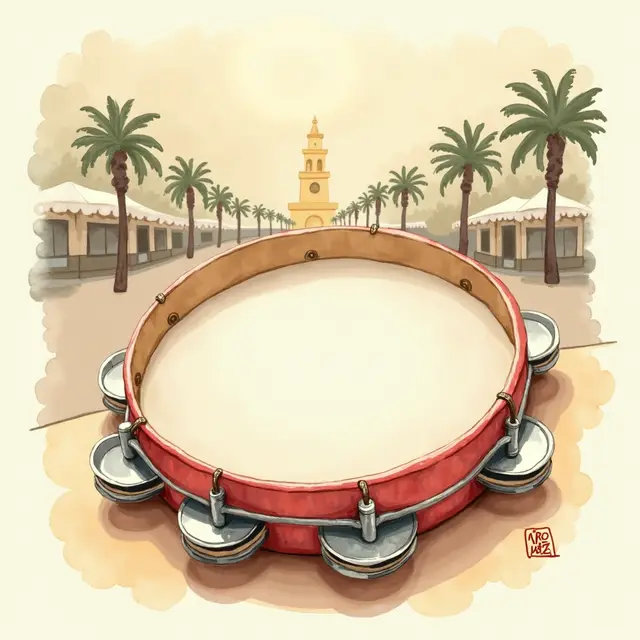
How it sounds
It is four in the afternoon on a Sunday in a Santurce plaza, and the asphalt radiates the trapped heat beneath a thin layer of humidity. The air smells of light frying oil, sun-warmed skin, and the salt carried up from the nearby coast. There is no stage; the circle forms directly on the ground, open, defined only by bodies pressing close in a chorus around the barrels. Someone loosens the tension rods of the requinto with a wrench, tightening the goat skin until the wood sings dry, sharp, demanding a response.
The first hit drops before the sun starts to dip, a sharp strike that cuts the afternoon in half and forces the hips to answer without asking permission. In the center, a dancer marks the step with her skirt raised, challenging the lead drum with her gaze, answering every feint with the precision of a scalpel. The panderos stitch the space together, a dry, continuous rattle that lodges right between the ribs, while the güiro scrapes against dry palm with an urgency that admits no pauses. Nobody looks outward.
The circle is a physical law: those clapping with hollow palms form a living wall that bounces every blow right back, multiplied. The flags in the background ripple without wind, held by hands that have been there for hours, sweating, celebrating the stubborn persistence of simply remaining. The music is not a backdrop; it is the ground moving beneath your feet.
Palette: red / blue / white / green
- BPM
- 110 BPM
- Family
- The Party That Never Ends
- Serial
- FST-27
- Rarity
- Common
- Style strength
- 94
- Experimentation
- 18
Typical structure
[Intro] barrel drums → [Call] → [Chorus response] → [Repique] → [Final chorus]
The data above can be copied in a minute with a couple of percussion instruments and a flag. What cannot be copied is the exact tension between the lead voice throwing the verse and the chorus returning it transformed by the plaza, nor how to sustain rhythmic urgency without letting the lyric turn into an empty slogan. That lives inside an unpublished internal distillate of eight parameters, which the motor crosses with the buyer's personal history to find the exact point where private memory becomes communal rhythm. Upon completion, an internal judge measures the lyric against six canon dimensions and orders repairs on anything that smells like a tourist postcard. The drumhead is bought. The exact strike, no.
How a lyric in this style thinks
A lyric in Bomba y Plena does not describe a feeling — it summons a body into motion. The words exist to be answered, thrown outward into a circle of people who will catch them and throw something back. This is the foundational logic of the genre: every line is a call that expects a response, and a lyric that forgets this collapses into monologue, which is the one form Bomba y Plena refuses. The emotion does not arrive gradually.
It arrives on the first hit of the barril drum, already at full temperature, and the lyric's job is to stay at that heat without explaining why it's hot. Pride, survival, territorial belonging, the stubborn fact of still being here — these enter through the body before they register in the mind.
The structural logic follows the physical event of the circle itself. An intro establishes the drum conversation, tightening the skin of the requinto until the room has no choice but to pay attention. The call section drops a declaration — short, declarative, often built on a single strong noun: a place name, a family name, a verb of arrival or return. The chorus response is where the collective voice answers, and this section must be singable by people who have never rehearsed it, because in practice they haven't.
The repique is the moment the lead drum challenges the dancer and the lyric intensifies, often fragmenting into shorter, sharper phrases that mirror the percussion's improvisation. The final chorus lands with full weight, not as a resolution but as a confirmation: we already knew this, and now we have said it together.
Line length in Bomba y Plena is short by design, rarely more than eight syllables before the breath resets. Repetition is not a weakness; it is the architecture. A phrase repeated three times does not mean the same thing all three times — by the third pass it has accumulated the room's agreement and become something communal rather than personal. Rhythm is syncopated and percussive, the syllables landing against the pandero's dry rattle rather than floating above it. The güiro's scrape marks the urgency; a lyric that moves too smoothly, too legato in its vowels, will slip past the groove without catching.
The sensory field is specific and non-negotiable. Goatskin stretched tight over wood. Asphalt holding afternoon heat. Salt air from a coast that is never far. Hollow palms clapping to bounce sound back into the center. Skirts raised not for decoration but for precision of footwork. These are the textures the lyric earns the right to use. What it never uses: interior decoration, ambient softness, anything that suggests a closed room or a lowered volume.
There are no candles in Bomba y Plena, no whispered confidences, no metaphors built from rain on a window. The light here is direct, the colors are the flag's red, blue, and white against the green of a plaza that has survived everything thrown at it.
What separates a genuine Bomba y Plena lyric from a generic imitation is the presence of the collective voice from the first line, not as an afterthought added in the chorus. Generic versions write a personal narrative and then bolt on a communal hook. The real thing begins in the plural and stays there. The singer is not a soloist who occasionally acknowledges the crowd; the singer is the crowd's appointed voice for this moment, and the crowd knows it is the singer's job to say what they already feel.
The lyric's pride is not individual achievement — it is the pride of persistence, of a community that crossed water with nothing and built something that cannot be demolished because it lives in the body, not in a building. When you write for this genre, ask yourself whether the lyric could be sung by forty people who just met. If the answer is no, it is not finished yet.
- DRUMS IN DIALOGUE
- BORICUA ROOTS
Sample excerpt
The concrete cracked on Calle Loíza, We planted plantains in the broken shade. My grandfather’s hands held the heavy iron, While the neighbors hummed the debt we paid. We dragged the wooden trunk across the ocean, Sweat turned to salt upon our collarbone.
Beat the barrel, let the rhythm tell the story, Raise the pandereta, claim the ground we hold. Deep blue ink beneath the heavy thunder, We stand defiant in the amber gold.
Workshop note — This genre relies on the rhythmic interplay between the lead call and the communal response, so keep your verse lines punchy to mimic the cadence of the barrel drum. The chorus functions as a collective anthem, using direct, concrete imagery to ground the song in a shared geography rather than abstract emotion. Avoid introspection; the energy must remain outward-facing and percussive to drive the movement of the dancers.
Sample excerpt written by MUSAI Song. Your lyrics are written from scratch, based on your story.
When to choose this style
Choose this card when the story speaks of an unnegotiable origin, a family that crossed the sea with only what they wore, or a communal victory that took years of silence to achieve. It works to celebrate a neighborhood's survival against demolition or neglect, for the return of someone who left and comes back to ring the exact same doorbell, or for a birthday where joy is an act of resistance rather than protocol.
It is the right card when personal pride is tied to the soil you come from and needs to be heard in a collective voice, not a monologue. Do not choose it for stories of private transition, solitary introspection, or grief that asks for silence and dim light; bomba and plena do not fit in a closed room nor do they tolerate a low complaint. It also fails for lukewarm reconciliations or quiet losses where the body refuses to move. If you are looking for a bedroom confession and a soft melody to accompany a private cry, the card is Salsa Romántica.
Your story in this style
MUSAI Song writes original lyrics from your story, in the Bomba & Plena style, and delivers the finished sung song, the ready-to-use style recipe, and an illustrated art plate with its numbered certificate, private by default; public only if its owner publishes it.
- Original lyrics written from your story
- A finished sung song, ready to play and share
- Art plate with a unique seal and a numbered certificate, private by default; public only if its owner publishes it
Frequently asked questions
What BPM is Bomba & Plena?
Bomba & Plena usually runs at 110 BPM.
What does Bomba & Plena sound like?
Barrel drums in conversation with the dancers and panderetas ringing in celebration. Bomba y plena, the Afro-Puerto Rican roots tradition, is communal, proud, and alive.
What song structure does Bomba & Plena use?
[Intro] barrel drums → [Call] → [Chorus response] → [Repique] → [Final chorus]
How do I write Bomba & Plena lyrics?
Tell MUSAI Song your story and pick Bomba & Plena: it writes original lyrics for this style at 110 BPM, you edit them word by word, and you get the song sung in Bomba & Plena, with an illustration of the song and its numbered certificate. $19 USD per song, one-time payment.
Explore more styles
- Afro House
- Afrobeats
- Amapiano
- Axé Bahia
- Calypso
- Cha-Cha-Chá
- Champeta
- Cuarteto Cordobés
- Cuban Son
- Cuban Timba
- Cumbia Norteña
- Cumbia Sonidera
- Cumbia Villera
- Dancehall
- Dominican Dembow
- Electronic Guaracha
- Funk Carioca
- Highlife
- Kuduro
- Mambo
- Merengue
- Pagode
- Peruvian Cumbia (Chicha)
- Peruvian Festejo
Your idea or story, sung in this style
Card · secure payment via Stripe, charged in USD
If it doesn't move you, we give you your money back · 7 days