Cha-Cha-Chá
Three steps that teach the body what the mind took years to figure out.
Get your song in Cha-Cha-Chá
Make yours in this styleHear it before you pay.$19 USD · your first song for $5.50 USDIf it doesn't move you, we give you your money back · 7 days.

Example in a sibling style: Cumbia Sonidera
“Esta Cumbia Va por Karla”
- Karla hoy cumples treinta
- y el barrio prende bocinas,
- la que armaba los karaokes
- nos recorre las esquinas.
Example made with MUSAI Song · sample story · See its certificate MUS-E3C4BD
Cha-Cha-Chá is a style from The Party That Never Ends family. 120 BPM.
What is Cha-Cha-Chá?
Charanga flute and flirtatious violins over the güiro. Cha-cha-chá is light and elegant, easy to follow, impossible to resist.
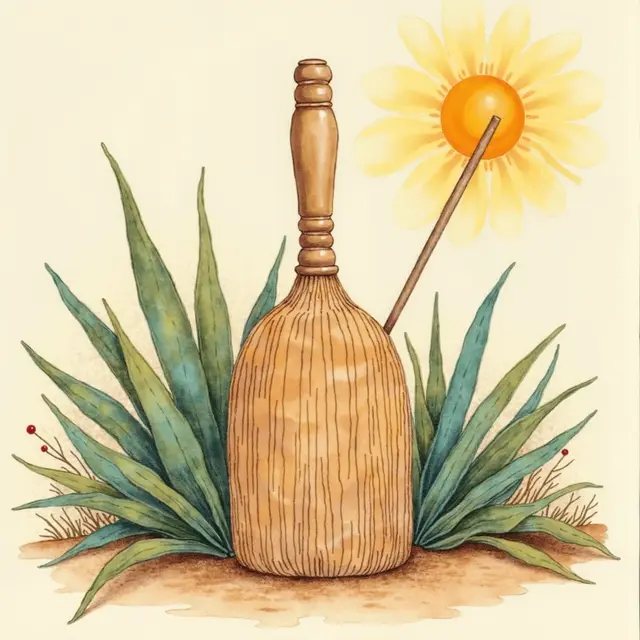
How it sounds
It is five in the afternoon on a terrace in Miramar where the sea breeze arrives warm and salt-heavy. The sun strikes the white walls, leaving a golden glare that hurts to look at without sunglasses. In the background, an older man shakes the maracas with clockwork precision while the scraper rakes the dried gourd, marking a tempo that seems to float before landing in the exact right spot. A three-beat measure, the split step dragging leather soles across the cold tile with a coquetry so natural it is unbeatable.
The charanga flute enters: a silver thread that curls into the air, flirts, slips away, and bites back with insulting lightness. The violins answer with a silk trill, a warm mattress that never weighs down, sliding across the floor like a flared dress during a spin. Someone crosses the courtyard with a crystal glass where ice clinks against the rim right on the cinquillo beat. There is no rush. No one yells. Elegance here is not a pose but the only way to walk when the afternoon smells of whitewash and salt.
A woman steps forward, drops her heel with insolent exactitude, and flashes a smile that promises nothing because it has already won everything. The rhythm carries the weight of the world without bending a knee.
Palette: turquoise / cream / gold
- BPM
- 120 BPM
- Family
- The Party That Never Ends
- Serial
- FST-23
- Rarity
- Common
Typical structure
[Flute Intro] → [Verse] → [Chorus] → [Flute instrumental] → [Final chorus]
The data above can be copied in a minute. What cannot be copied is the invisible rigor: how to maintain light irony without sliding into mockery, and where to cut the line so the rhyming couplet sounds like a dance step instead of nursery verse. All of that lives in an unpublished internal distillate of eight parameters that the engine crosses with your story before writing the first syllable. When finished, an internal judge measures the lyrics against six dimensions of the canon and orders repairs on anything that fails to dance. The güiro plays on any corner. The elegance, no.
How a lyric in this style thinks
A cha-cha-chá lyric does not announce its feelings — it demonstrates them through movement. Every line arrives with the physical confidence of someone who already knows they look good on the floor. The genre works by seduction through precision: the word lands exactly where the beat expects it, and that exactness is the flirtation. Emotion in cha-cha-chá is not declared but implied, held in a raised eyebrow of a rhyme, a syllable that lands half a count late on purpose, a vowel stretched just long enough to suggest something is being withheld.
Joy here slides; it does not shout. The tone sits in amber light, warm and self-assured, and it stays there even when the lyric brushes against longing or memory.
Line length in cha-cha-chá is governed by the split step at the genre's rhythmic core. The classic three-beat feel with its characteristic cha-cha-chá figure demands lines that resolve cleanly on the downbeat, then linger briefly before the next phrase begins. Short, declarative phrases work best — eight to ten syllables, rarely more — because the charanga flute and the violins will compete for the melodic space and the lyric must not crowd them.
Repetition is structural and intentional: a hook phrase returns not because the writer ran out of ideas but because the dance floor requires it. The güiro's steady scrape sets a metronome inside the listener's body, and the lyric should feel like it was written by someone who could already feel that pulse before picking up the pen.
The sensory field of cha-cha-chá is specific and unapologetic: white walls catching late-afternoon sun, leather soles crossing cold tile, ice shifting in a glass on the offbeat, a flared hem catching air during a turn. These are the textures the genre inhabits. What it refuses is equally clear — there is no darkness here, no kitchen-table confession, no unresolved grief. Rain does not appear. The hour is always mid-afternoon or early evening, never midnight. The palette is gold and cream with occasional flashes of deep amber, never shadow. If your lyric reaches for a minor key in its imagery, you have wandered into the wrong room.
Structurally, the genre follows a logic shaped by the charanga format: a flute introduction that establishes the harmonic and rhythmic contract with the listener, verses that carry the narrative or the flirtation forward, a chorus that distills the entire emotional argument into one returnable phrase, a flute instrumental passage that gives the dance floor time to breathe and remember why it came, and a final chorus that does not resolve so much as it releases. The instrumental break is not optional decoration — it is the moment the lyric earns by having been good enough to make the listener want more without words. That break is where the violins answer what the singer implied.
What separates a genuine cha-cha-chá lyric from a generic imitation is the quality of restraint. Amateurs oversell the joy, stacking adjectives until the line buckles. Real cha-cha-chá lyric writing trusts the rhythm to carry the weight. A single well-placed image — a heel dropped with insolent exactitude, a glance exchanged to the güiro's beat — does more than a verse full of superlatives. The vocal delivery the genre asks for is playful and clear, never strained, never breathy with manufactured yearning.
The voice should sound like someone who could stop dancing and still win the room. In production terms, the piano comps lightly around the cinquillo rhythm, the violins provide a warm harmonic bed rather than melodic statement, and the charanga flute carries the wit. Write the lyric so the flute has somewhere interesting to answer you from.
- FLIRTY FLUTE
- EASY STEP
Sample excerpt
Your linen coat brushes my arm in the hall, We catch the amber glow from the wall. The güiro scrapes a rhythm so neat, I watch the way you shift your feet. One glance is a silent, velvet command, You offer a palm, I reach for your hand.
Cha-cha-chá, let the violins play, Turning the minutes to gold in the sway. One, two, and the step is complete, Moving in time to a pulse so sweet.
Workshop note — This sample works by prioritizing short, rhythmic syllables that mirror the steady, syncopated scrape of the güiro. The chorus uses a simple, repetitive structure to invite movement, strictly avoiding heavy metaphors to maintain the genre's characteristic lightness. In Cha-cha-chá, keep the narrative focused on physical proximity and elegance, leaving no room for melancholy or dense emotional weight.
Sample excerpt written by MUSAI Song. Your lyrics are written from scratch, based on your story.
When to choose this style
Choose this card when the story calls for seduction without stridence, a joy that slides rather than shouts. It works to celebrate your grandparents' fiftieth wedding anniversary without sinking into solemn cheesiness. To tell how your parents met at a town dance where a single glance exchanged to the scraper's beat was enough. For an anniversary where memory prefers golden light and a close embrace over tears. To thank someone who taught you how to move your feet when life felt too heavy. For a luminous birthday where elegance is the gift.
Cha-cha-chá does not work for stories of deep pain, violent breakups, or quiet grief; its lightness is precise and rejects all tearing. Do not choose it for a late-night confession or a heavy kitchen-table family drama. If you want a party that overflows and shatters the dance floor, the card is Dembow Dominicano. If you want a warm, nostalgic embrace facing the sea, the card is Salsa Romántica.
Your story in this style
MUSAI Song writes original lyrics from your story, in the Cha-Cha-Chá style, and delivers the finished sung song, the ready-to-use style recipe, and an illustrated art plate with its numbered certificate, private by default; public only if its owner publishes it.
- Original lyrics written from your story
- A finished sung song, ready to play and share
- Art plate with a unique seal and a numbered certificate, private by default; public only if its owner publishes it
Frequently asked questions
What BPM is Cha-Cha-Chá?
Cha-Cha-Chá usually runs at 120 BPM.
What does Cha-Cha-Chá sound like?
Charanga flute and flirtatious violins over the güiro. Cha-cha-chá is light and elegant, easy to follow, impossible to resist.
What song structure does Cha-Cha-Chá use?
[Flute Intro] → [Verse] → [Chorus] → [Flute instrumental] → [Final chorus]
How do I write Cha-Cha-Chá lyrics?
Tell MUSAI Song your story and pick Cha-Cha-Chá: it writes original lyrics for this style at 120 BPM, you edit them word by word, and you get the song sung in Cha-Cha-Chá, with an illustration of the song and its numbered certificate. $19 USD per song, one-time payment.
Explore more styles
- Afro House
- Afrobeats
- Amapiano
- Axé Bahia
- Bomba & Plena
- Calypso
- Champeta
- Cuarteto Cordobés
- Cuban Son
- Cuban Timba
- Cumbia Norteña
- Cumbia Sonidera
- Cumbia Villera
- Dancehall
- Dominican Dembow
- Electronic Guaracha
- Funk Carioca
- Highlife
- Kuduro
- Mambo
- Merengue
- Pagode
- Peruvian Cumbia (Chicha)
- Peruvian Festejo
Your idea or story, sung in this style
Card · secure payment via Stripe, charged in USD
If it doesn't move you, we give you your money back · 7 days