Heavy Metal
The mountain doesn't ask for silence. It demands it.
Get your song in Heavy Metal
Make yours in this styleHear it before you pay.$19 USD · your first song for $5.50 USDIf it doesn't move you, we give you your money back · 7 days.
Heavy Metal is a style from the Storm and Steel family. 140 BPM, Experimentation 24, Style strength 97.
What is Heavy Metal?
Twin guitars galloping in tandem, double bass drum thundering, and a voice rising like a sword raised to the sky. Heavy metal is fury transformed into power and glory.
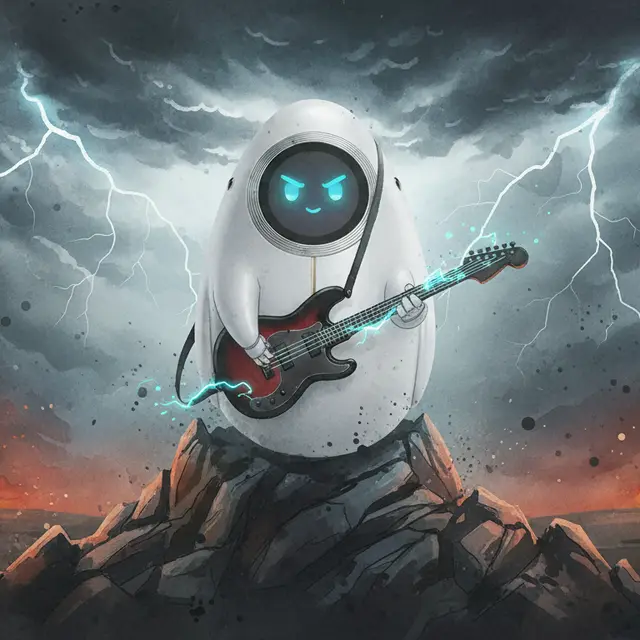
How it sounds
Rain hammers hard against the back parking lot asphalt, but the water evaporates before hitting the ground from the heat radiating off straight-piped exhausts. It is eleven at night. The tube amplifier hums with that high voltage that rattles the fillings in your teeth before you even strike a string. You stand before the iron music stand, hands marked by old blisters now turned to hard calluses, grip tightening around the guitar neck until your knuckles turn white.
The drummer starts clicking the rim of the snare, dry, metronomic, just before the double bass kicks in like heavy machinery breaking through concrete. At the first chord, twin guitars lock into third-interval harmonies that slice the air like freshly tempered sabers. The room smells of cheap beer, hot metal, and dried sweat on worn leather. There is no doubt in the air: every hit on the cymbals is a warning that the night will yield no ground.
Your voice rises from the chest, clean and sharp, cutting through the wall of sound without cracking, lifting above the roar like a standard refusing to fall. The amp screams at the edge of its gain, a thick growl filling every corner until your ribs beat in time with the low end, turning all that pent-up pressure into one forward shove.
Palette: steel gray / black / ember red / electric cyan
- BPM
- 140 BPM
- Family
- Storm and Steel
- Serial
- ACE-01
- Rarity
- Master
- Style strength
- 97
- Experimentation
- 24
Typical structure
[Intro] galloping riff → [Verse] → [Epic Chorus] → [Verse 2] → [Twin Guitar Solo] → [Final Chorus]
The specs above can be copied in a minute. What cannot be copied is the precise tension between melody and thunder: knowing the exact height where the chorus must drop so it sounds like a proclamation rather than a cheap anthem, and making sure the lyrics use martial metaphors without turning into cardboard props. All of that lives in an internal distillate that the engine crosses with your history before writing a single syllable. When finished, an internal judge measures the lyrics against six dimensions of the canon and trims the fat. The double kick is everywhere. The glory, not.
How a lyric in this style thinks
A heavy metal lyric does not describe suffering — it converts suffering into forward momentum. The genre's central mechanism is transformation: whatever weight the narrator carries at the start of the song must be visibly transmuted, line by line, into something harder and more durable than the original wound. That is the contract with the listener. By the time the epic chorus arrives, the emotion cannot still be grief; it has to be force. This is why heavy metal works for stories of survival, defiance, and earned pride, and why it fails utterly when the story ends in ambiguity or quiet ache. The genre demands a verdict, and the verdict is always forward.
The base tone is steel-gray and uncompromising, but emotion in heavy metal does not arrive through confession — it arrives through accumulation. The verses build a case. They lay down concrete images: the white-knuckle grip on the guitar neck, the calluses where softness used to be, the moment you walked through a door and did not look back. Line length in the verse tends toward the declarative and mid-length, each line landing with the same metronomic certainty as the snare crack before the double-kick drops.
Repetition is structural, not decorative — the chorus phrase is chosen precisely because it can be hammered three or four times without losing pressure, gaining it instead. When a chorus line repeats in heavy metal, it is not because the writer ran out of ideas; it is because the idea is a battering ram and it needs another swing.
The sensory field of heavy metal is specific and non-negotiable. The genre lives in physical, tactile, often industrial imagery: hot metal, dried leather, concrete, the filament hum of a tube amplifier pushed to the edge of its gain. The twin guitars locked into third-interval harmonies, the double-bass drum breaking through the floor like heavy machinery — these are not decorations but the emotional argument made sonic. A lyric in this genre reaches for ember-red heat and electric-cyan sharpness, never for the pastel or the delicate.
What heavy metal never uses: whispered uncertainties, domestic interiors rendered tenderly, the language of apology. If a word could appear in a lullaby, reconsider it. The voice in a heavy metal song rises from the chest, clean and sharp above the wall of sound, which means the lyric must be phonetically open enough to project — hard consonants, strong vowel cores, nothing that collapses under volume.
Structurally, the galloping intro riff is a statement of intent, not a warm-up. By the time the first verse arrives, the listener already knows the emotional register. The classic architecture — intro riff, verse, epic chorus, second verse, twin guitar solo, final chorus — follows a logic of escalation: each section must raise the stakes or sharpen the image.
The twin guitar solo is not a pause in the lyrical argument; it is the argument expressed without words, which means the section immediately before it should leave the listener with a question the solo then answers through pure instrumental force. The final chorus should feel inevitable, not repeated — the difference being that by then the lyric's central image has been fully earned.
What separates a real heavy metal lyric from a generic imitation is precision in the moment of transformation. Imitators write vague defiance — broad declarations about rising and not falling that could belong to any genre. A genuine heavy metal lyric names the specific thing that tried to break you, and then names, with equal specificity, the exact moment it failed. The betrayal, the illness, the job that was consuming you alive — these are not background.
They are the antagonist, and the lyric must give them enough weight that defeating them means something. Fury without a named target is just noise. When the fury has a face, a texture, a smell — cheap beer and hot metal and sweat on worn leather — and the voice rises above all of it without cracking, that is heavy metal doing what only it can do.
- GALLOPING GUITARS
- FURY INTO POWER
Sample excerpt
Seven years clocked under flickering neon light Breathing soot down in the basement of the mill They thought the rust would swallow up my appetite And leave my hands too paralyzed to kill I left my badge upon the foreman's greasy desk And watched the rusted cogs grind to a halt
Cast the iron! Let the heavy anvil roar! I walk out through the shattered iron door! No chains can bind the fury in my chest! I take the crown and leave them to the rest!
Workshop note — This verse relies on hard, industrial nouns and precise physical gestures rather than vague emotional complaints. The chorus uses escalating imperative commands and tight end-rhymes to mimic the relentless double bass rhythm, giving the vocalist room to soar.
Sample excerpt written by MUSAI Song. Your lyrics are written from scratch, based on your story.
When to choose this style
Choose this card when your story demands epic weight instead of quiet mourning. It works to recount how you survived a year when everyone assumed you would fold. For the day you walked out on a job that was eating you alive and left through the front door without looking back. For a friend who beat a brutal illness and hit the floor again with the exact same stubborn pride. For turning the rage of a betrayal into a loud, definitive victory. It serves when you need the weight of the world to become armor that fits just right.
Do not pick it for a soft reconciliation, a loss that still hurts in a low whisper, or a childhood memory built entirely on tenderness. Heavy metal does not know how to ask for forgiveness or murmur half-truths; if your story needs fragile nuances or quiet melancholy, this card will feel like a clumsy costume. If you seek an intimate, fractured confession, the card is Symphonic Metal.
Your story in this style
MUSAI Song writes original lyrics from your story, in the Heavy Metal style, and delivers the finished sung song, the ready-to-use style recipe, and an illustrated art plate with its numbered certificate, private by default; public only if its owner publishes it.
- Original lyrics written from your story
- A finished sung song, ready to play and share
- Art plate with a unique seal and a numbered certificate, private by default; public only if its owner publishes it
Frequently asked questions
What BPM is Heavy Metal?
Heavy Metal usually runs at 140 BPM.
What does Heavy Metal sound like?
Twin guitars galloping in tandem, double bass drum thundering, and a voice rising like a sword raised to the sky. Heavy metal is fury transformed into power and glory.
What song structure does Heavy Metal use?
[Intro] galloping riff → [Verse] → [Epic Chorus] → [Verse 2] → [Twin Guitar Solo] → [Final Chorus]
How do I write Heavy Metal lyrics?
Tell MUSAI Song your story and pick Heavy Metal: it writes original lyrics for this style at 140 BPM, you edit them word by word, and you get the song sung in Heavy Metal, with an illustration of the song and its numbered certificate. $19 USD per song, one-time payment.
Explore more styles
- Black Metal
- Blackgaze
- Death Metal
- Deathcore
- Djent
- Doom Metal
- Folk Metal
- Glam Metal
- Gothic Metal
- Grindcore
- Groove Metal
- Hardcore Punk
- Industrial
- Industrial Metal
- Mathcore
- Melodic Death Metal
- Melodic Metalcore
- Metalcore
- Nu-Metal
- NWOBHM
- Post-Metal
- Power Metal
- Progressive Metal
- Sludge Metal
Your idea or story, sung in this style
Card · secure payment via Stripe, charged in USD
If it doesn't move you, we give you your money back · 7 days