Byzantine Chant
It was already sounding like this before time began.
Get your song in Byzantine Chant
Make yours in this styleHear it before you pay.$19 USD · your first song for $5.50 USDIf it doesn't move you, we give you your money back · 7 days.
Byzantine Chant is a style from the Sacred Ground family. 54 BPM, Experimentation 24, Style strength 95.
What is Byzantine Chant?
An ornamented melody floating over an eternal vocal drone. Byzantine chant, the prayer of Eastern Christianity, is microtonal, ancient, and filled with mystical depth.
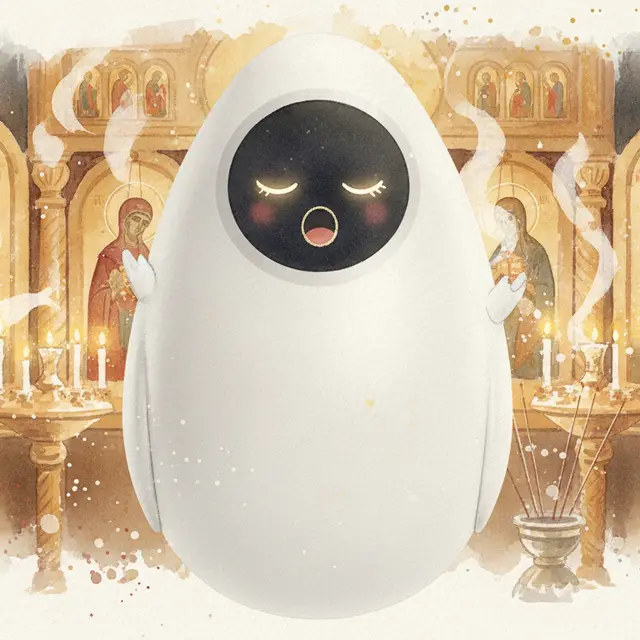
How it sounds
The dimness smells of cold wax and thick incense that has already settled deep into the stone floor. It is the exact dead of night inside a church where the faces of saints, painted on wooden panels with genuine gold leaf, catch the light only when a candle flame flickers from the draft slipping under the heavy oak door. There are no pews. Only uneven flagstones transmitting an ancient chill straight to the knees.
Someone takes a deep breath and the air fills with a low vibration, a sustained drone rising not from outside but from the chest itself, the ison driving into the ground like an invisible stake. Then, across that carpet of pure frequency, the voice begins to climb. It does not sing; it draws lines in the air with a flexibility that defies mathematics, sliding each syllable through microtones that graze dissonance before tumbling into a golden truce.
Every vowel is a thread stretched until it threatens to snap, a contained grief asking for no comfort because it knows none exists, only the hard beauty of kneeling before the ungraspable. Oil lamp light glitters off the dark garnet of the robes. Time stops moving. Hours are not counted; they are measured in dripping wax and the endurance of a spine bearing the invisible weight of the sacred.
Palette: warm gold / red garnet / white
- BPM
- 54 BPM
- Family
- Sacred Ground
- Serial
- TIE-13
- Rarity
- Common
- Style strength
- 95
- Experimentation
- 24
Typical structure
[Ison drone] → [ornamented melody] → [modal development] → [cadence] → [echo]
The details above are merely the stone where the candle is lit. What remains unseen is how to sustain the weight of a single syllable without sliding into drone-like monotony, or where to fracture the melisma so pain reads as raw flesh rather than a stylistic exercise. That lives inside an unpublished internal distillate of eight parameters that the engine crosses with your story before drawing the first line. When finished, an internal judge measures the lyric against six canons and demands repairs on anything sounding like an academic study. Dome acoustics can be copied anywhere. The contained tremor cannot.
How a lyric in this style thinks
A lyric in Byzantine chant does not express feeling — it enacts endurance. The words are not delivered to a listener; they are pressed into the air the way a seal is pressed into wax, slowly, with full weight, leaving an impression that hardens as soon as the hand withdraws. Byzantine chant operates on the principle that devotion which has lasted long enough becomes indistinguishable from architecture. The lyric's first task is to establish that permanence: not to explain grief or guilt or reverence, but to inhabit it the way a body inhabits a cold stone floor, without negotiation.
The emotional register is not warm in the way of consolation. It runs closer to the quality of old gold leaf on darkened wood — luminous at certain angles, utterly unyielding, slightly remote. Emotion arrives in this genre through accumulation rather than declaration. A single vowel stretched across six or eight microtonal inflections carries more feeling than an entire verse of confessional poetry, because the stretching itself is the confession.
Line length in the lyric tends toward the long and breath-dependent: phrases that outlast a normal exhalation, forcing the singer to commit beyond comfort. Repetition works not as a pop hook but as a liturgical deepening — each recurrence of a phrase descends a layer further into the same meaning, the way candlelight appears to enter a painted icon rather than reflect off it.
The sensory world of Byzantine chant is narrow and deliberate. Cold stone, wax, incense that has settled into porous surfaces over decades, the draft under a heavy door, the specific darkness of a space lit only by oil and flame — these are the objects your lyric is allowed to touch. The imagery gravitates toward materials with weight and age: garnet, iron, charred wood, cracked plaster, gold that has dimmed but not vanished.
What this genre categorically refuses is the organic and the immediate: no soil, no rain on skin, no breath of open air, no embrace. The architecture is the embrace, and it does not give warmth. Avoid any image that implies resolution or forward motion. Byzantine chant looks from a threshold, not from a destination.
Structurally, the form follows the movement of the ison itself. The drone — that sustained low pitch held by one or more voices — is not accompaniment; it is ground. The lyric must be written with the drone in mind, because every syllable of the melody floats above a fixed point of reference. Sections fall where the breath falls and where the modal line reaches its furthest extension before curving back toward the cadence.
The ornamented melody section is where the lyric's most precise language belongs: the exact noun, the specific weight of the thing being named. Modal development allows the lyric to turn the idea without abandoning it, the way a slow camera might orbit a statue. The cadence is not a resolution in the Western sense — it is a settling, like sediment. The echo that closes the structure is often a single syllable or a near-repetition, letting the final meaning arrive after the voice has stopped.
What separates a genuine Byzantine chant lyric from an imitation is the absence of any request. The lyric does not ask for relief, understanding, or even witness. It states. It names the geometry of what has hardened — guilt, devotion, the weight of the dead, the fact of distance — and then it holds that geometry up in the drone-lit air without flinching. Generic imitations tend to slip into petition: they want something from the sacred. Byzantine chant kneels because kneeling is the correct posture, not because it expects a response.
If your lyric contains hope as a forward-looking force, you are writing a different genre. Here, hope is structural: it is the fact that the voice is still rising at all, against the drone, after everything.
- MELODY OVER DRONE
- MYSTIC EAST
Sample excerpt
The amber wax drips down the column of cedar, Tracing the lines of a name worn smooth by palms, I count the decades in the dust of the icons, The ink black shadows hold the weight of the silence, My breath is a tether to a home made of granite.
Let the resonance remain in the hollow, Beyond the reach of the spoken petition, Gold leaf flaking into the dark of the threshold.
Workshop note — This style relies on elongated vowels and non-rhyming, rhythmic prose to mimic the liturgical pace of the drone. The chorus functions as a meditative anchor, prioritizing atmosphere and imagery over conventional pop structures. Avoid modern conversational syntax, as this genre demands a formal, detached tone that treats even personal grief as an ancient, static monument.
Sample excerpt written by MUSAI Song. Your lyrics are written from scratch, based on your story.
When to choose this style
Choose this card when you need to name a devotion that asks for no reply or relief, only permanence. It works for an old grief that no longer burns with anger but possesses the stillness of a marble statue. To honor someone whose life had the hardness and dull sheen of gold leaf on wood. For a forgiveness asked in secret, staring at an empty wall. For returning to your homeland after decades, realizing the names of the dead weigh heavier than the words of the living.
For when guilt has stopped searing and hardened into exact geometry you must inhabit. Byzantine chant does not serve noisy celebrations or light affections; its gravity requires a story with the thickness of centuries. Do not choose it for an adolescent breakup, a career milestone, or fleeting joy, because the microtonal scale will mock small urgencies.
And if your history needs earthy communion, an acoustic guitar, or an embrace that chases away the chill, this card will not provide it: Byzantine chant looks from the threshold of eternity and demands the heart bend without complaint. If you seek a gathered prayer that hushes the room without losing community warmth, the letter is Taizé Chants.
Your story in this style
MUSAI Song writes original lyrics from your story, in the Byzantine Chant style, and delivers the finished sung song, the ready-to-use style recipe, and an illustrated art plate with its numbered certificate, private by default; public only if its owner publishes it.
- Original lyrics written from your story
- A finished sung song, ready to play and share
- Art plate with a unique seal and a numbered certificate, private by default; public only if its owner publishes it
Frequently asked questions
What BPM is Byzantine Chant?
Byzantine Chant usually runs at 54 BPM.
What does Byzantine Chant sound like?
An ornamented melody floating over an eternal vocal drone. Byzantine chant, the prayer of Eastern Christianity, is microtonal, ancient, and filled with mystical depth.
What song structure does Byzantine Chant use?
[Ison drone] → [ornamented melody] → [modal development] → [cadence] → [echo]
How do I write Byzantine Chant lyrics?
Tell MUSAI Song your story and pick Byzantine Chant: it writes original lyrics for this style at 54 BPM, you edit them word by word, and you get the song sung in Byzantine Chant, with an illustration of the song and its numbered certificate. $19 USD per song, one-time payment.
Explore more styles
- Acoustic Worship
- African American Spiritual
- African Spiritual
- Celestial Sacred (Ambient)
- Choir Gospel
- Classic Christian Hymn
- Contemporary Gospel
- Devotional Bhajan
- Devotional Sufi (Dhikr)
- Ethiopian Sacred (Coptic)
- Gospel Blues
- Gregorian Chant
- Healing Chant
- Jewish Niggun
- Kirtan & Mantra
- Latin Praise
- Meditation Mantra
- Modern Worship
- Native Ceremonial
- Orchestral Gospel (Finale)
- Praise Break Gospel
- Russian Orthodox Hymn
- Sacred Sephardic Song
- Shamanic Chant
Your idea or story, sung in this style
Card · secure payment via Stripe, charged in USD
If it doesn't move you, we give you your money back · 7 days