Lo-Fi Indie
The dust on the cassette is part of the mix.
Get your song in Lo-Fi Indie
Make yours in this styleHear it before you pay.$19 USD · your first song for $5.50 USDIf it doesn't move you, we give you your money back · 7 days.

Example in a sibling style: Chamber Pop
“Before My Mother Calls”
- The board is open on the table,
- dice still warm in your hand.
- Jorge, roll them slow, be careful,
- let this Sunday understand
Example made with MUSAI Song · sample story · See its certificate MUS-PUZ5BY
Lo-Fi Indie is a style from the Fog and Nostalgia family. 110 BPM, Experimentation 38, Style strength 88.
What is Lo-Fi Indie?
Tape-saturated guitars and a muffled voice full of raw charm. Lo-fi indie: the nostalgia of a cassette found in a drawer, rough, warm, and beautiful precisely because of its imperfection.
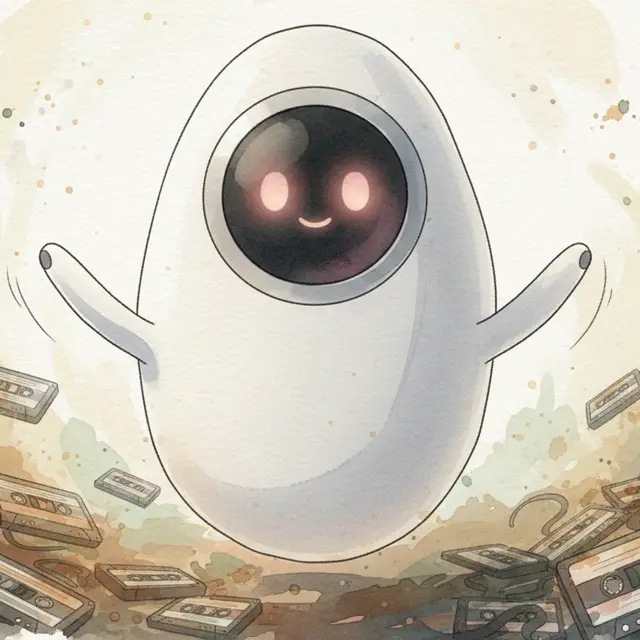
How it sounds
It is four o'clock on a Tuesday in October inside a bedroom where direct sunlight never reaches. The blinds are pulled halfway down, letting in dusty rays of light that slice through the still air. On the desk sits a Tascam four-track recorder with worn knobs, a stack of unlabelled cassette tapes, and a chewed-up Bic pen missing its cap. Leaning against the textured wall in the corner rests an acoustic guitar with a high E string tuned slightly flat that nobody fixes because in that exact state it sounds better.
You press record and the tape head hums with a steady hiss, a white noise of aging magnetic ribbon that wraps around everything before the first note is even played. When you sing, you stay close to the mic, almost swallowing the foam, with a muffled, lazy delivery that sounds like it is coming from the other side of a thin wall. The practice amplifier buzzes with every open chord, saturating the signal with a dirty, imperfect warmth as if the gear itself were coughing.
There is no complex processing or pristine EQ; just the grain of the oxide and the friction of fingertips sliding across the nickel fretboard. The ceiling fan turns slowly, keeping a rhythmic click that blends with the tempo. Everything smells like old cardboard, dry wood, and the lukewarm coffee left sitting in a mug since this morning. Here, beauty is not polished; it is left dusty, trapping the exact time when things first began to fade.
Palette: warm amber / soft pink / pale green
- BPM
- 110 BPM
- Family
- Fog and Nostalgia
- Serial
- NIE-24
- Rarity
- Common
- Style strength
- 88
- Experimentation
- 38
Typical structure
[Intro] → [Verse] → [Chorus] → [Verse 2] → [Outro]
What you read above is only the surface. The two real writing challenges in this style are sustaining emotional tension without tipping into sticky melodrama and making everyday jargon sound like accidental poetry instead of a grocery list. That lives in an unreleased internal distillate of eight parameters, and the engine cross-references it with every memory you share to find the exact objects carrying temporal weight. When it finishes, an internal judge measures the lyrics against six canonical dimensions and sends back for repairs anything that sounds too clean or forced. Tape hiss can be dialled in with any pedal. Exact memory cannot.
How a lyric in this style thinks
A lo-fi indie lyric doesn't describe a memory so much as it inhabits one — it puts you inside the room where the memory happened and refuses to clean anything up before you arrive. The emotional work is done through accumulation of small, imperfect details rather than through any single revelatory line. A mug of cold coffee, a ceiling fan clicking off-beat, a guitar string that nobody ever bothered to tune back up: these are not decorations. They are the argument. The lyric trusts that the listener will feel the weight of the specific and ordinary, and it never explains that weight out loud.
The base tone in lo-fi indie sits somewhere between tenderness and mild resignation — not grief exactly, but the quiet acknowledgment that something is over and was good. Emotion arrives sideways. You don't announce that you miss a person; you describe the particular angle of light in October through half-closed blinds and let that do the work. Line lengths tend to be irregular, following speech rhythm rather than metrical precision, so a line can collapse in the middle or run longer than expected without apology.
Repetition shows up, but it's the repetition of a thought that keeps returning rather than a chorus engineered to land — the same phrase drifting back in a slightly different context, the way a real memory resurfaces.
The sensory field of lo-fi indie is deliberately narrow and tactile. Worn upholstery, masking tape on a poster, the hiss of magnetic ribbon before the first note plays, dry wood, old cardboard. These are textures you touch or smell before you see them. The genre lives in interiors — bedrooms, leaky apartments, kitchens at odd hours — and almost never outdoors in any grand sense. What it never uses: skylines, crowds, abstract emotional nouns stacked on top of each other, anything that implies scale or polish.
The production reinforces this at every level. Tape saturation wraps the vocal in a warm grain that makes a close-mic delivery feel like someone singing from the next room. Loose drums sit slightly behind the beat. Fuzzy, open-chord guitar tones buzz with a friendly imperfection, as if the practice amp itself is part of the arrangement. Around 110 BPM, the tempo feels unhurried without dragging — it has the pace of an afternoon that isn't going anywhere.
Structurally, lo-fi indie keeps things short and uncluttered. The canon shape — intro, verse, chorus, second verse, outro — is lean by design, and the sections earn their place by feeling inevitable rather than constructed. The intro often does little more than establish the room: the tape hiss, a chord, the hum of something electrical. Verses carry most of the lyrical weight, building the specific detail that makes the chorus meaningful.
The chorus itself is rarely a traditional hook — it's more often a phrase that opens slightly, a moment of mild release that doesn't resolve so much as breathe. The outro in lo-fi indie is where the genre is most itself: things don't end so much as they fade or trail off, a door closing softly rather than slamming.
What separates a real lo-fi indie lyric from a generic imitation is the discipline of restraint applied to both production and language simultaneously. It's easy to record something badly and call it lo-fi. It's harder to be intentional about which imperfections stay — the flat string, the tape hiss, the vocal that sounds like it's coming through a thin wall — and to write lyrics that match that same honesty. A generic imitation reaches for nostalgia as a concept; a real lo-fi indie lyric reaches for a specific Tuesday in October and trusts that Tuesday to carry everything.
- TAPE SATURATION
- RAW CHARM
Sample excerpt
the floorboards creak on channel two a cup of cold tea turning blue you left your jacket on the chair and half a pack of smokes up there the tape is dragging in the deck a grease stain on your collar neck
we were broke and half asleep in rooms we rented cheap let the warm hiss hide the sound of everything we ran around
Workshop note — This verse relies on everyday domestic debris like cold tea and masking tape to anchor the memory without grand poetry. The chorus uses a lazy, conversational rhythm that matches the tape-saturated texture, keeping the emotional weight grounded and unresolved.
Sample excerpt written by MUSAI Song. Your lyrics are written from scratch, based on your story.
When to choose this style
Choose this card when a personal story needs the texture of worn-out things rather than the clarity of a fresh photograph. It works to preserve a memory that has already started to blur, like the exact summer you left home and the car smelled like old upholstery. For when you want to say thank you for something small yet immense, like a quiet afternoon shared with someone who is no longer around.
For forgiving your own past mistakes without grand speeches, letting them drop like a tangled cassette tape you had to painstakingly spool back by hand. For portraying an era when money was tight but time was endless, living in a leaky apartment with posters stuck to the walls with masking tape. Lo-fi indie is the card of warm, grounded nostalgia: it serves when the emotion is bittersweet and asks for no clean resolution.
Do not choose it for a party, a loud victory, or a rage that demands breaking things; its lazy pulse would suffocate any fury. And if your story needs an epic closure, glossy production, or a stadium-sized hook, this card will feel too small. If you are looking for an atmosphere where melancholy expands through spatial synths and a colder haze, the card is Dreamgaze.
Your story in this style
MUSAI Song writes original lyrics from your story, in the Lo-Fi Indie style, and delivers the finished sung song, the ready-to-use style recipe, and an illustrated art plate with its numbered certificate, private by default; public only if its owner publishes it.
- Original lyrics written from your story
- A finished sung song, ready to play and share
- Art plate with a unique seal and a numbered certificate, private by default; public only if its owner publishes it
Frequently asked questions
What BPM is Lo-Fi Indie?
Lo-Fi Indie usually runs at 110 BPM.
What does Lo-Fi Indie sound like?
Tape-saturated guitars and a muffled voice full of raw charm. Lo-fi indie: the nostalgia of a cassette found in a drawer, rough, warm, and beautiful precisely because of its imperfection.
What song structure does Lo-Fi Indie use?
[Intro] → [Verse] → [Chorus] → [Verse 2] → [Outro]
How do I write Lo-Fi Indie lyrics?
Tell MUSAI Song your story and pick Lo-Fi Indie: it writes original lyrics for this style at 110 BPM, you edit them word by word, and you get the song sung in Lo-Fi Indie, with an illustration of the song and its numbered certificate. $19 USD per song, one-time payment.
Explore more styles
- Ambient Pop
- Baroque Pop
- Bedroom Pop
- Chamber Pop
- Chillwave
- Cinematic Post-Rock
- Coldwave
- Darkgaze
- Dream Folk
- Dream Pop
- Dreamgaze
- Emo-Shoegaze
- Ethereal Wave
- Hypnagogic Pop
- Jangle Dream
- Melancholic Post-Rock
- New Romantic
- Noise Pop
- Nostalgic Synthpop
- Nu-Gaze
- Post-Rock
- Sadcore
- Shoegaze
- Slowcore
Your idea or story, sung in this style
Card · secure payment via Stripe, charged in USD
If it doesn't move you, we give you your money back · 7 days