Jangle Dream
The light arrives late, but it arrives with strings.
Get your song in Jangle Dream
Make yours in this styleHear it before you pay.$19 USD · your first song for $5.50 USDIf it doesn't move you, we give you your money back · 7 days.

Example in a sibling style: Chamber Pop
“Before My Mother Calls”
- The board is open on the table,
- dice still warm in your hand.
- Jorge, roll them slow, be careful,
- let this Sunday understand
Example made with MUSAI Song · sample story · See its certificate MUS-PUZ5BY
Jangle Dream is a style from the Fog and Nostalgia family. 120 BPM, Experimentation 32, Style strength 90.
What is Jangle Dream?
Chiming guitars with dreamy reverb beneath a sweet, nostalgic voice. Jangle dream: the sun-soaked nostalgia of a perfect afternoon, bright, hazy, and sweetly melancholic.
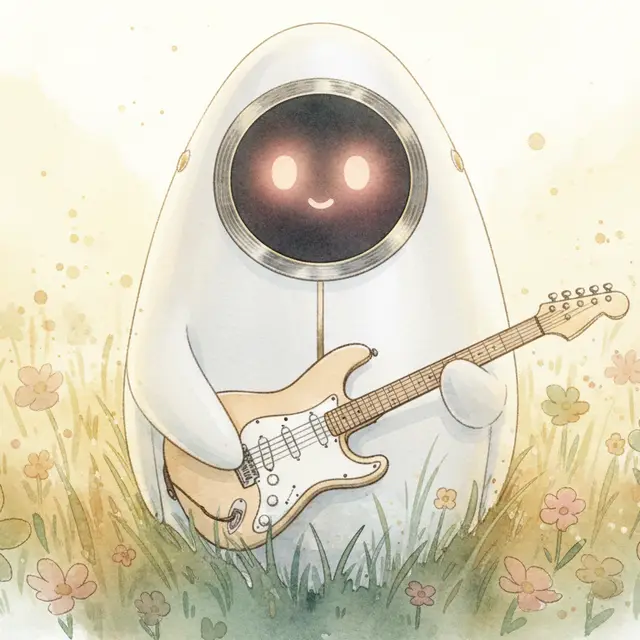
How it sounds
It is six in the afternoon in a room where the sun cuts horizontally through the floating dust suspended over a worn rug. The window is wide open and the breeze moves the white linen curtains with a nearly liquid slowness, letting in a dense smell of dry grass and warm asphalt from a distant storm. Leaning against the faded daisy wallpaper, a twelve-string Rickenbacker rests with a body full of circular scratches around the soundhole.
Someone strikes a G major chord and the amp answers with a long reverb, a metallic chime that rings out and stretches until it melts into the buzzing of a bee trapped on the sill. There is no rush in the right hand; the pick brushes the strings as if afraid to wake something that prefers to keep dreaming. The voice enters almost without volume, doubled by an invisible octave, singing a phrase about a train station that no longer exists or a blue wool sweater left on a stone bench.
Outside, car tires roll wet over the gravel drive, a dull sound that fades slowly. Everything has the color of an overexposed photograph where the corners turned white from staring at the light. You keep staring at the exact spot where the sun hits the wooden frame, feeling that this precise second already passed but is still happening right here.
Palette: pale gold / sage green / pastel pink
- BPM
- 120 BPM
- Family
- Fog and Nostalgia
- Serial
- NIE-22
- Rarity
- Common
- Style strength
- 90
- Experimentation
- 32
Typical structure
[Intro] guitar → [Verse] → [Chorus] → [Verse 2] → [Final Chorus]
The BPM data and tags are just paint on the surface. Beneath them lie hidden traps: how to make the voice sweet without sounding cloying, and how to stop the wash of reverb guitars from turning the lyrics into a blur where words dissolve. That lives inside an unpublished eight-parameter distillate that the engine cross-references with your story before writing. Afterward, an internal judge measures the text against six canon dimensions and sends back anything that falls short. The reverb can be bought in any shop. The exact light, no.
How a lyric in this style thinks
A jangle dream lyric does one precise thing: it holds a moment still without asking it to mean more than it already does. The genre does not reach for moral resolution or emotional catharsis. Instead it photographs — with words — the exact quality of light at a specific hour, trusting that the image carries all the weight it needs.
Jangle dream works through accumulation of sensory detail so particular that the listener feels they have lived inside it too: the grain of a wooden windowsill, the specific drag of a curtain across a bare floor, the way afternoon air smells just before a distant storm decides not to arrive. The emotion arrives sideways, tucked inside an object rather than announced in the lyric's own voice.
The base tone is warm and slightly unfocused, the way memory softens edges without erasing them. Sadness in jangle dream is never raw; it is the mild ache of recognising that something good has passed, not the shock of losing it violently. Line lengths tend to be medium and conversational, rarely clipped or staccato. The rhythm breathes with the chord changes rather than driving against them — syllables settle into the natural swing of a strummed twelve-string rather than fighting it.
Repetition in this genre is gentle and structural: a key phrase returns at the chorus not to hammer a point but to confirm that the image is still there, still true, like checking that a photograph has not faded since you last looked.
The sensory field of jangle dream is specific and domestic-outdoor: worn rugs, overexposed photographs with whitened corners, bicycle sheds, stone benches, wool sweaters left behind. Train stations that have been demolished. Gardens where the light lands at an angle that cannot be replicated in any other season.
The instruments that carry these images are reverb-drenched guitars — the chiming, bell-like sustain of a twelve-string run through a long tail — paired with a melodic bass that moves with the same unhurried logic as someone thinking aloud. Vocals arrive with little volume and considerable intimacy, often doubled at the octave so the voice sounds like memory remembering itself. What jangle dream never uses: urban grit, night-time dread, irony, confrontation. No slamming doors, no raised voices, no industrial texture.
The tempo sits around 120 bpm but feels slower because the production breathes — the reverb stretches each chord until the next one arrives almost as a relief.
Structurally, jangle dream keeps it clean and symmetrical: an intro that lets the chiming guitar establish the room before any words arrive, two verses that place the listener inside the scene with increasing specificity, a chorus that lifts without breaking — melodic rather than anthemic — and a final chorus that closes not with a bang but with the same image from the intro, slightly changed, as if the sun has moved a few inches across the floor. The second verse earns its place by adding one detail the first verse withheld: a name, a texture, a sound from outside the frame. That small addition is what separates a real jangle dream lyric from a generic nostalgic song.
What makes an imitation obvious is over-explanation. The generic version tells you how to feel — it uses words like longing, golden, forever — while the real lyric stays inside the object and trusts the reader to feel it without instruction. Write toward the concrete particular: not summer, but the blue wool sweater folded on the stone bench. Not sadness, but the sound of car tires on wet gravel fading down the drive. Keep the emotional temperature steady rather than building to a release that this genre structurally refuses to offer. Jangle dream earns its feeling by staying in the room, staring at the exact spot where the light hits the wood, willing that second to last a little longer.
- CHIMING GUITARS
- PERFECT AFTERNOON
Sample excerpt
The garden gate swings on a rusted hinge, I left my keys on the porch by the wicker chair. The tall grass leans against the fence in amber light, And the scent of bruised mint lingers in the air.
Oh, the afternoon is holding its breath, Just a quiet hum where the shadows stretch long, We let the summer drift out of reach, Like a fading chime in a simple song.
Workshop note — Jangle dream relies on imagery of static moments and sensory details rather than emotional declarations. The lines are kept rhythmic and airy to mirror the chiming guitars, focusing on the sweetness of a memory instead of the pain of its passing. Avoid heavy metaphors or aggressive verbs; keep the language light and observational to maintain the hazy, sun-soaked atmosphere.
Sample excerpt written by MUSAI Song. Your lyrics are written from scratch, based on your story.
When to choose this style
Choose this card when you want to keep a sunlit memory without falling into bitterness or reproach. It works to freeze the last summer spent at the old family house before it was sold. For the afternoon your grandmother taught you to sew by the window while the garden light looked like gold dust. For an adolescent romance that ended not with a slammed door, but because the season turned and the bicycles were put away in the shed.
It serves when nostalgia does not hurt like an open wound, but feels warm and light, like looking through a foggy pane where someone drew a smile years ago. Do not choose it for a violent loss, a grief that left you breathless, or a family grudge that needs shouting and settled scores: jangle dream does not know how to turn dark or swallow its anger. Nor is it for a career milestone or an outburst of rage. If you seek a nocturnal, dense sonic refuge where melancholy mixes with shadow, the card is Bedroom Pop.
Your story in this style
MUSAI Song writes original lyrics from your story, in the Jangle Dream style, and delivers the finished sung song, the ready-to-use style recipe, and an illustrated art plate with its numbered certificate, private by default; public only if its owner publishes it.
- Original lyrics written from your story
- A finished sung song, ready to play and share
- Art plate with a unique seal and a numbered certificate, private by default; public only if its owner publishes it
Frequently asked questions
What BPM is Jangle Dream?
Jangle Dream usually runs at 120 BPM.
What does Jangle Dream sound like?
Chiming guitars with dreamy reverb beneath a sweet, nostalgic voice. Jangle dream: the sun-soaked nostalgia of a perfect afternoon, bright, hazy, and sweetly melancholic.
What song structure does Jangle Dream use?
[Intro] guitar → [Verse] → [Chorus] → [Verse 2] → [Final Chorus]
How do I write Jangle Dream lyrics?
Tell MUSAI Song your story and pick Jangle Dream: it writes original lyrics for this style at 120 BPM, you edit them word by word, and you get the song sung in Jangle Dream, with an illustration of the song and its numbered certificate. $19 USD per song, one-time payment.
Explore more styles
- Ambient Pop
- Baroque Pop
- Bedroom Pop
- Chamber Pop
- Chillwave
- Cinematic Post-Rock
- Coldwave
- Darkgaze
- Dream Folk
- Dream Pop
- Dreamgaze
- Emo-Shoegaze
- Ethereal Wave
- Hypnagogic Pop
- Lo-Fi Indie
- Melancholic Post-Rock
- New Romantic
- Noise Pop
- Nostalgic Synthpop
- Nu-Gaze
- Post-Rock
- Sadcore
- Shoegaze
- Slowcore
Your idea or story, sung in this style
Card · secure payment via Stripe, charged in USD
If it doesn't move you, we give you your money back · 7 days